Sanitization & Fogging: Costs & Insurance
Decision-focused information about sanitization & fogging scope variables, estimate comparison, documentation, and policy questions. Coverage depends on the triggering peril, policy language, limits, exclusions, deductible, and carrier review.
This category explains how disinfecting and fogging visits are priced and where insurance may or may not help. Posts look at what shapes a quote. That includes the floor space in use, clutter that slows cleaning, the product, and the type of equipment. It also includes after-hours scheduling and record-keeping needs. Other articles cover whether a property or business policy pays for contamination events. They explain why routine prevention visits are usually treated as an upkeep cost. They also show how to line up low and high bids against the same scope of work. You will also read how extra visits after an illness outbreak are priced.
Get an email reply about sanitization & fogging
Send a short message to the follow-up inbox. A coordinator can reply by email. This form does not send emergency help; call 911 first if anyone is in danger.
A repeat contract can quietly become a big budget line. So it pays to know what each charge stands for. Comparing bids without matching the work often leads to choosing the cheapest visit, which may skip wiping or logs. Knowing where coverage might apply, and where it almost surely does not, helps you have a realistic talk with your broker. You will not have to rely on a vendor's promises about getting paid back. It also helps you decide whether a repeat fogging program earns its place in the budget. The same money might do more as extra cleaning hours spent on restrooms, door handles, and shared equipment. That comparison is easier once every line item is visible.
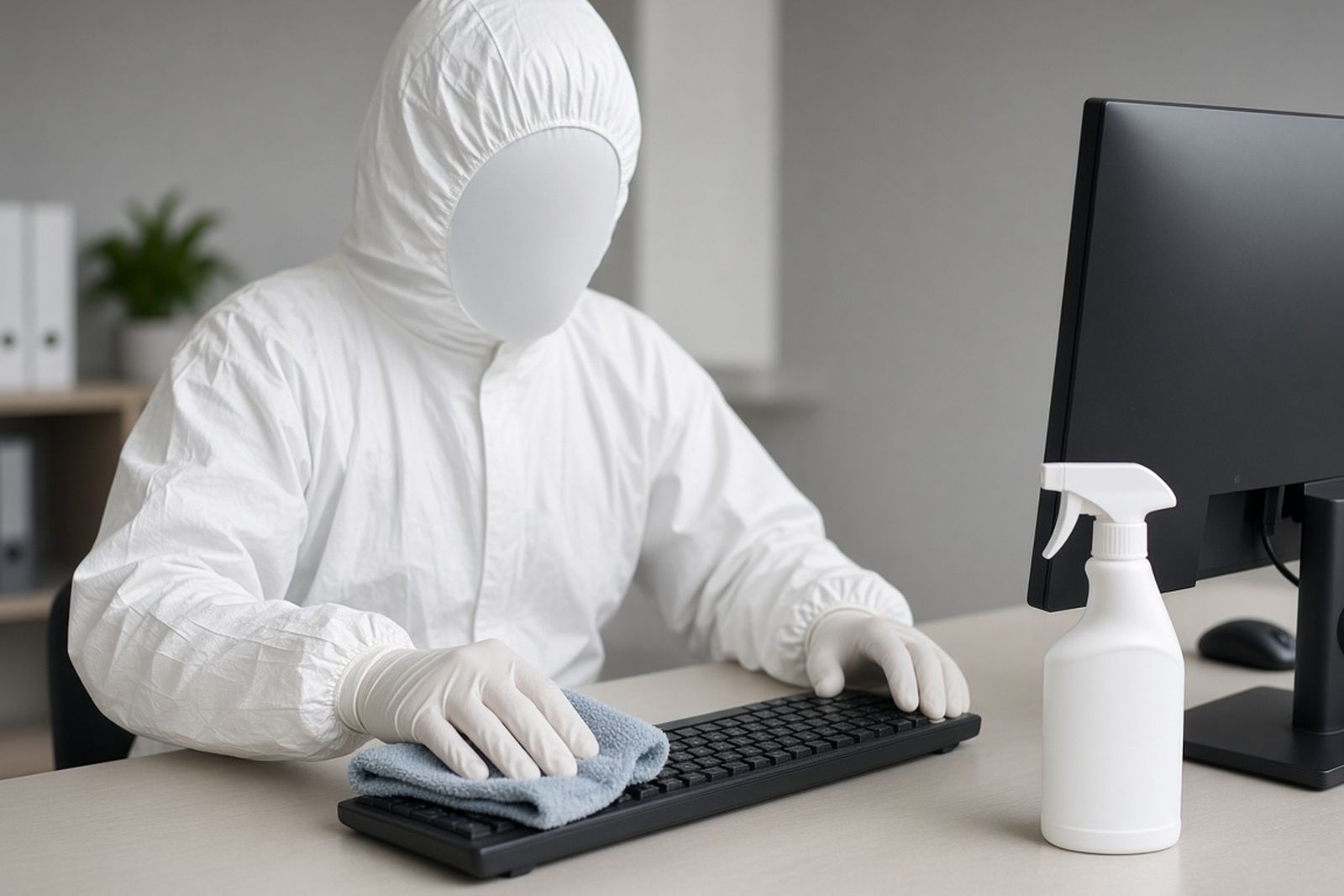
What Drives Sanitization & Fogging Cost?
Fogging bids swing widely. See how pre-cleaning, product choice, dwell and re-entry time, square footage, and verification testing shape what you pay.
Sanitization and fogging cost is driven less by the fog itself and more by everything around it: how much pre-cleaning the space needs, which product and application method its label allows, how long the area must stay empty, how large and cluttered it is, and whether results are verified. A quick misting of an empty room is cheap; a documented, validated program for an occupied facility is not.
Does Homeowners Insurance Cover Sanitization & Fogging?
Fogging after illness, smoke, or a sewage backup? Learn when a policy may treat sanitization as part of a covered loss and when it is your own expense.
Standalone sanitization fogging is rarely covered. A homeowners policy does not pay to disinfect a house after a stomach bug or as a precaution. Fogging or misting may be paid as one line item inside a larger covered claim, such as smoke deodorization after a fire or disinfection after a sudden sewage backup, when the adjuster agrees it is needed. Get that agreement in writing before work starts.

How to Compare Low and High Sanitization & Fogging Bids
Fogging quotes can hide big differences in pre-cleaning, product labels, contact time, and verification. Learn how to line up bids and see what each includes.
To compare low and high sanitization and fogging bids, put both on the same scope: areas treated, pre-cleaning of surfaces, the exact product and whether its label allows the method, contact time, re-entry timing, and any verification such as ATP testing. A low bid can be fine if it covers those steps. A high bid should explain what the added cost buys and why your space needs it.
Sourced figures on costs & insurance
- 2016
EPA's 2016 Emerging Viral Pathogen policy has been activated for SARS-CoV-2 (January 2020), mpox (August 2024), Marburg (October 2024), and hantavirus and Ebola (May 2026).
Read with care: The policy is voluntary and allows only limited off-label claims in technical materials; it does not change the application methods allowed on a label.
Source: EPA (2026)United States; EPA-registered antimicrobial pesticides; activations listed as of 2026
- 500+
EPA's List N of surface disinfectants expected to kill SARS-CoV-2 grew from 85 products at launch in March 2020 to more than 500 products by October 2020.
Read with care: The count is a 2020 snapshot and the list has continued to change; inclusion does not mean a product is labeled for fogging or electrostatic use.
Source: EPA (2020)United States; EPA-registered surface disinfectants; March to October 2020
- 180-460 ppm
A WHO expert review notes WHO's 2020 interim guidance strongly recommended against spraying or fogging disinfectants in occupied spaces, and lists U.S.-approved hypochlorous acid at 180 to 460 ppm.
Read with care: The fogging statement is quoted secondhand from WHO's May 2020 interim guidance, which was written for the COVID-19 context.
Source: WHO (2021)Global; WHO Essential Medicines expert review citing WHO COVID-19 surface disinfection guidance; 2021
These figures are public research and agency data, not this network's own job records. Keep each number with its population, year and limits; none of them predicts cost, timing or outcome at a specific property.
What research has found
Findings from published studies of people and properties in situations like this one. They describe what researchers observed in a specific group; they are not predictions for your case.
The comparison found no significant difference between preceding cleaning with and without UV.
Microorganisms decreased significantly on sampled surfaces after treatment.
Costs & Insurance: common questions
Why do two fogging quotes for the same building differ so much?
One quote may include careful cleaning of the most-touched surfaces first, while another offers spray only. Products, equipment, labor hours, after-hours fees, and reports also vary. Ask each company to list the rooms covered and whether wiping is included. Ask which product and method they will use and what records you will get. Then compare those lines directly.
Will insurance pay for routine sanitization visits?
Routine, preventive disinfecting is usually seen as an operating cost, not an insured loss. Coverage questions are more likely to come up after a specific event. Examples are a sewage backup, or germ contamination tied to a covered cause. Policy wording differs widely. So ask your broker or insurer directly and get their answer in writing.
Is a lower price per square foot always the better deal?
Not always. A low price per square foot can hide missing steps. Examples are skipping the cleaning first, a product whose label does not support fogging, or no written log. Compare what each visit actually does on the surfaces people touch most. A slightly higher price that includes wiping and records often gives you more value.
How should I budget for outbreak response when I cannot predict it?
Set aside a backup fund apart from routine cleaning. Base it on the size of your building and how often illness events have happened in the past. Line up a company ahead of time so you are not bargaining under pressure. Keep supplies so staff can handle small incidents. Each year, check the backup fund against what you actually spent, and raise or lower it.
What should an itemized fogging invoice show?
It should list the date, the areas treated, the product name and registration number, and the spray method. It should show labor for each stage, such as cleaning first, covering items, spraying, and checking. Separate charges for travel, after-hours work, waste removal, or extra rooms should be clear. An itemized bill makes it easier to compare visits over time and check them against the agreed work. It also helps with any insurance question.
Should I expect a better rate for a recurring contract?
Some companies offer one, because repeat work is easier to schedule. Before you accept, make sure the repeat work matches your real need. Make sure you can cut back or pause visits when the reason passes. A lower rate on visits you do not need is not a saving. Compare the work in each visit with a one-time bid to see what the discount really buys.
Who pays for fogging in a leased commercial space?
It depends on the lease and the reason for the service. A tenant usually pays for treatments it orders for its own suite. Building-wide treatments, or those tied to events in shared areas, may be the landlord's cost. Sometimes they are passed on as operating costs if the lease allows. Read the lease sections on upkeep and operating costs. Agree in writing before the work is booked.
Related community polls
Every count is a real visitor vote; nothing is seeded or padded. One vote per poll per device, and you can change your answer.
A vendor offers to fog your classrooms at lunch while students are outside. What do you say?
How do you see repeat fogging contracts today?
More on sanitization & fogging
Sanitization & Fogging services
See how electrostatic spray, heat fogging, UV-C, and scheduled programs fit into a clean-first, then-disinfect plan for your building or fleet.
Costs explained
What drives the price, published cost ranges, and how to read a written quote line by line.
Insurance and payment
Which policies may respond, how to document a claim, and what to do if coverage is denied.
Planning tools
Estimate costs, vet companies, sort waste, and choose between wiping and fogging with tools built for offices, gyms, schools, and fleets.
Community polls
See how other facility managers weigh fogging contracts, air system control, label checks, and re-entry timing against cost and daily disruption.
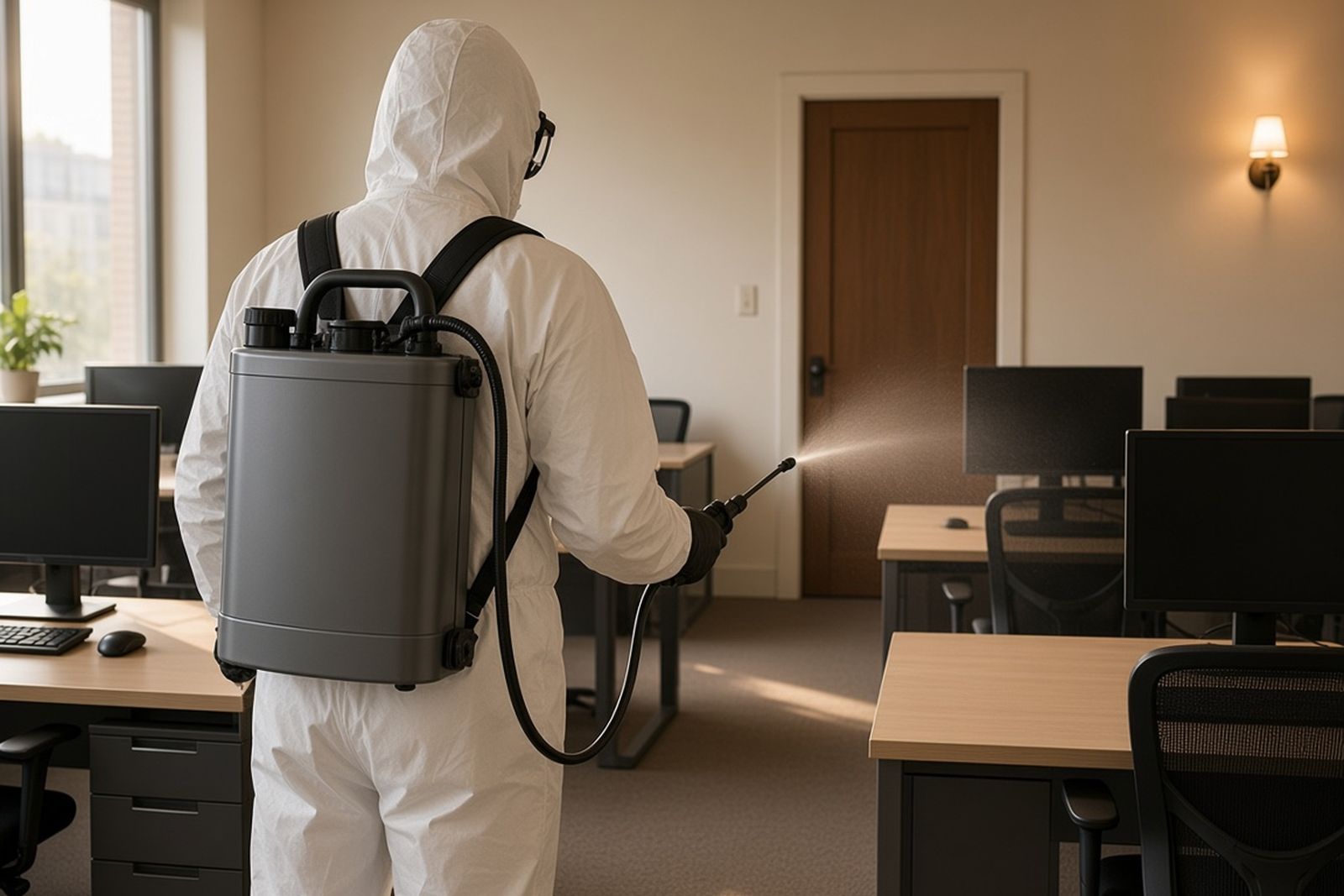
Knowledge quiz
Check whether you can spot a label mismatch, fogging with people present, or a skipped cleaning step. Then review the study guide.