Sanitization & Fogging articles and resources
Deeper reads on scope, safety, insurance and hiring, written for property owners.
Read explainers on spray methods, product labels, re-entry timing, ozone risks, and why routine wiping still matters in every building.
Get an email reply about sanitization & fogging
Send a short message to the follow-up inbox. A coordinator can reply by email. This form does not send emergency help; call 911 first if anyone is in danger.
Browse sanitization & fogging articles

Evidence-led educational articles about sanitization & fogging. Stay informed about safety standards, best practices, and what to expect from professional remediation.
What to Expect During Professional Sanitization & Fogging
Before, during, and after a fogging or electrostatic visit: pre-cleaning, covering electronics, application, contact time, ventilation, and ...
The Science Behind Sanitization & Fogging
Droplet size, gravity, electric charge, and contact time decide whether fogging disinfects anything. The physics and chemistry behind a mist...
How Long Does Sanitization & Fogging Take?
The spraying is the quick part. Pre-cleaning, room prep, label contact times, and re-entry waits decide how long a fogging or electrostatic ...
How to Evaluate Equipment Proposed for Sanitization & Fogging
ULV foggers, electrostatic backpacks, vapor systems, UV-C lamps, and ATP meters: how to judge whether proposed fogging equipment fits your b...
DIY vs Professional Sanitization & Fogging: The Critical Differences
Rented foggers, mixed chemicals, and skipped contact times cause most DIY disinfection problems. See when wiping works and when to hire a fo...
10 Sanitization & Fogging Safety Risks to Assess Before Work Begins
Inhaled mist, off-label products, early re-entry, slick floors, damaged electronics, and false confidence: ten fogging safety risks to settl...
OSHA Regulations and Sanitization & Fogging
Fogging puts disinfectant into the air that workers breathe. See how OSHA chemical, PPE, and respirator rules shape a safe fogging job and w...
PPE Planning for Sanitization & Fogging: Start With the Hazard Assessment
Fogging technicians work inside a cloud of disinfectant. Learn how the label, the space, and the method decide which respirator, goggles, an...
What Drives Sanitization & Fogging Cost?
Fogging bids swing widely. See how pre-cleaning, product choice, dwell and re-entry time, square footage, and verification testing shape wha...
Does Homeowners Insurance Cover Sanitization & Fogging?
Fogging after illness, smoke, or a sewage backup? Learn when a policy may treat sanitization as part of a covered loss and when it is your o...
How to Compare Low and High Sanitization & Fogging Bids
Fogging quotes can hide big differences in pre-cleaning, product labels, contact time, and verification. Learn how to line up bids and see w...
Which Federal, State, and Local Rules Apply to Sanitization & Fogging?
Fogging sits under federal pesticide labels, state product registration, applicator licensing, OSHA, and local health codes. See which layer...
How to Research Waste Rules for Sanitization & Fogging
Leftover tank mix, empty jugs, spent cartridges, and wipes all need a disposal plan. Learn how to research waste rules for sanitization and ...
10 Questions to Ask Before Hiring a Sanitization & Fogging Company
Weighing a fogging or electrostatic spraying contract? Ask these ten questions about product labels, pre-cleaning, re-entry, equipment safet...
Red Flags When Hiring Sanitization & Fogging Services
Fogging with off-label products, skipping cleaning, ozone claims, and no re-entry time are warning signs. How to vet a sanitization or foggi...
Training, Documentation, and Credentials for Sanitization & Fogging
Which licenses, training, and records matter when hiring a fogging or electrostatic disinfection crew? Pesticide rules, respirators, labels,...
Managing Stress and Disruption During Sanitization & Fogging
After an outbreak, fear of germs and worry about chemicals can collide. Ways to manage stress, closures, and household disruption around a f...
How Sanitization & Fogging Practice Has Changed
From old room fumigation to hospital vapor systems, pandemic-era sprayers, and label-driven practice: how sanitization fogging changed and w...
The Difference Between Cleaning and Disinfection in Sanitization & Fogging
Fogging disinfects; it does not clean. How cleaning, sanitizing, and disinfecting differ, why soil blocks disinfectants, and where a fogger ...
Sanitization & Fogging for Property Managers: What You Need to Know
Property managers weighing a fogging or electrostatic proposal: label checks, resident notice, HVAC, re-entry, and when wipe-and-dwell is th...
When ATP Testing Helps—and When It Does Not—in Sanitization & Fogging
ATP swabs can show whether surfaces were cleaned before and after fogging, but they cannot prove a pathogen is gone. How to use readings wit...
Sanitization & Fogging Planning Example: Building a Defensible Scope
A hypothetical school stomach-bug cluster, used to show how a defensible fogging scope is built: label review, pre-cleaning, zones, re-entry...
Urgent Sanitization & Fogging: What to Do Before a Provider Arrives
Facing an outbreak, a vomiting incident, or a contamination scare? Learn what to do before a sanitization crew arrives and why mixing chemic...
Commercial vs Residential Sanitization & Fogging
Fogging a home and fogging an office or gym raise different questions about occupants, pets, HVAC, labels, timing, and records. Compare both...
Environmental Responsibility in Sanitization & Fogging
Fogging puts chemicals into the air of your building. How to limit needless use, protect occupants and materials, and choose products and me...
How to Evaluate Technology Used in Sanitization & Fogging
Electrostatic sprayers, ULV and thermal foggers, hydrogen peroxide vapor, UV-C robots, and drones: a practical way to judge the fogging tech...
Mental Health Resources During Sanitization & Fogging
An outbreak at home or work can leave lingering worry about germs. Support for health anxiety, guilt, grief, and staff strain around fogging...
When Enzymes or Microbial Products Fit Sanitization & Fogging
Enzyme cleaners and probiotic sprays are sometimes pitched alongside fogging. Where they help with odor and biofilm, and why they cannot rep...
How to Compare Local and National Sanitization & Fogging Providers
Local cleaning firm or national disinfection brand? Compare label knowledge, who applies the product, multi-site consistency, contracts, and...
Questions about sanitization & fogging?
If the articles did not answer your question, send a short message and a coordinator will reply by email.
Your request is sent to the follow-up inbox. A coordinator can reply by email.
If anyone is hurt or in danger, call 911 first.
Sanitization & Fogging figures our articles draw on
- 98%
Aerobic colony counts fell 98% after added fogging compared with post-cleaning measurements.
Read with care: System-specific; commercial technology; no patient infection or occupied-room safety endpoint.
Source: Khandelwal et al. (2022)Patient-room surfaces sampled after standard cleaning and again after a specific fogging system.
- 81%
81% reported bleach use on high-touch surfaces in contact-isolation rooms.
Read with care: 47 of 273 contacted participated; practices were reported rather than observed.
Source: Han et al. (2021)47 US hospital environmental-services respondents across 26 states; 2019 survey.
- 19-21 million
Norovirus causes 19 to 21 million illnesses, about 2,500 reported outbreaks, 109,000 hospitalizations and 900 deaths in the United States each year.
Read with care: Estimates are modeled averages; norovirus is hard to kill and many quaternary ammonium products are not labeled for it.
Source: CDC (2024)United States; annual averages; CDC page reviewed May 2024
These figures are public research and agency data, not this network's own job records. Keep each number with its population, year and limits; none of them predicts cost, timing or outcome at a specific property.
How to use these articles
Where should I start if a fogging proposal just landed on my desk?
First read the article on red flags when hiring a company. Then read the one on questions to ask before hiring. Together they help you sort through a proposal quickly. If price is your main concern, follow with the articles on cost factors and comparing bids. When you are ready to act, use the Provider Vetting Checklist tool. It turns those questions into a list you can send to each company.
Which articles help most right after someone becomes ill in the building?
Start with the article on urgent situations and what to do first. It covers separating people, handling small spills, and calling the health department. Then read what to expect during a professional visit, so you know what a company should propose. The First 24 Hours Planner tool turns those early steps into an ordered list for your own situation.
I am worried about whether insurance will pay. Which article should I read?
Read the article on whether homeowners insurance covers sanitizing fogging. It explains why routine fogging, or fogging after an illness, is rarely covered. It also shows how fogging can be part of a bigger covered claim. It has a section for landlords, condo owners, and home-based businesses too. Then the Insurance Claim Organizer tool helps you build the file if an event might be covered.
How do the fogging articles help me answer the estimator's questions about my building?
The articles explain why steps matter, like cleaning first, how long the disinfectant must stay wet, and how long to wait before re-entry. The tools apply those ideas to your building. For example, the cost factors article explains what drives the price of a fogging treatment. The Cost Range Estimator lets you describe your floor space and rooms to see which drivers apply. Reading first makes the tool's questions easier to answer.
Do the articles replace advice from my health department or state agency?
No. The articles explain general practice and the questions to ask. But they cannot tell you what your local health department, licensing agency, or state pesticide agency requires. When an article mentions one of those offices, take it as a prompt to call them. Their advice for your own setting and situation always comes before general reading.
Are the examples in the articles real events?
No. The schools, daycares, offices, and homes in the examples are made-up blends. They were written to show how choices play out. They do not describe real clients, results, or prices. Use them to see how the steps fit together. Then apply the same thinking to your own building, product labels, and local advice.
How can I use these articles with staff or a board?
Pick the one or two articles that match the choice in front of you. Share them before the meeting instead of sending the whole library. The case study article and the property manager article work well for board talks. They show a full decision from start to finish. For cleaning and facilities staff, the articles on cleaning versus disinfecting and on safety risks are practical places to start.
More on sanitization & fogging
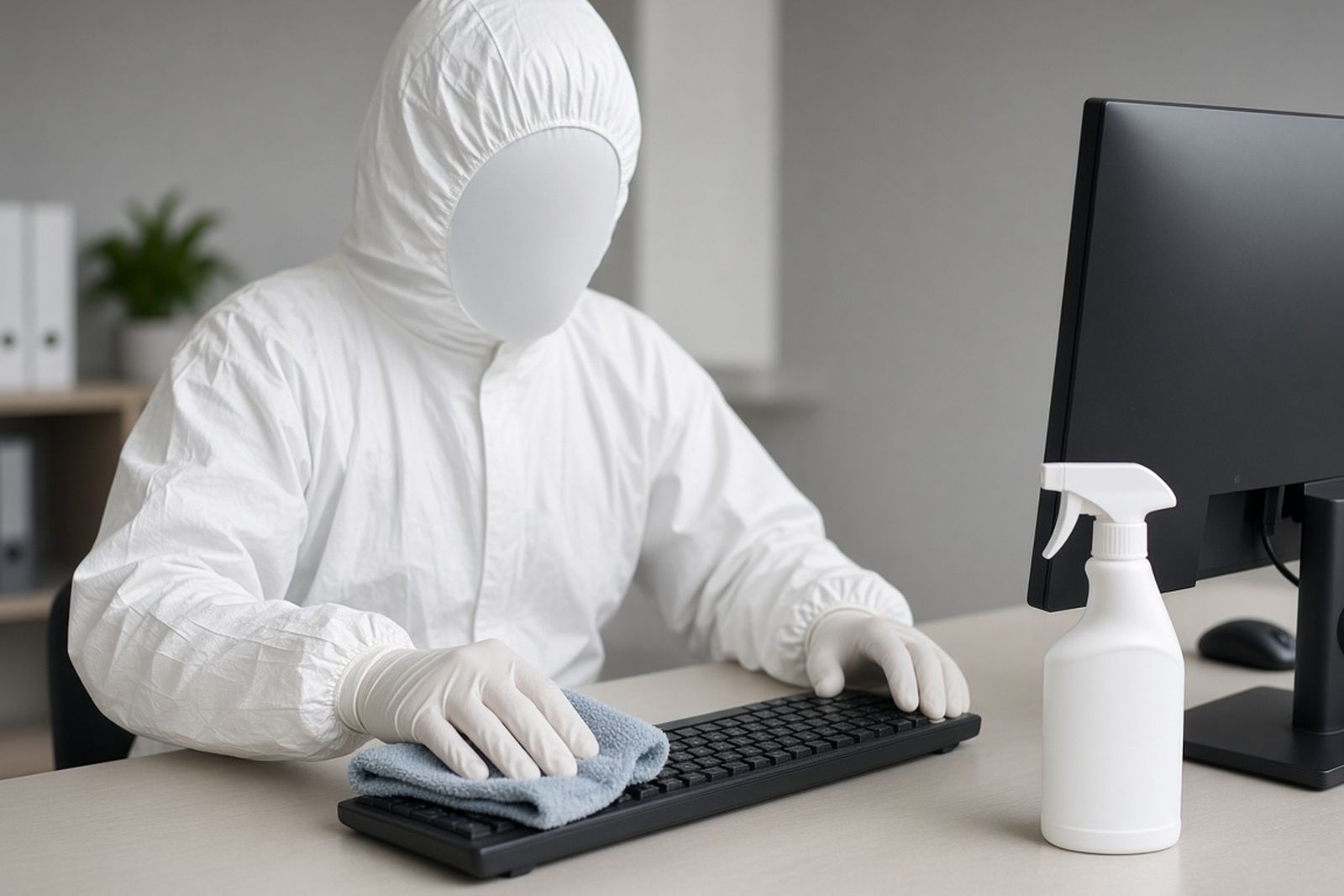
Sanitization & Fogging services
See how electrostatic spray, heat fogging, UV-C, and scheduled programs fit into a clean-first, then-disinfect plan for your building or fleet.
Costs explained
What drives the price, published cost ranges, and how to read a written quote line by line.

Insurance and payment
Which policies may respond, how to document a claim, and what to do if coverage is denied.
Planning tools
Estimate costs, vet companies, sort waste, and choose between wiping and fogging with tools built for offices, gyms, schools, and fleets.
Community polls
See how other facility managers weigh fogging contracts, air system control, label checks, and re-entry timing against cost and daily disruption.
Knowledge quiz
Check whether you can spot a label mismatch, fogging with people present, or a skipped cleaning step. Then review the study guide.