Does Insurance Cover Sanitization and Fogging?
Coverage depends on the event behind the disinfecting, not the fogging.
Insurers rarely pay for disinfecting just because a space feels unclean. Where coverage exists, it usually follows a sudden accident that your policy already covers. The sanitizing is one part of cleaning up after it. Knowing that link helps you decide whether a claim is worth filing. It also helps you back it up with the right records.
Get an email reply about sanitization & fogging
Send a short message to the follow-up inbox. A coordinator can reply by email. This form does not send emergency help; call 911 first if anyone is in danger.
What published figures say about coverage and payment
- 77%
In a September 2020 Ipsos poll of 1,005 U.S. adults, 77% expected businesses to wipe down surfaces frequently and 65% felt businesses were cleaning enough.
Read with care: Commissioned by a cleaning-products trade association during the pandemic; expectations may have eased since.
Source: American Cleaning Institute (2020)United States; Ipsos online poll of 1,005 adults; September 10-11, 2020; margin of error 3.5 points
- 39%
In a May 2020 CDC survey of 502 U.S. adults, 39% reported high-risk practices such as washing food with bleach or applying disinfectant to skin, and only 35% knew bleach should not be mixed with vinegar.
Read with care: Small opt-in panel during peak pandemic anxiety; behaviors may have since changed.
Source: CDC MMWR (2020)United States; opt-in internet panel of 502 adults weighted to be nationally representative; May 2020
- 180-460 ppm
A WHO expert review notes WHO's 2020 interim guidance strongly recommended against spraying or fogging disinfectants in occupied spaces, and lists U.S.-approved hypochlorous acid at 180 to 460 ppm.
Read with care: The fogging statement is quoted secondhand from WHO's May 2020 interim guidance, which was written for the COVID-19 context.
Source: WHO (2021)Global; WHO Essential Medicines expert review citing WHO COVID-19 surface disinfection guidance; 2021
- 500+
EPA's List N of surface disinfectants expected to kill SARS-CoV-2 grew from 85 products at launch in March 2020 to more than 500 products by October 2020.
Read with care: The count is a 2020 snapshot and the list has continued to change; inclusion does not mean a product is labeled for fogging or electrostatic use.
Source: EPA (2020)United States; EPA-registered surface disinfectants; March to October 2020
- 2016
EPA's 2016 Emerging Viral Pathogen policy has been activated for SARS-CoV-2 (January 2020), mpox (August 2024), Marburg (October 2024), and hantavirus and Ebola (May 2026).
Read with care: The policy is voluntary and allows only limited off-label claims in technical materials; it does not change the application methods allowed on a label.
Source: EPA (2026)United States; EPA-registered antimicrobial pesticides; activations listed as of 2026
- 4-15%
The American Psychiatric Association estimates that 4% to 15% of bereaved adults experience prolonged grief disorder, diagnosable 12 months after a loss.
Read with care: Range reflects differing study populations and criteria.
Source: American Psychiatric Association (2024)Bereaved adults, APA patient information
These figures are public research and agency data, not this network's own job records. Keep each number with its population, year and limits; none of them predicts cost, timing or outcome at a specific property.
Which policies might respond to a sanitization need?
For homes, a homeowners or renters policy may help when disinfecting is part of recovering from a covered cause, called a covered peril. Examples are a burst pipe, or a sewage backup if you have that add-on. The key question is whether the event itself is covered. If it is, reasonable cleaning and disinfecting needed to restore the space may be part of the adjuster's estimate.
Businesses usually look to commercial property coverage for similar losses. Some businesses also carry special add-ons for disease outbreaks or contamination. These vary a lot and may have their own limits and conditions. Landlord policies may cover shared areas of a rental building. Tenants turn to their own business or renters coverage for their belongings and suites.
When a worker is exposed on the job, workers' comp covers the hurt or sick worker. It does not pay to clean the building. Keep those two issues apart when you talk with your insurers. A health official or workplace safety adviser can help you understand your duties as an employer. Your property insurer focuses on the building itself. Mixing the two talks can slow both claims. It can also cause confusion about which policy should pay which cost.
What exclusions commonly apply to disinfection costs?
Many property policies exclude losses caused by viruses, bacteria, or other germs unless a specific add-on puts that coverage back. Routine upkeep, slow contamination, and wear and tear are also often excluded. So a prevention fogging program, or a visit booked because it's flu season, usually isn't covered. That's true even for well-insured businesses. Knowing this ahead of time helps you set realistic hopes before you call.
Other exclusions can involve mold, pollutants, and lost business income that isn't tied to physical damage. The exact wording matters. Small differences between policies can change the result. Read the declarations page, which is the summary page of your policy. Read the exclusions section and any add-ons too. Ask your agent to explain in writing how each would apply to you. If the wording is unclear, ask for an explanation in plain terms.

How do you document a sanitization claim?
Start by recording the event that made disinfecting necessary. Photos, videos, and dated notes of the water, sewage, or biohazard source carry more weight than just saying the space needed cleaning. Keep any report from a plumber, building manager, or health official that describes what happened and when it was found. The more closely your records tie the cleanup to a specific, dated event, the easier the claim is to review.
Next, gather the vendor's scope and invoice. A strong file lists cleaning apart from disinfecting. It names each product with its registration number and lists the rooms treated. It records how long surfaces stayed wet and when people could go back in. It also helps to show the product label allows the method used. EPA guidance from 2026 says the agency does not recommend fogging, fumigation, wide-area or electrostatic spraying unless the product label specifically includes directions for that method. So if the method doesn't match the label, an adjuster may ask questions.
- Photos and notes of the event that caused the need
- A vendor scope that lists cleaning apart from disinfecting
- Product names, registration numbers, and labels
- A room list, how long surfaces stayed wet, and when people went back in
- Invoices and proof of payment
How should you work with the adjuster?
Tell your insurer right away. Ask whether they want to inspect before cleanup starts. Often you will need to act fast to protect health and property. So take plenty of photos first. Keep damaged materials if the adjuster asks you to. Ask the adjuster to confirm in writing which parts of the plan they think are reasonable. Clear talk early on tends to mean fewer disagreements later.
Share your vendor's itemized estimate, not a single lump sum. Adjusters usually respond better to line items they can compare with their own pricing tools. The adjuster may question a step, like a second application or keeping the space closed while the air clears. If so, ask your vendor to explain the reason in writing. Keep a log of every call and email, with names and dates.
What are your next steps after a disinfection claim is turned down?
First, ask for the denial in writing, with the exact policy wording the insurer relied on. Compare that wording with your policy papers and add-ons. Sometimes a denial rests on a mix-up about the cause of the loss. More proof can change the result. An example is a plumber's report showing the backup was sudden, not slow. Read the denial slowly, and note any deadlines it gives for responding.
You can ask the insurer to reconsider, send supporting papers, or ask for a supervisor's review. Many states also have a complaint process through the state insurance department. A licensed public adjuster or a lawyer who handles insurance disputes may help with larger losses. Rules vary by state and county; verify with the local authority before you rely on any appeal deadline.
Are there other ways to fund disinfection work?
If insurance doesn't help, the cost usually falls to the property owner, the business, or whoever is responsible under a lease or service contract. Check your lease to see whether the landlord maintains shared systems. Check any cleaning or building services contract to see if outbreak response is included. Some vendors offer payment plans for bigger jobs, which can spread the cost over time.
Public bodies, like schools and local agencies, can sometimes get public health or emergency funds during declared outbreaks. But what's offered changes over time. If a certain person or company caused the contamination, you may be able to seek payment from them or their liability insurer. Keep every invoice and service record, since you'll need them for any of these paths.
How can you avoid coverage surprises in the future?
Go over your policy with your agent before you need it. Ask directly whether losses from germs, disease outbreaks, sewage backups, or contamination are covered. Ask whether any of these need a separate add-on. Ask how the policy treats lost business income when you must close for cleaning or airing out. Think about asking for a written summary of the answers so your team can look back at it. Have this talk again at each renewal. Add-ons and exclusions can change from one policy period to the next without much notice.
Keep a simple file for each disinfecting vendor. Include their insurance certificates, product lists, and sample service logs. When something happens, that planning makes it easier to move fast. You can pick a vendor that records its work well and present a clear claim. Planning doesn't promise coverage, but it can make the process less stressful. Share the file with whoever handles claims so nobody has to hunt for it during an emergency.
Keep the claim organized
Sanitization & Fogging insurance claim organizer
A checklist to keep the claim orderly. It stores nothing on our servers; copy the summary to your own notes.
0 of 18 steps recorded (0%)
Print or paste the summary into your own records. Coverage is the carrier's decision under the policy; keep every answer in writing.
Open the full tool page for a worked example and more answers.
What research has found
Findings from published studies of people and properties in situations like this one. They describe what researchers observed in a specific group; they are not predictions for your case.
Microorganisms decreased significantly on sampled surfaces after treatment.
The comparison found no significant difference between preceding cleaning with and without UV.
Insurance questions about sanitization & fogging
Does homeowners insurance pay for fogging after an illness in the house?
Usually not. Most homeowners policies don't treat illness in the home as a physical loss. Many exclude losses caused by viruses or bacteria. Coverage is more likely when disinfecting is part of cleaning up after a covered event. Examples are a sudden burst pipe or a sewage backup covered by an add-on. Read your policy wording and ask your agent how it would apply to you before you book work.
Can a business claim fogging costs after an outbreak among employees?
The answer depends on your policy wording. Standard business property forms often exclude losses from germs. But some businesses buy disease outbreak or contamination add-ons that may help. Those add-ons vary in scope, limits, and conditions. Workers' comp covers workers who get sick through work, not disinfecting the building. Talk with your broker about what your policies include and what records the insurer expects.
What documents does an adjuster usually ask for?
Expect requests for photos of the event that caused the need and the vendor's itemized scope and invoice. They will also want product names with registration numbers, the list of rooms treated, and dates of service. Some adjusters also ask for product labels to confirm the method was allowed. Getting these records in order before you file can cut down on back-and-forth. It also helps the adjuster see exactly what was done.
Will insurance pay for a recurring sanitization program?
Regular or prevention programs are usually treated as routine upkeep and a normal running cost. Most property policies don't cover that. Coverage usually only comes up when disinfecting is needed because of a specific, sudden event. If you run a scheduled program, budget for it as a normal building cost. Keep its logs, which may still help if a covered loss happens later.
Should I call my insurer before or after hiring a sanitization company?
When health or safety calls for fast action, you can usually take sensible steps to prevent more harm first. Still, tell your insurer as soon as you can and ask whether they want to inspect. Take photos before work starts. Keep damaged materials if asked, and share the vendor's estimate. Early contact helps avoid disputes about whether the work was needed or reasonable.
My claim was denied because of a virus exclusion. What now?
Ask for the denial in writing, with the exact policy wording it cites. Check whether the disinfecting was really tied to another event, like a water or sewage loss, that might be covered on its own. You can send more proof, ask the insurer to reconsider, or contact your state insurance department. For larger losses, a public adjuster or insurance lawyer can check whether the exclusion was applied correctly.
Can a landlord's policy cover disinfection in a rental unit?
A landlord's policy usually protects the building and shared areas, not a tenant's belongings. If disinfecting follows a covered building loss, like a plumbing failure, the landlord's insurer may cover the structure. Tenants usually rely on renters insurance for their own things. Check your lease to see who must clean after certain events. Send any questions to your landlord in writing.
What other visitors said
Every count is a real visitor vote; nothing is seeded or padded. One vote per poll per device, and you can change your answer.
A vendor offers to fog your classrooms at lunch while students are outside. What do you say?
How do you see repeat fogging contracts today?
More on sanitization & fogging
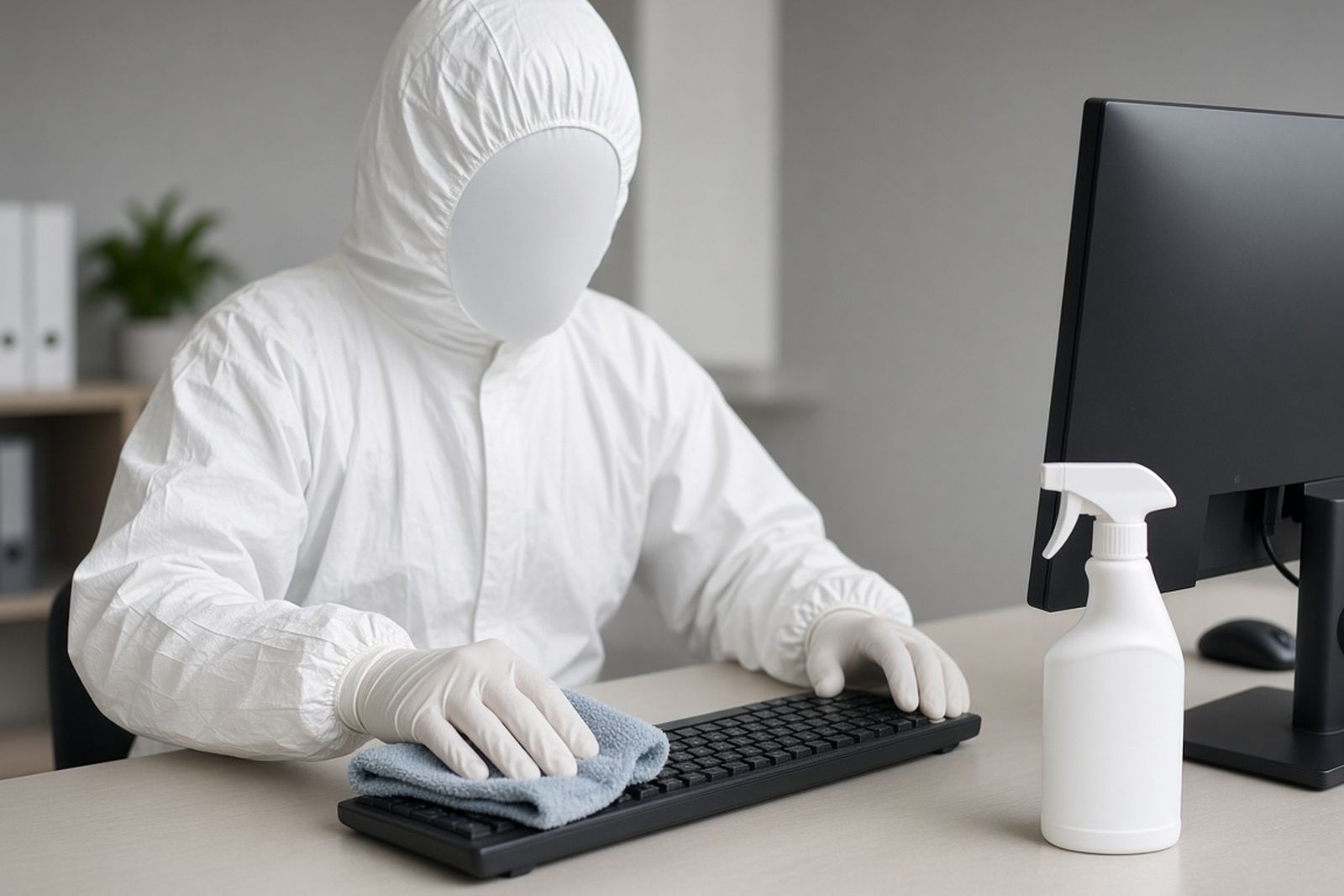
Sanitization & Fogging services
See how electrostatic spray, heat fogging, UV-C, and scheduled programs fit into a clean-first, then-disinfect plan for your building or fleet.
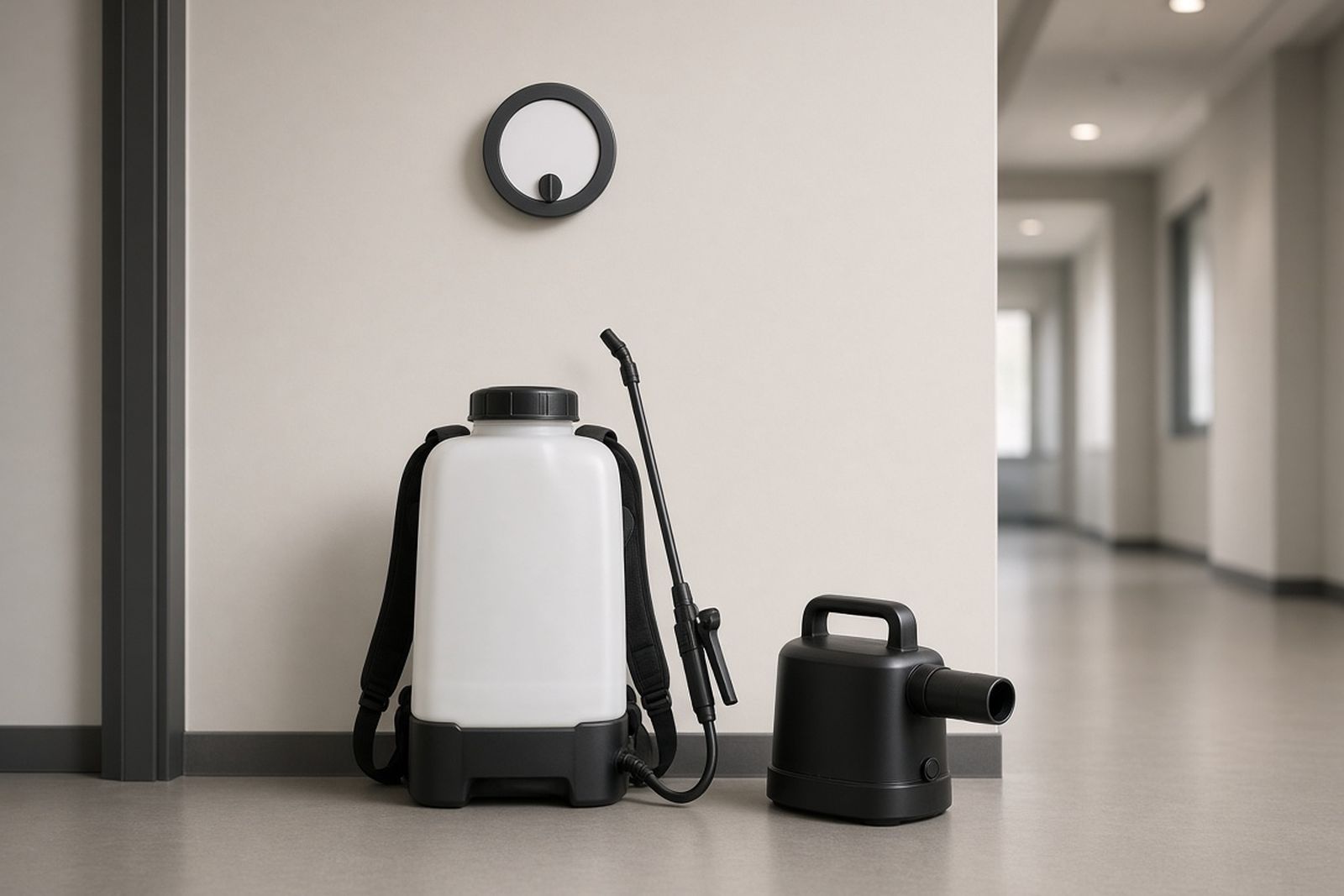
Costs explained
What drives the price, published cost ranges, and how to read a written quote line by line.
Planning tools
Estimate costs, vet companies, sort waste, and choose between wiping and fogging with tools built for offices, gyms, schools, and fleets.
Community polls
See how other facility managers weigh fogging contracts, air system control, label checks, and re-entry timing against cost and daily disruption.
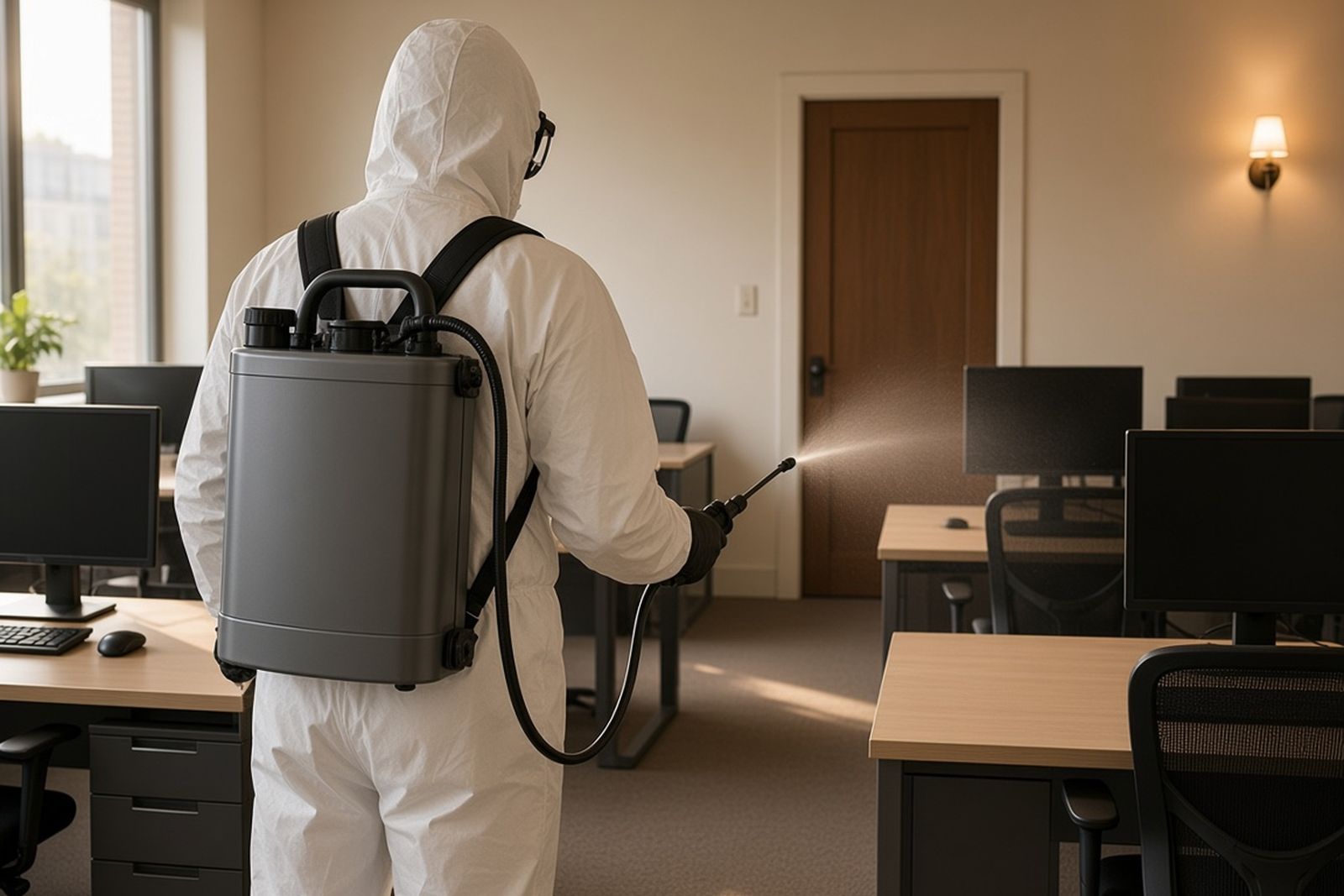
Knowledge quiz
Check whether you can spot a label mismatch, fogging with people present, or a skipped cleaning step. Then review the study guide.
Articles and resources
Read explainers on spray methods, product labels, re-entry timing, ozone risks, and why routine wiping still matters in every building.