This page explains four types of disinfection service in plain terms. Each one has its strengths and limits, and none of them take the place of cleaning.
Send a short message to the follow-up inbox. A coordinator can reply by email. This form does not send emergency help; call 911 first if anyone is in danger.
Four tools with different jobs
Electrostatic spraying, thermal fogging, and UV-C are three ways to put a germ-killing step on top of cleaning. A scheduled program uses one or more of them on a regular basis, with a set list of rooms and records for each visit.
Which tool fits depends on your space. Busy rooms with lots of odd shapes may suit a sprayer. Empty rooms that can be closed off may suit a fogger. Small spaces with clear, open surfaces may suit UV-C. A good company explains why it picked one over another.
The services, one by one
Electrostatic Spray Disinfection
Who it is for: Offices, gyms, schools, and waiting rooms with many chairs, handles, and machines that are hard to wipe one by one.
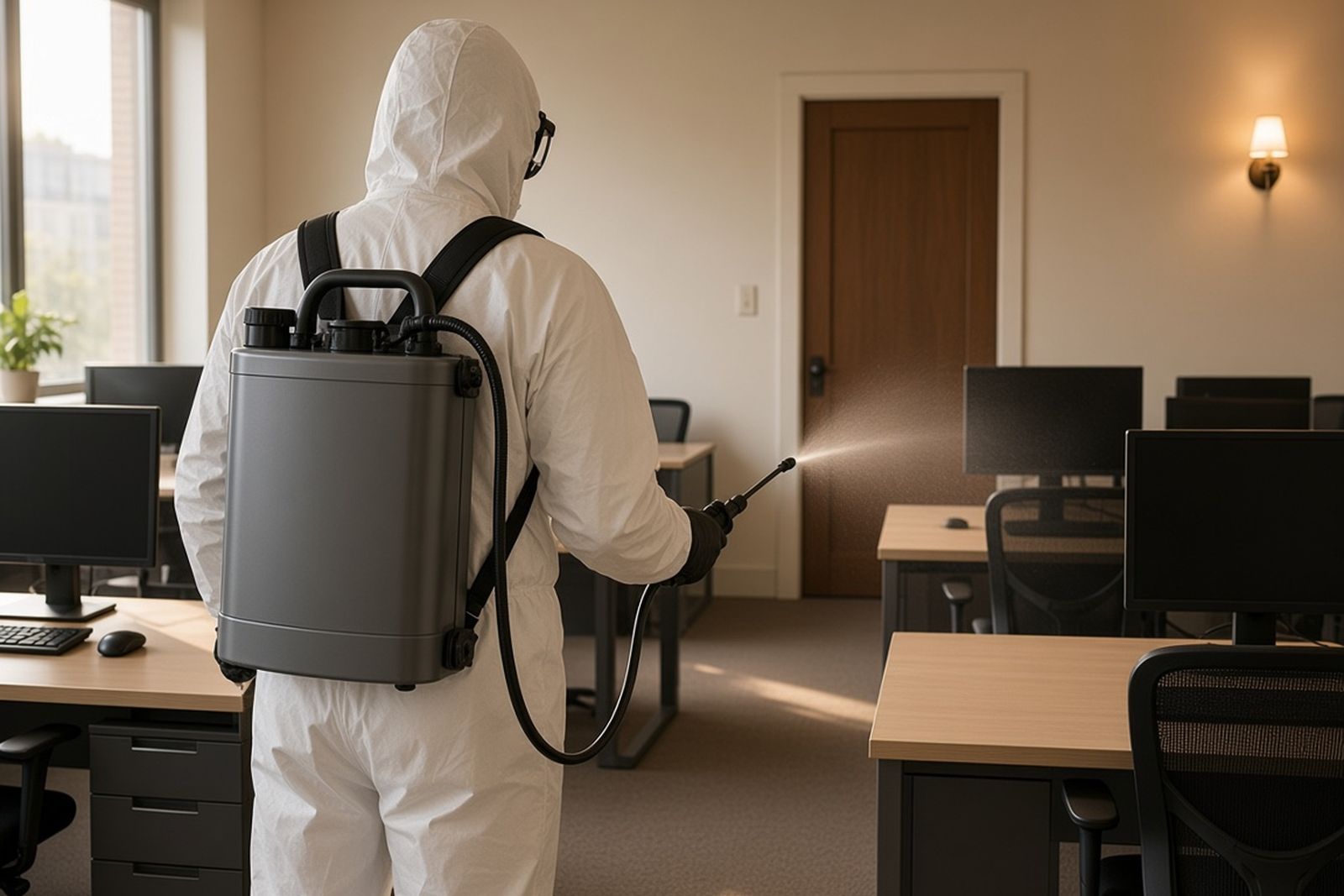
The crew maps the rooms and high-touch spots on the ticket. Visible dirt is cleaned first. The crew picks a product that suits your surfaces and the germs you are worried about, then sprays so surfaces stay wet for the label time. Electronics and food areas are protected as the label and your rules require.
What you should get: A log with the product name, EPA number, rooms treated, and when people may return.
Thermal Fogging
Who it is for: Empty spaces that can be closed off, such as a vacant unit or a storage area, after they have been cleaned.
Before starting, the crew confirms the space is empty and has a plan for the air system. Key surfaces are wiped clean first. The fog is made with a product labeled for this use and this kind of space. The room stays closed and then is aired out as the label says.
What you should get: A written record of the product, how long the machine ran, and when the room can reopen.
UV-C Light Disinfection
Who it is for: Small rooms with open, hard surfaces, like exam rooms or restrooms, as an added step after cleaning.
All people and pets leave, since UV-C can burn skin and eyes. The lamp only works on surfaces it shines on directly, so shadows and the undersides of things are not treated. The crew still cleans and uses liquid disinfectant on key surfaces. They follow the device's safety locks and timing.
What you should get: Notes on rooms treated, along with a plain statement of what UV-C did not reach.
Scheduled Sanitization Programs
Who it is for: Schools, daycares, gyms, and offices that want regular disinfection with records they can show others.
You and the company agree on which rooms and spots get treated and how often. Every visit follows the same order: clean, then disinfect. Products and wet times are kept consistent and written down. The plan can add extra visits if an illness spreads, and it gets reviewed as your needs change.
What you should get: A running log of every visit, the products used, and any changes to the schedule.
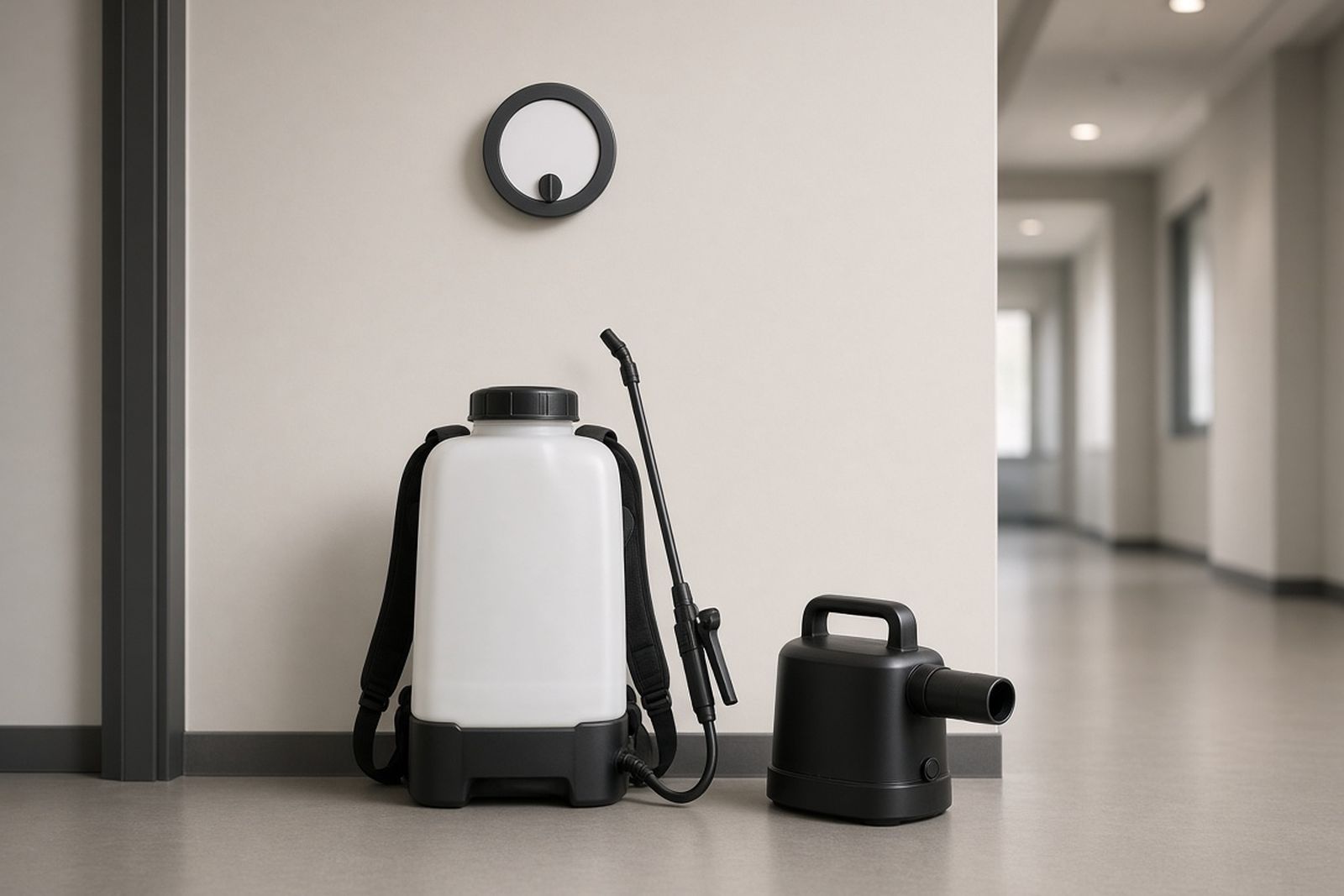
Illustrative photo, not a job record. Backpack sprayer and a handheld fogger standing in an office hallway beside a wall timer.Illustrative photo, not a job record. Clean conference room with chairs pushed in and a blank card on the table.
Sanitization & Fogging in numbers
53%
53% reported changes in application type, such as fogging, spraying or wiping.
Read with care: Small voluntary sample; no causal inference; survey item nonresponse substantial.
Source: Wilson et al. (2023)59 Arizona survey respondents and 11 interviewees from maid services and a school district.
98%
Aerobic colony counts fell 98% after added fogging compared with post-cleaning measurements.
Read with care: System-specific; commercial technology; no patient infection or occupied-room safety endpoint.
Source: Khandelwal et al. (2022)Patient-room surfaces sampled after standard cleaning and again after a specific fogging system.
66.5%
The reported overall reduction was 66.5% in coaches.
Read with care: Product/vehicle-specific; bacterial reductions do not establish virus control or passenger safety.
Source: Kruszewska et al. (2022)Buses and long-distance coaches treated with a specific automated peracetic-acid system.
8
Products above pH 8 accounted for 74% of failures in the experiment.
Read with care: Accelerated test conditions; not a failure rate for installed equipment.
Source: Jennings et al. (2024)Eight wipe formulations tested on healthcare plastics under fixed strain for seven days.
These figures are public research and agency data, not this network's own job records. Keep each number with its population, year and limits; none of them predicts cost, timing or outcome at a specific property.
What these services do not cover
Blood, vomit, or sewage cleanup. Call a biohazard cleanup company for those spills.
Mold removal. A mold company can find the water source and remove damaged materials.
Pest control. Insects and rodents call for a pest control company.
Air duct cleaning. Hire a duct cleaning or heating and cooling company.
Medical advice about outbreaks. Your local health department can guide next steps.
After a disinfection visit
You may notice a faint product odor at first. Open windows or run the air system as the label suggests. If people get headaches or itchy eyes, air the space out more and call the company. A strong or lasting odor may mean too much product was used.
Keep every service log and label copy in one binder or folder. They help if an inspector, parent, or tenant asks what was sprayed. Remember that germs return as soon as people come back, so daily cleaning is still the main defense.
Findings from published studies of people and properties in situations like this one. They describe what researchers observed in a specific group; they are not predictions for your case.
Microorganisms decreased significantly on sampled surfaces after treatment.
Every count is a real visitor vote; nothing is seeded or padded. One vote per poll per device, and you can change your answer.
Your experience
A vendor offers to fog your classrooms at lunch while students are outside. What do you say?
No visitor votes yet
Industry
How do you see repeat fogging contracts today?
No visitor votes yet
Process
For a bus with a short turnaround, which approach makes the most sense?
No visitor votes yet
Before you hire: sanitization & fogging questions
What does electrostatic mean in plain terms?▼
The sprayer puts a small electric charge on each drop of disinfectant. Charged drops are drawn to surfaces, so they wrap around the back of a chair leg or a door handle instead of just landing on the front. This helps coverage on odd shapes. It doesn't clean dirt away, so wiping still comes first.
Will thermal fog set off our smoke alarms?▼
It might. Thick fog can trip some alarms. The company should plan for this with your building manager, since turning off alarms may require notice to your alarm company or fire department. Alarms must be turned back on right after the room is cleared. Ask who is responsible for each step in writing.
Is UV-C safe to use while people are in the room?▼
Most UV-C lamps used for surface treatment are not. The light can burn skin and hurt eyes, even in short bursts. That's why people and pets must leave, and many devices have motion sensors that shut off the lamp. Only use UV-C devices with safety features, and follow the maker's directions closely.
How often should a scheduled program come out?▼
It depends on how busy your space is and who uses it. A daycare may want more frequent visits than a small office. Start with your daily cleaning plan and ask where extra help would make a difference. A fair company will suggest a schedule based on your building, not just on what sells.
Can the crew work after hours so we don't close?▼
Many companies work evenings or weekends, which helps you avoid closing during business hours. Ask whether after-hours work costs more. Also plan how the crew will get in, who will let them in, and when the space will be ready for staff the next morning. Put this in the agreement.
What should a service log include?▼
A useful log lists the date, the rooms and surfaces treated, the product name and EPA number, how the product was applied, and when people could go back in. It should also note any cleaning done beforehand and anything the crew couldn't reach. Keep these logs where you can find them quickly.
Can a program change during cold and flu season?▼
Yes. Many programs can add visits or focus on certain rooms when illness spreads. Ask the company how you request extra visits and how fast they can arrive. You may also want to switch to a product whose label lists the specific germ going around. Write these options into your agreement.