Sanitization & Fogging: Safety
Hazard-assessment articles for sanitization & fogging, including when bloodborne, chemical, respiratory, sharps, structural, or waste controls may apply. PPE and containment must follow the actual exposure—not a universal checklist.
Safety posts focus on the people in and around a building before, during, and after spraying. They explain why nobody should stay in a room being fogged. They show how breathing in mist can irritate the airways of people with asthma or chemical sensitivity. They cover what breathing and eye protection workers may need, depending on the product. They also show how to protect food, fish tanks, and pets. Other articles compare staff doing their own spraying with bringing in a company. They list dangers worth checking first, such as slippery floors and setting off alarms. Posts also cover residue left on gym mats or classroom tables.
Get an email reply about sanitization & fogging
Send a short message to the follow-up inbox. A coordinator can reply by email. This form does not send emergency help; call 911 first if anyone is in danger.
During an outbreak, the urge to do something visible is strong, and buying a home fogger can feel like action. Yet misused disinfectant can harm people without making things cleaner. Some products are not meant to be sprayed into the air at all. Knowing the exact risks of mist spraying helps you set firm rules about keeping rooms empty. It helps you choose a product that fits the method. It also helps you decide which tasks your own team can handle safely. And it makes clear which warning signs mean you should wait to reopen until the company comes back to review its work. Examples are eye irritation that lingers or a slick floor near an entrance.
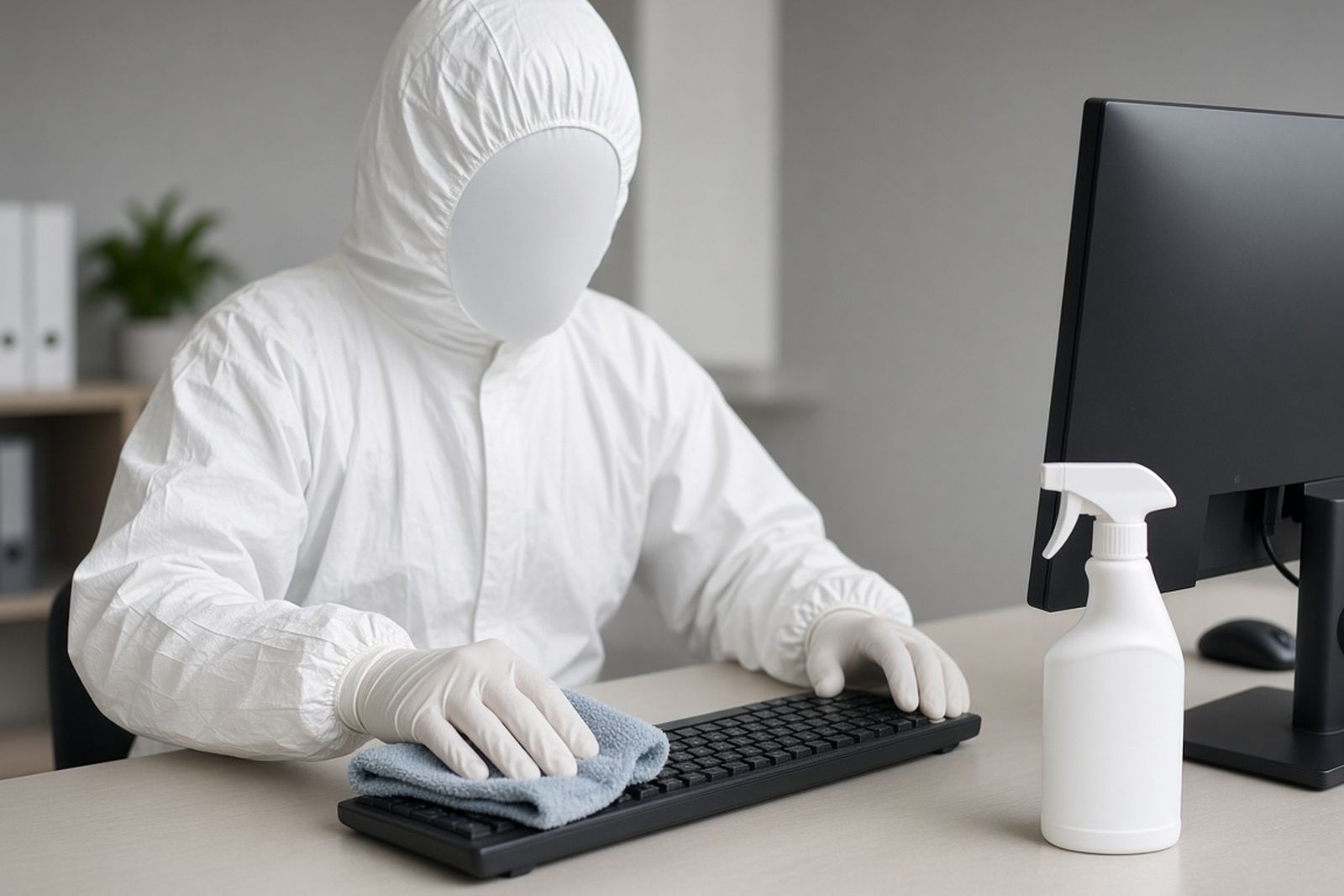
DIY vs Professional Sanitization & Fogging: The Critical Differences
Rented foggers, mixed chemicals, and skipped contact times cause most DIY disinfection problems. See when wiping works and when to hire a fogging professional.
For most homes and small offices, careful DIY cleaning and wiping with a registered disinfectant, used as its label directs, is more effective than renting a fogger. Professional sanitization or fogging makes sense for large or complex spaces, outbreak response, sensitive settings like schools and clinics, or when documentation is needed. The riskiest DIY choices are mixing chemicals, fogging with unlabeled products, and re-entering too soon.
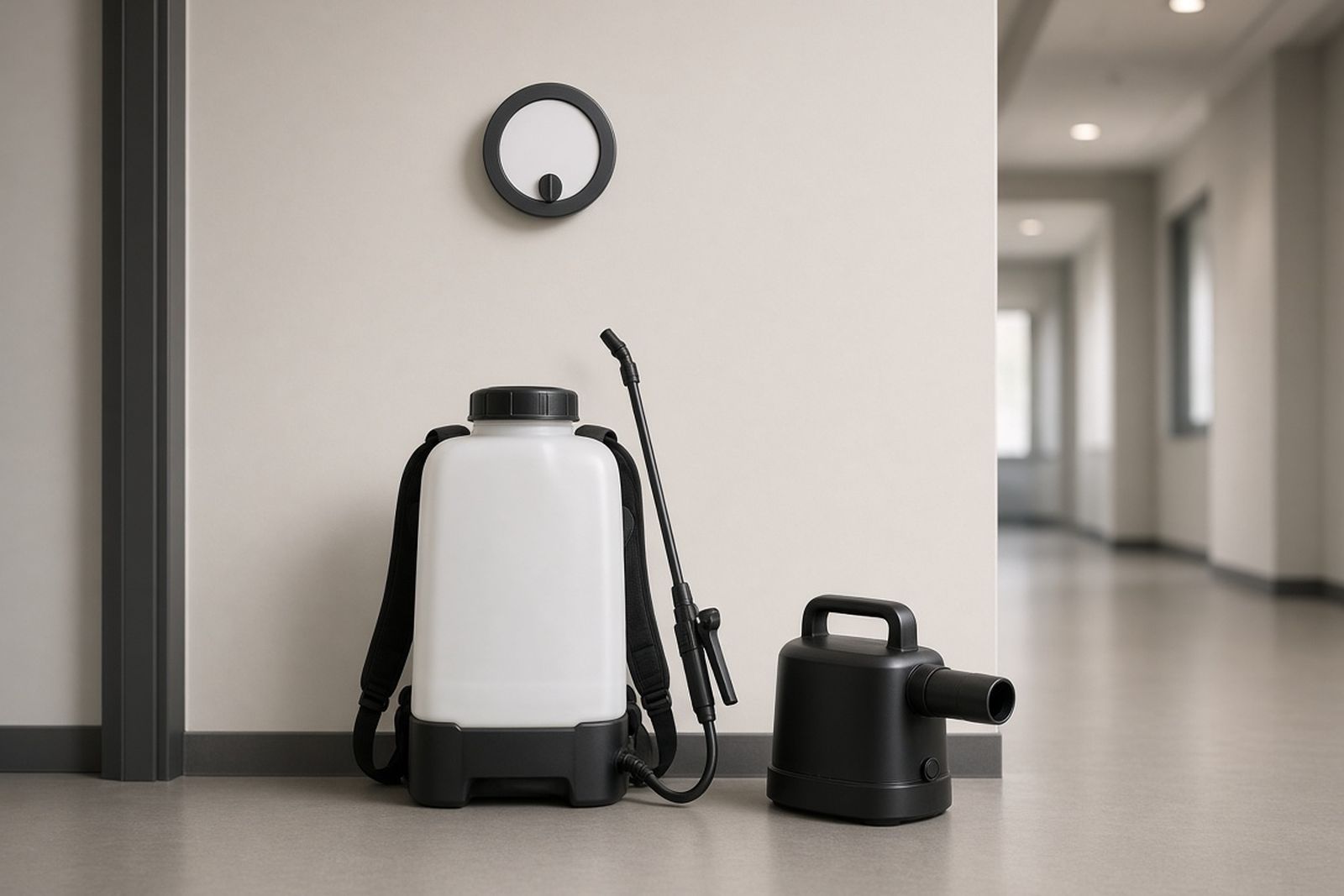
10 Sanitization & Fogging Safety Risks to Assess Before Work Begins
Inhaled mist, off-label products, early re-entry, slick floors, damaged electronics, and false confidence: ten fogging safety risks to settle before spraying.
Before a sanitization or fogging job, assess ten risks: inhaling disinfectant mist, using a product whose label does not permit the method, re-entering too soon, mixing incompatible chemicals, residue on food-contact surfaces and toys, fire and electrical hazards, slippery floors, damage to materials and electronics, spread through the HVAC system, and the false confidence that fogging replaces cleaning. Each risk has a clear, practical control.
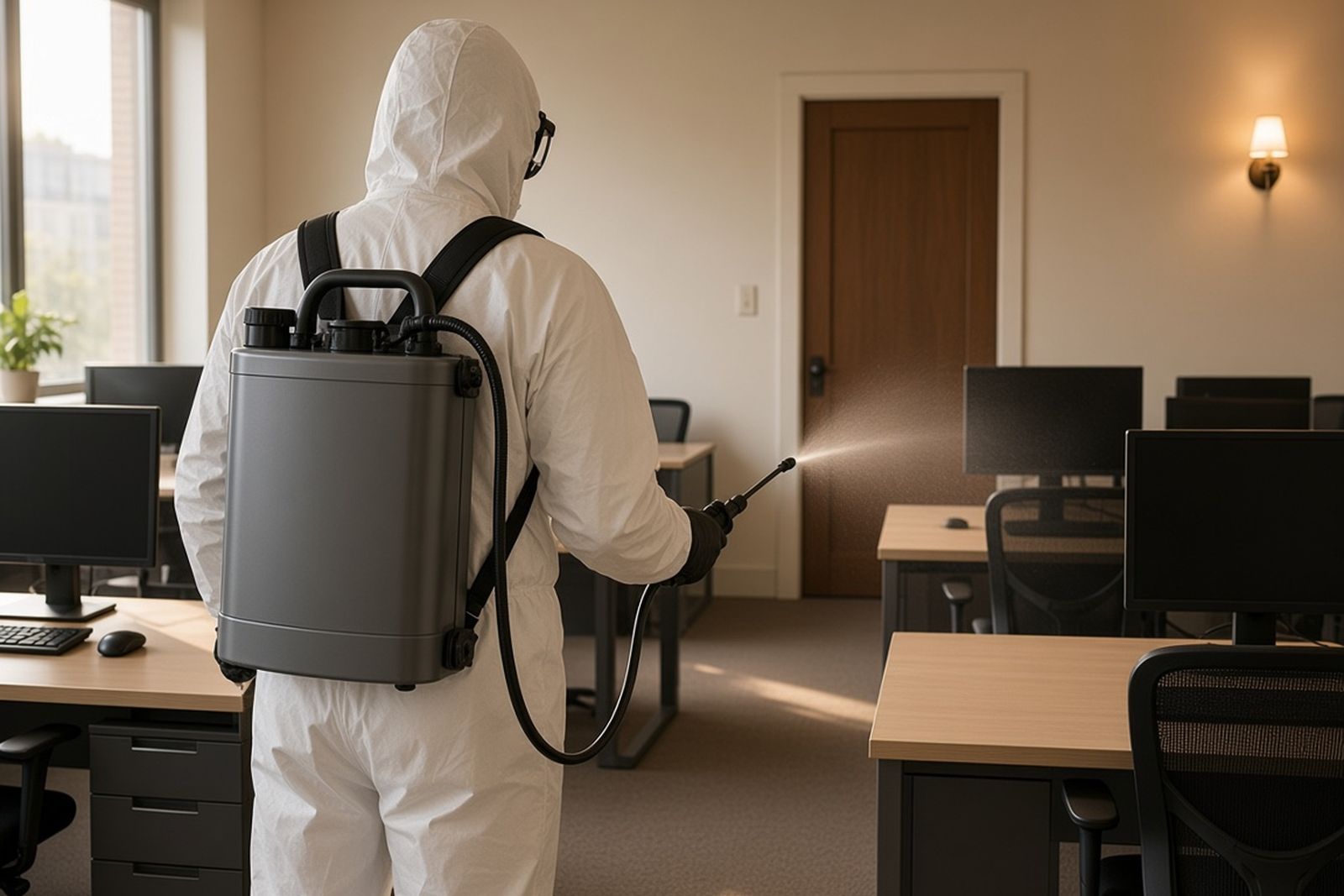
PPE Planning for Sanitization & Fogging: Start With the Hazard Assessment
Fogging technicians work inside a cloud of disinfectant. Learn how the label, the space, and the method decide which respirator, goggles, and suit to use.
PPE for sanitization and fogging starts with the product label and safety data sheet, then adjusts for the space and application method. Most jobs call for chemical-resistant gloves, sealed goggles, and clothing that keeps mist off the skin. Enclosed rooms, fine-droplet foggers, and some active ingredients call for a fit-tested respirator with the right cartridge. Removal and re-entry steps matter as much as the gear.
Sourced figures on safety
- 45,550
U.S. poison centers logged 45,550 cleaner and disinfectant exposure calls in January through March 2020, and inhalation exposures to disinfectants rose 108.8% over the same period in 2019.
Read with care: Calls reflect reported exposures, not confirmed poisonings, and the spike coincided with pandemic-driven home cleaning.
Source: CDC MMWR (2020)United States; National Poison Data System; January to March 2020 versus 2019
- 150 ppm
In a randomized trial in two Nigerian hospitals, hypochlorous acid at 150 ppm left 84.8% of surfaces below 2.5 cfu/cm2 versus 87.3% for sodium hypochlorite at 500 ppm.
Read with care: Two-hospital trial measuring bacterial counts, not viruses; the 2-point difference was within the trial's confidence interval.
Source: Microorganisms (PMC) (2022)Two hospitals in Abuja, Nigeria; aerobic colony counts on surfaces; published April 2022
- 40 million
CDC estimates the 2023-2024 flu season caused 40 million illnesses, 18 million medical visits, 470,000 hospitalizations and 28,000 deaths in the United States.
Read with care: Flu spreads mainly by respiratory droplets, so surface disinfection is a supporting measure, not the primary control.
Source: CDC (2024)United States; October 1, 2023 through April 30, 2024; preliminary modeled estimates
These figures are public research and agency data, not this network's own job records. Keep each number with its population, year and limits; none of them predicts cost, timing or outcome at a specific property.
What research has found
Findings from published studies of people and properties in situations like this one. They describe what researchers observed in a specific group; they are not predictions for your case.
One worker described skin irritation despite improvised arm coverings while fogging.
Small/medium amines or alcohol in formulations were linked with greater cracking propensity.
Safety: common questions
Is it safe for staff to stay in the building during fogging?
Staff should not be inside the treated area during fogging or electrostatic spraying. The only exception is if the product label clearly allows use with people present and they wear the required protection. Mist can drift through open doors and shared air systems. So ask the company how it will close off treated rooms. Also ask whether nearby spaces should be emptied too.
Can we buy a fogger and treat the office ourselves?
You can buy one, but the product label still controls how it may be used. Many disinfectants do not allow fogging. Staff who apply chemicals need training under your chemical safety program and the right safety gear. For most offices, a steady wiping routine with a registered product is safer and works better than homemade fogging.
What should we do if someone feels unwell after a treatment?
Move the person to fresh air. Then follow the first-aid steps on the product label and safety data sheet. Call Poison Control or get medical care if symptoms like coughing, eye irritation, or dizziness go on. Keep the product name and EPA number handy. Ask the company to review whether the airing-out and reopening times were followed.
Should children's items be handled differently from other surfaces during treatment?
Yes. Toys, pacifiers, high chairs, and other items children put in their mouths should be removed before spraying. Or they should be rinsed afterward if the label requires it. Soft toys are often better washed than sprayed. Keep children out of treated rooms until it is safe to return and any rinsing is done. Ask the company to walk through the children's areas with you before the job.
How do we keep people from wandering into a treated area?
Use several steps together. Put signs on every door with the re-entry time. Lock or watch the entrances. Give night cleaners and security a written schedule, and send a message to early-shift staff. In shared buildings, tell the neighboring tenants. Have someone check that the signs are still up before the treatment starts. Clear, specific signs work better than general warnings people have learned to ignore.
What fire safety steps go along with fogging?
Check the safety data sheet to see whether the product can catch fire. Turn off pilot lights and anything else that could spark, and keep sprayers away from hot equipment. Decide with your alarm contractor how smoke detectors will be handled. Follow your building's fire rules for any short-term changes. Turn every device back on before the crew leaves. Keep exits clear and make sure the crew knows the way out.
Is it safe to eat in a break room the day after fogging?
Usually yes, once the label's re-entry conditions are met. The room should be aired out, and any required rinse of food surfaces should be done. Check that dishes, utensils, and food were removed or covered during treatment. If tables or counters feel sticky or smell strongly of product, wipe them with clean water. Then ask the company about the residue before the next visit.
Related community polls
Every count is a real visitor vote; nothing is seeded or padded. One vote per poll per device, and you can change your answer.
A vendor offers to fog your classrooms at lunch while students are outside. What do you say?
How do you see repeat fogging contracts today?
More on sanitization & fogging
Sanitization & Fogging services
See how electrostatic spray, heat fogging, UV-C, and scheduled programs fit into a clean-first, then-disinfect plan for your building or fleet.
Costs explained
What drives the price, published cost ranges, and how to read a written quote line by line.

Insurance and payment
Which policies may respond, how to document a claim, and what to do if coverage is denied.
Planning tools
Estimate costs, vet companies, sort waste, and choose between wiping and fogging with tools built for offices, gyms, schools, and fleets.
Community polls
See how other facility managers weigh fogging contracts, air system control, label checks, and re-entry timing against cost and daily disruption.
Knowledge quiz
Check whether you can spot a label mismatch, fogging with people present, or a skipped cleaning step. Then review the study guide.