Short answer
For most homes and small offices, careful DIY cleaning and wiping with a registered disinfectant, used as its label directs, is more effective than renting a fogger. Professional sanitization or fogging makes sense for large or complex spaces, outbreak response, sensitive settings like schools and clinics, or when documentation is needed. The riskiest DIY choices are mixing chemicals, fogging with unlabeled products, and re-entering too soon.
Fogging your own space: the real question
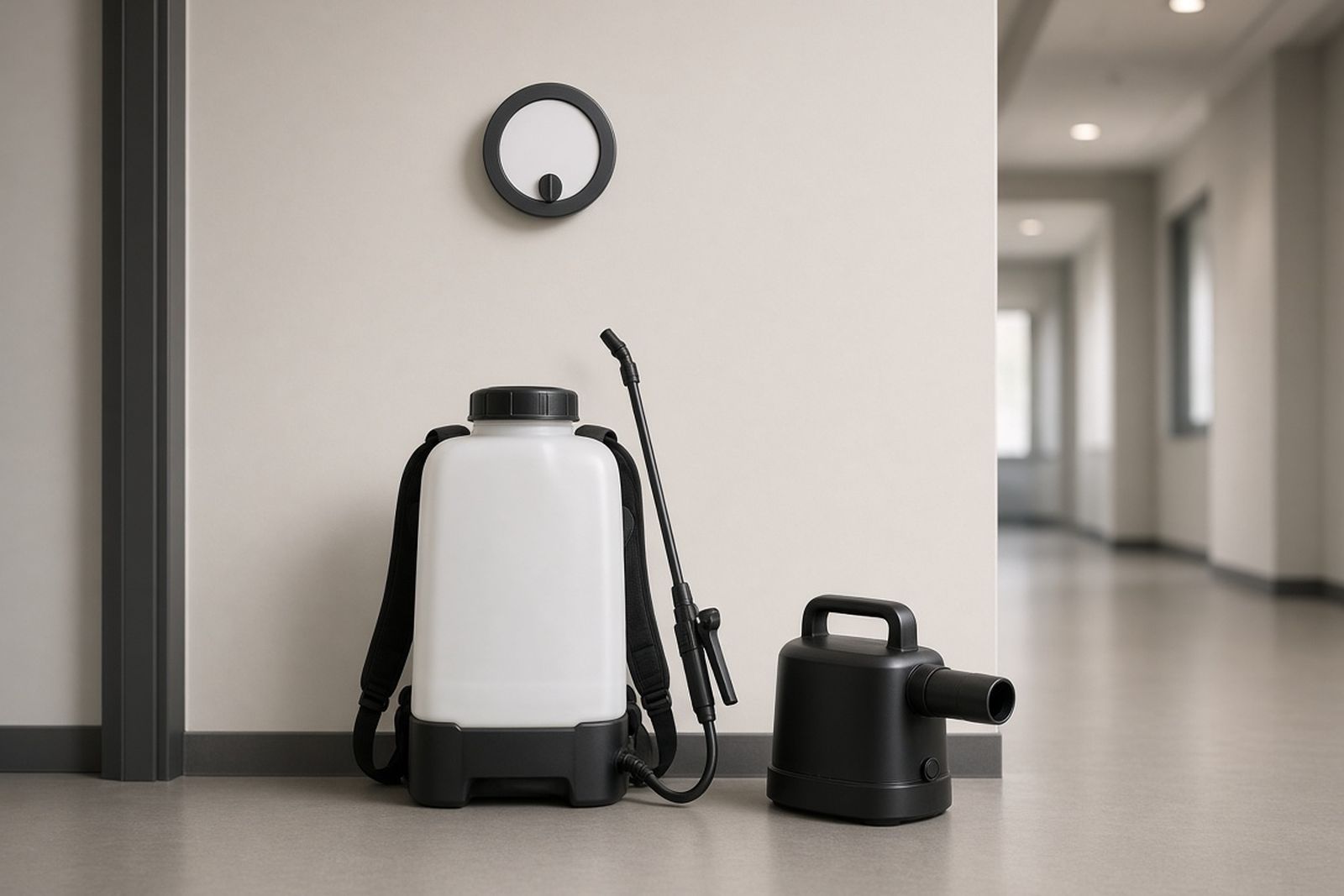
Handheld foggers and electrostatic sprayers are easy to buy or rent, and videos make them look simple. It is natural to wonder whether you can skip the service call and do it yourself. For many situations, the better question is whether you need fogging at all.
In a typical home or small office, thorough cleaning and wiping of high-touch surfaces with a registered disinfectant, used exactly as the label directs, reaches the places that matter most. Fogging adds value mainly in larger or more complex spaces, and then only when the product label allows that application method and the work is done carefully.
This article compares what you can safely do yourself with what professionals bring, and highlights the mistakes that turn a well-meant DIY disinfection into a health problem.
Renting equipment also shifts responsibility onto you. You become the applicator, which means you are the one who must read the label, protect occupants, manage the air handling, and decide when it is safe to go back in. For a quick weekend project, that is more than most people expect to take on.
What does effective DIY disinfection actually involve?
Start with cleaning. Use detergent and water to remove dirt, grease, and visible soil from surfaces. Disinfectants work poorly on dirty surfaces, and cleaning removes many germs on its own.
Next, choose a disinfectant registered for the organisms you are concerned about. Read the label before you begin. It tells you how to dilute the product if needed, which surfaces it is safe for, how long the surface must stay wet, and whether food-contact surfaces or toys need rinsing afterward.
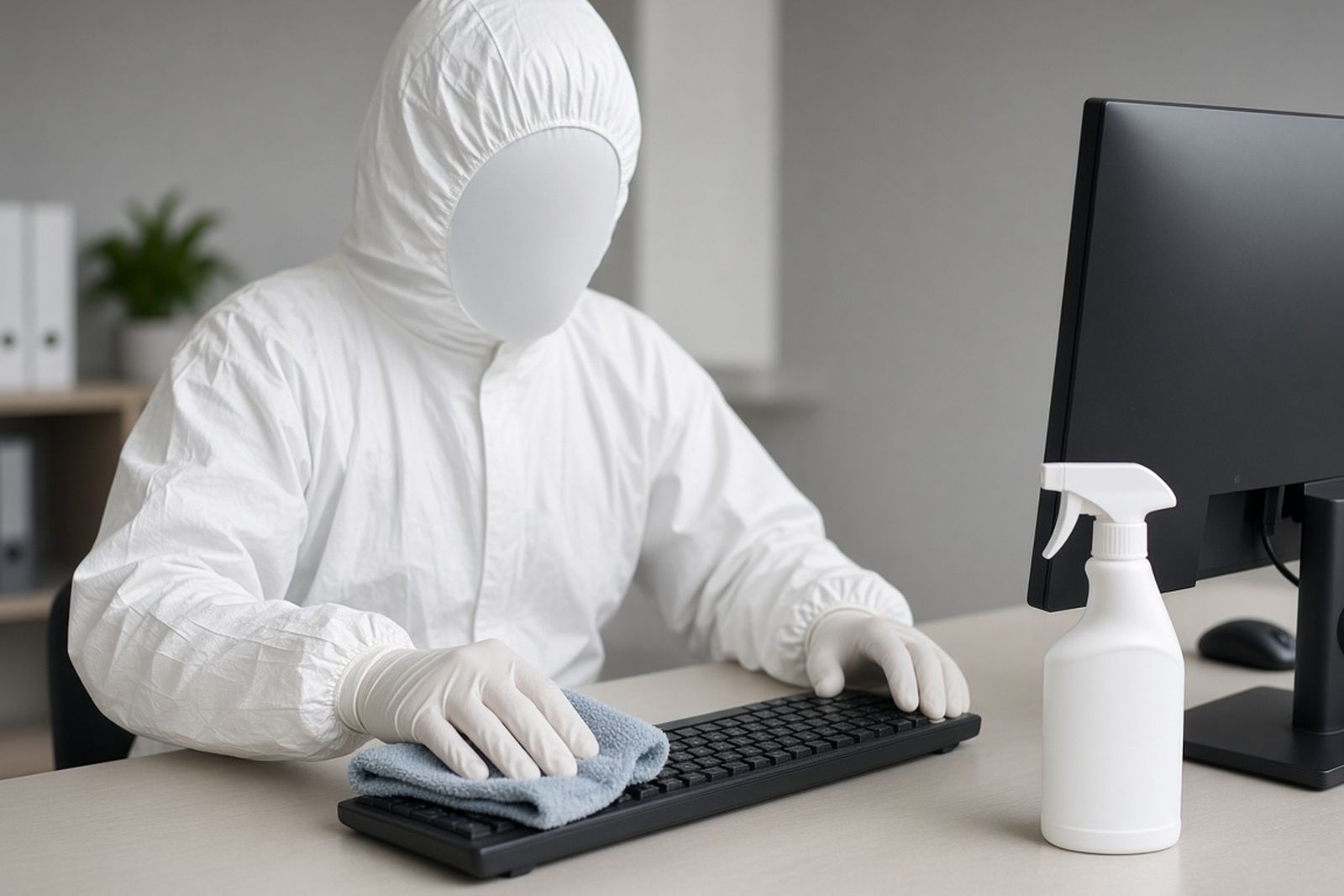
Apply the product with a cloth or trigger spray to high-touch surfaces: door handles, light switches, faucets, toilet handles, remote controls, phones, keyboards, railings, and counters. Keep the surface wet for the full contact time. Ventilate the room while you work and afterward.
Store products safely, out of reach of children, in their original containers.
Soft surfaces need a different approach. Most household disinfectants are labeled for hard, nonporous surfaces only. For couches, curtains, and bedding, laundering on the warmest setting the fabric allows, or steam cleaning, is usually more practical than spraying. If you do use a spray on fabric, choose one whose label specifically covers soft surfaces.
- Clean with detergent first to remove soil.
- Pick a registered disinfectant and read its label.
- Focus on high-touch surfaces rather than the whole room.
- Keep surfaces wet for the full contact time and ventilate.
Four common DIY mistakes
Mixing chemicals is one of the most dangerous. Bleach combined with ammonia-based cleaners, vinegar, or other acids can release toxic gases. Many people do not know this. In a May 2020 CDC survey of 502 U.S. adults, 39 percent reported high-risk practices such as washing food with bleach or applying disinfectant to skin, and only 35 percent knew bleach should not be mixed with vinegar.
Using the wrong method is another. Spraying a disinfectant as a mist when its label does not permit that method may be ineffective and increases the chance of breathing it in. Consumer foggers sold for insects are pesticides, not disinfectants, and should never be used to sanitize surfaces.
Skipping contact time is the third. Spraying and immediately wiping, or letting a thin mist dry in seconds, often means the disinfectant has not had time to act.
The fourth is overuse. More product does not mean more protection. Heavy application in closed rooms raises exposure without improving results.
Why chemical exposure is a real concern
When more people disinfect more often, more people breathe in what they spray, and misting puts the product directly into the air of a closed room.
Respiratory effects can occur even at modest levels. NIOSH has stated that clinically important asthma from airborne disinfectants can occur at exposure concentrations below the occupational limits regulated by OSHA or recommended by NIOSH. That is a strong reason to avoid misting disinfectants in enclosed rooms, especially where people with asthma live or work.
If someone feels dizzy, has trouble breathing, or develops eye or throat irritation during or after disinfecting, get them to fresh air and contact your regional Poison Control center, or call 911 for severe symptoms.
Children and pets are more vulnerable. They are closer to the floor, where heavier mists settle, and they touch surfaces and then their mouths far more often than adults do. Keeping them out of treated rooms until surfaces are dry and the air has cleared is a simple rule that prevents many problems.
When professional sanitization makes sense
Professional service earns its cost in a few situations. The first is scale and complexity: large facilities, open-plan offices, warehouses, gyms, schools, transit vehicles, and places with many surfaces that are hard to reach by hand.
The second is response to a known problem, such as an outbreak of stomach illness in a daycare or a respiratory illness cluster in an office. A professional can plan the sequence of cleaning, disinfection, and re-entry, choose a product labeled for the specific organism, and document the work.
The third is sensitive settings. Healthcare facilities, food service areas, childcare centers, and senior living communities may have additional requirements for products, application methods, and records. Your licensing agency or local health department can tell you what applies to your type of facility.
The fourth is when you need documentation for insurance, a landlord, a regulator, or worried parents and staff.
What professionals bring
Professionals start with a plan. They assess the space, identify high-touch and high-risk areas, choose a product whose label lists the relevant organisms and permits the application method, and schedule the work so the space is empty.
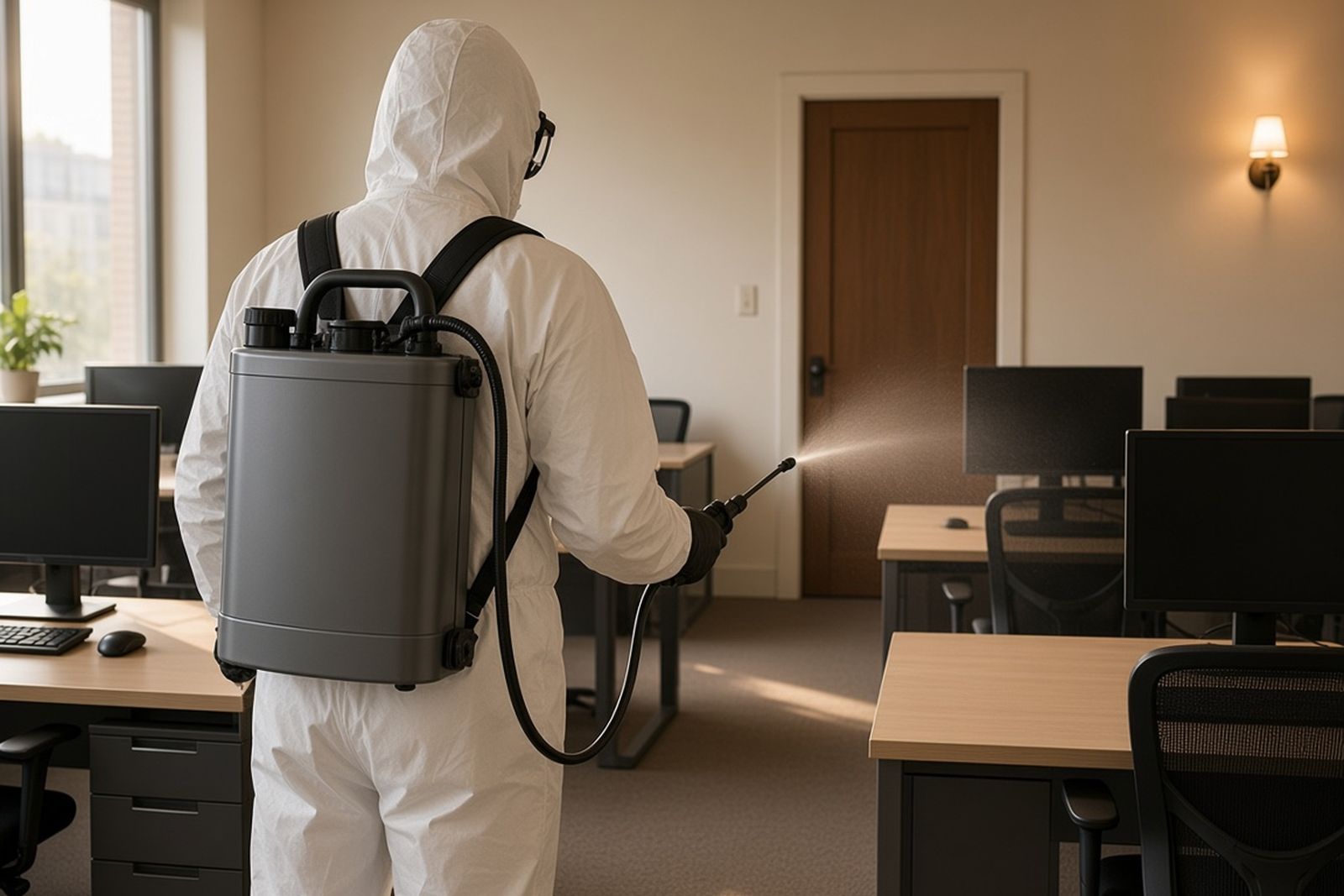
They bring equipment matched to the job, maintained and calibrated, along with trained operators who know how to achieve coverage without overapplying. They wear respiratory protection appropriate to the product and understand how to manage air handling during and after treatment.
They can verify results. Many use ATP meters or fluorescent markers to check surfaces before and after. They provide written re-entry times, a list of treated areas, and the products used.
Perhaps most importantly, a good professional will tell you honestly when fogging is not needed and a focused wipe-down program would serve you better.
They also carry the applicator training and, where required, the licensing to apply disinfectants commercially. That training covers product safety data sheets, spill response, and how to handle a situation where someone enters a treated area unexpectedly.
Household flu vs daycare outbreak
The line usually falls in the same place. If someone in your household has the flu, clean and disinfect bathroom fixtures, door handles, light switches, the kitchen counter, and remote controls each day with a registered disinfectant, following its contact time, and wash bedding on the warmest setting the fabric allows. There is no need for fogging; targeted wiping reaches the surfaces people actually touch.
If you run a daycare and several children and staff develop a stomach illness in the same week, the picture changes. A professional provider would work with your staff to clean toys, tables, cribs, changing stations, and bathrooms first. They would choose a product labeled for the relevant virus and approved for their application method, treat the space after hours with air handling paused, and give you written re-entry times and a record of what was treated. That record would help you answer questions from parents and your licensing agency.
A household illness is a task well suited to careful DIY. A daycare outbreak involves scale, a vulnerable population, and a need for documentation, which is where professional help belongs.
What should you ask before hiring a fogging service?
If you decide to hire a professional, a few questions will help you tell a careful provider from one selling a show.
If a provider cannot answer these clearly, or suggests fogging can replace cleaning, keep looking.
- Which product will you use, and does its label permit this application method?
- Does the label list the organisms we are concerned about?
- Who handles cleaning before disinfection?
- How will you maintain the full contact time?
- What are the re-entry time and ventilation steps?
- How will you verify results, and what records will we receive?
Making the call for your space
Start with the simplest effective option. For most homes and small workplaces, that means cleaning and wiping high-touch surfaces with a registered disinfectant used as directed. Reserve fogging for situations where scale, complexity, a specific outbreak, or documentation needs make it worthwhile, and hire a professional who follows the label.
Whatever you choose, keep people safe while you work. Never mix products, ventilate well, keep children and pets away during application, and wait for surfaces to dry and odors to clear before reoccupying the space.