Short answer
To research waste rules for sanitization and fogging, start with each product label's storage and disposal section, which is legally binding. Then sort the waste: leftover diluted solution, concentrate, empty containers, used wipes and PPE, and spent cartridges. Check local sewer rules before pouring anything down a drain, and household or commercial hazardous waste programs for concentrates. Waste from biohazard cleanups may follow stricter rules.
Where disposal rules for disinfectants come from
Disinfectants are registered pesticides, so disposal starts with the product label. Every registered label includes a storage and disposal section, and like the rest of the label, those directions are legally binding. That section tells you what to do with leftover product and with the empty container.
Beyond the label, other layers apply. Local sewer authorities may restrict what can go down a drain. State and local solid waste rules govern empty containers and used materials. Household hazardous waste programs and commercial hazardous waste rules may apply to concentrates. If the fogging was part of a biohazard cleanup, some waste may be regulated as medical waste.
Rules vary by state and county; verify with the local authority. The steps below help you research each piece.
If you hire a provider, much of this responsibility sits with them, since they bring the products and equipment. Still, the waste is generated at your property, and it is reasonable to know where it goes. Asking a few questions up front avoids finding an unlabeled bucket of tank mix left behind in a janitor's closet.
The waste streams a fogging job produces
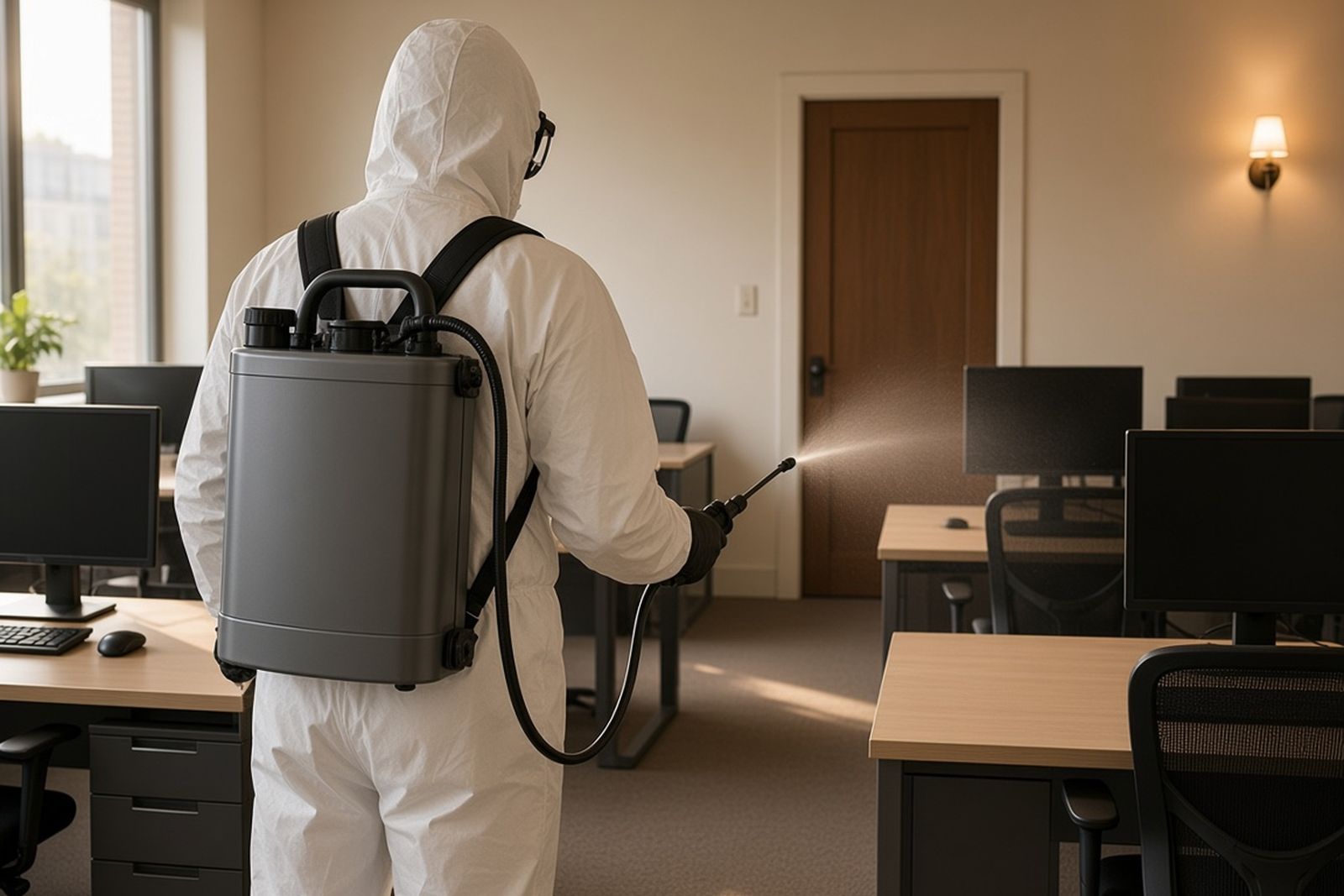
Fogging produces less visible waste than many cleanup jobs, which makes it easy to overlook. Most of the product ends up on surfaces, where it dries or is wiped away. Still, several streams remain at the end of a job.
Sorting these at the end of the job, rather than tossing everything in one bag, makes it easier to follow each label and local rule.
Equipment rinse water is an easy stream to forget. Cleaning a fogger or sprayer at the end of the day produces dilute product in water, and labels and local sewer rules may address it. A provider should know where its rinse water goes rather than emptying it into the nearest sink out of habit.
- Leftover diluted solution in the fogger or sprayer tank.
- Unused concentrate in its original container.
- Empty product containers.
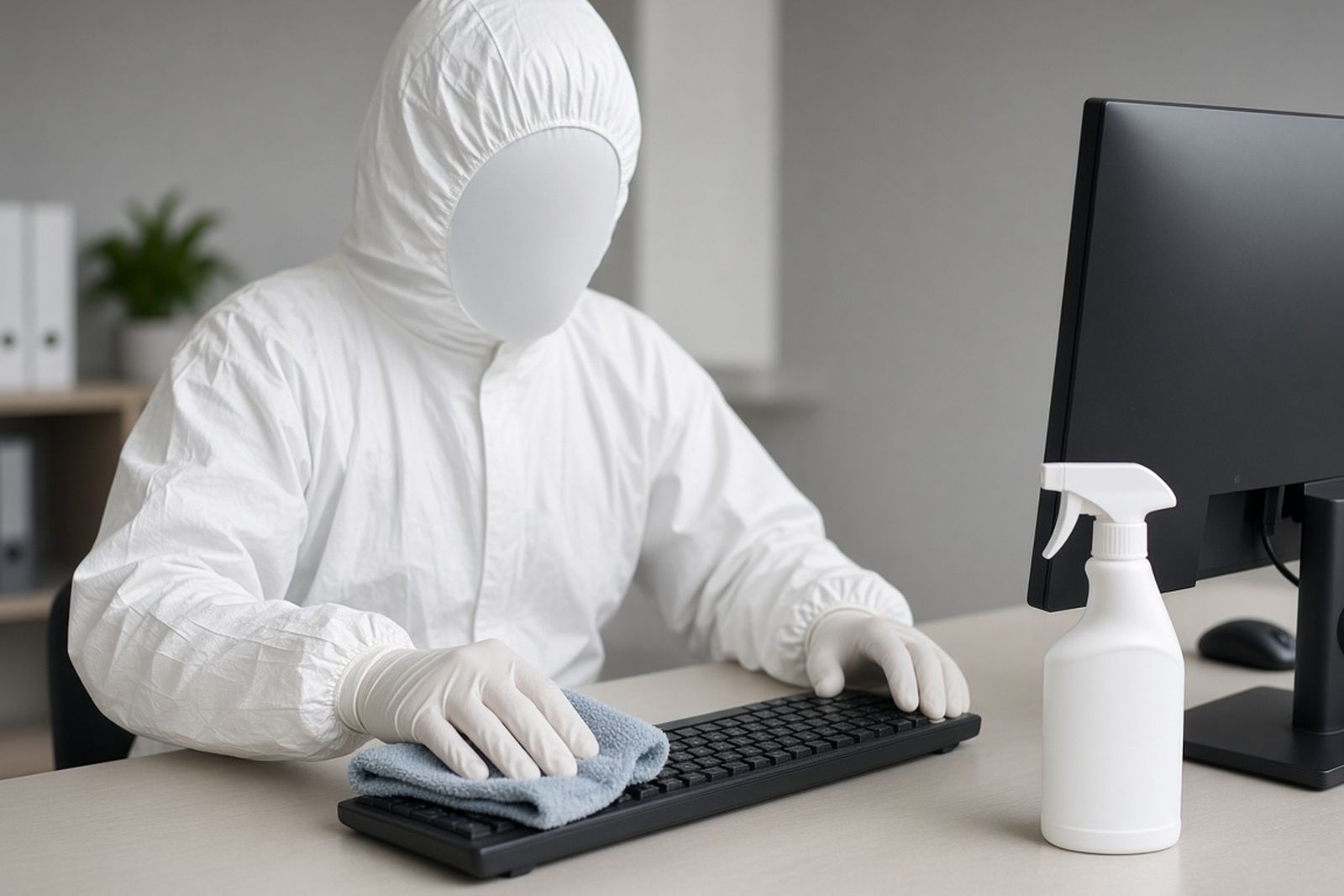
- Wipes, paper towels, and mop heads used for pre-cleaning or rinsing.
- Used PPE, such as gloves, coveralls, and respirator cartridges.
- Waste from any biohazard cleanup performed before fogging.
Leftover tank solution
The best approach is to avoid leftovers in the first place. Mixing only what the job needs, based on the size of the space and the equipment's output, reduces waste. Many labels also say that diluted solutions should be mixed fresh and not stored, since some active ingredients lose strength over time.
If some solution remains, check the label. Some labels permit using remaining solution on other appropriate surfaces. Others give specific disposal instructions. Some allow disposal to a sanitary sewer; others prohibit it.
Never pour leftover disinfectant into a storm drain, a yard, or a body of water. Storm drains usually flow directly to streams and lakes without treatment. Before pouring anything into a sink or floor drain, check the label and local sewer rules, especially for businesses, which may be subject to wastewater discharge limits.
Tank mixes left in equipment overnight create another problem. Some solutions can corrode seals and nozzles, and a forgotten tank is easy to mistake for plain water. Emptying and rinsing equipment at the end of each job, and labeling anything that must be held briefly, prevents both damage and confusion.
Concentrate and empty containers
Unused concentrate should stay in its original, labeled container, stored according to the label and away from incompatible chemicals. If you no longer need it, check whether your local household hazardous waste program accepts it. Businesses should check with their hazardous waste hauler or state environmental agency.
Empty containers often come with specific label instructions. Many labels direct users to rinse the container, sometimes more than once, and to add the rinse water to the application tank. Labels frequently say not to reuse or refill the container. After following those steps, some containers can be recycled or placed in trash, depending on local rules.
Keep incompatible chemicals apart in storage and in waste. Combining bleach with ammonia-based or acidic products, even as waste in the same bucket, can give off toxic gas. Label every waste container so nobody adds the wrong product to it later.
Wipes, PPE, cartridges, and biohazard waste
Wipes and paper towels used for pre-cleaning or rinsing are usually bagged and disposed of as household or commercial trash, provided they were used only with disinfectants and not with biohazardous material. Mop heads may be laundered or discarded depending on the provider's practice.
Used gloves and coveralls are typically bagged with other job waste. Respirator cartridges are replaced on a schedule or when spent and discarded according to the manufacturer's instructions. If any PPE was used during a biohazard cleanup before fogging, it may need to go with the biohazard waste instead.
If you are unsure whether a waste item is considered hazardous, check the safety data sheet, which includes disposal considerations, and ask your local waste authority.
Some providers launder reusable coveralls and mop heads rather than discarding them. That can reduce waste, but it should happen in a way that keeps job laundry separate from household laundry and follows the product and equipment instructions.
Fogging is sometimes the last step after a biohazard cleanup, such as blood, bodily fluids, or sewage. In those cases, the waste from the cleanup itself, such as soaked absorbents and removed materials, may be regulated medical waste under state rules. The fogging step does not change that classification.
Keep those streams separate. The contaminated materials go through a licensed medical waste route if state rules require it, while the fogging leftovers follow the product label and local rules.
Ask your provider to explain how it handles each stream and where each goes. A careful provider will describe the difference without hesitation.
Safe handling for household users
Many businesses and homeowners bought foggers and disinfectants during recent outbreaks. Some of that product is now sitting in closets and storage rooms. Improper use and storage have consequences. U.S. poison centers logged 45,550 cleaner and disinfectant exposure calls in January through March 2020, and inhalation exposures to disinfectants rose 108.8% over the same period in 2019, according to CDC's MMWR in 2020.
If you have leftover products, check whether they are still within their shelf life and whether you will use them. Store them upright in their original containers, away from children and pets, and away from incompatible chemicals.
For products you no longer need, local household hazardous waste programs are usually the right destination. Check the program's accepted-items list before bringing them.
Consider also whether you need a fogger at all. For many homes and small offices, cleaning with detergent followed by a registered disinfectant wipe or trigger spray on high-touch surfaces meets the need with less product, less airborne exposure, and less leftover waste to manage.
Clearing out an inherited supply closet
New property managers often inherit a closet with a fogger, partly used jugs of concentrate, a bucket of premixed solution with no label, and a box of respirator cartridges. The same label-first approach sorts it out.
Start with the jugs. Each label's storage and disposal section says what to do with unused product that cannot be used, often pointing to a hazardous waste program. Your commercial waste hauler or county solid waste office can tell you what collection options exist for small businesses and whether a fee applies.
An unlabeled bucket is harder. If you cannot identify its contents, do not pour it down a drain. Keep it covered, label it as unknown disinfectant solution, and take it to the same hazardous waste route as the concentrates.
Keep the fogger and cartridges only if you expect to use them, and note the cartridges' condition and expiration. Then post a simple rule for the closet: premixed solutions must be labeled with the product name and date, or they do not get stored.
Questions for your provider and local agencies
A few questions help ensure the waste from a fogging job is handled correctly. Put the answers in writing for your records, especially if you run a business.
A provider that handles waste responsibly will usually have ready answers to these questions and can often take care of disposal as part of the job.
Keep a simple record for business sites: the date, the products used, what was left over, and where it went. That note makes the next job easier and gives you answers if a tenant, inspector, or new manager asks how chemical waste is handled.
- What does the product label say about disposing of leftover solution and containers?
- Will any solution go down a drain, and does the local sewer authority allow it?
- Where will unused concentrate go?
- How will you handle waste from any biohazard cleanup performed before fogging?
- Which household or small-business hazardous waste programs serve this area?