Sanitization and Fogging Cost: What Sets the Price
Pay for disinfection you can prove, not for how thick the fog looks.
A sanitizing or fogging quote is really a bundle of smaller jobs. The crew clears clutter and wipes away dirt. They pick a registered product and apply it so surfaces stay wet long enough. They manage the air system and write down what was done. Knowing which of these you pay for helps you compare bids fairly. It also keeps you from paying for a show instead of results.
Get an email reply about sanitization & fogging
Send a short message to the follow-up inbox. A coordinator can reply by email. This form does not send emergency help; call 911 first if anyone is in danger.
What published figures say about cost
- 500+
EPA's List N of surface disinfectants expected to kill SARS-CoV-2 grew from 85 products at launch in March 2020 to more than 500 products by October 2020.
Read with care: The count is a 2020 snapshot and the list has continued to change; inclusion does not mean a product is labeled for fogging or electrostatic use.
Source: EPA (2020)United States; EPA-registered surface disinfectants; March to October 2020
- 2016
EPA's 2016 Emerging Viral Pathogen policy has been activated for SARS-CoV-2 (January 2020), mpox (August 2024), Marburg (October 2024), and hantavirus and Ebola (May 2026).
Read with care: The policy is voluntary and allows only limited off-label claims in technical materials; it does not change the application methods allowed on a label.
Source: EPA (2026)United States; EPA-registered antimicrobial pesticides; activations listed as of 2026
- 180-460 ppm
A WHO expert review notes WHO's 2020 interim guidance strongly recommended against spraying or fogging disinfectants in occupied spaces, and lists U.S.-approved hypochlorous acid at 180 to 460 ppm.
Read with care: The fogging statement is quoted secondhand from WHO's May 2020 interim guidance, which was written for the COVID-19 context.
Source: WHO (2021)Global; WHO Essential Medicines expert review citing WHO COVID-19 surface disinfection guidance; 2021
- $16,550
OSHA's maximum penalties are $16,550 per serious violation and $165,514 per willful or repeated violation.
Read with care: Amounts adjust annually for inflation.
Source: OSHA (2024)United States federal OSHA, 2024 inflation-adjusted amounts
- 34,625
Federal OSHA conducted 34,625 inspections in fiscal 2024, split between 17,455 unprogrammed and 17,170 programmed inspections.
Read with care: Excludes inspections by the 22 state plans covering private employers.
Source: OSHA (2024)United States federal OSHA, FY2024
- $4,000
Biohazard cleanup nationally averages about $4,000, with a typical range of $3,000 to $5,000 and extremes from $1,500 to $25,000, per Fixr's January 2025 guide.
Read with care: Fixr figures are editorial cost estimates compiled from contractor and industry data, not a statistical survey of completed jobs; local prices vary widely.
Source: Fixr (2025)United States, residential biohazard cleanup, estimates as of January 2025
These figures are public research and agency data, not this network's own job records. Keep each number with its population, year and limits; none of them predicts cost, timing or outcome at a specific property.
What are you actually paying for in a fogging job?
Most of the cost is labor that happens before any machine turns on. Workers walk the space and map the surfaces people touch most. These include door handles, railings, counters, and shared equipment. Then they wipe off visible dirt by hand. Disinfectants work poorly on dirty surfaces. So a good crew treats cleaning first as the base of the job. It is not an optional add-on you can skip to save money.
After cleaning comes the product. Electrostatic sprayers, thermal foggers, and sometimes UV-C light devices each have costs. There is the equipment, upkeep, and the time to run them. The product matters too. Registered disinfectants differ in price and in which surfaces they are safe on. They also differ in how long the label says they must stay wet. A crew that must cover electronics, food surfaces, or stock will spend more time protecting those areas. Ask each bidder which method they plan for each room. Mixing methods changes both the crew size and the time on site.
The last layer is the paperwork. You should get a record of the product name and registration number and the rooms treated. It should show how long surfaces stayed wet and when people can safely go back in. That paperwork takes time. It is often what a risk manager, school board, or property owner needs to show later. Treat a quote without a sample log as incomplete. Ask to see one before you commit.
- Walkthrough and mapping of high-touch surfaces
- Cleaning by hand and clearing clutter first
- A registered product and the equipment to apply it
- Protecting electronics, food surfaces, and stock
- Managing the air system and timing when people return
- A written service log for your files
Which factors push a sanitization quote higher or lower?
Size is the obvious factor, but layout often matters more. An open warehouse floor is quicker to treat than a clinic with dozens of small exam rooms, lockers, and cabinets. Lots of furniture, shelves, and clutter slow down the cleaning. They also create hidden spots that sprays and UV light don't reach well. So crews plan extra hands-on time for them.
The germ you're targeting and the reason for the visit also shape the price. A routine prevention program for a gym follows a set pattern. A response to a group of people getting sick may need a product rated for that germ. It may also need more careful wiping and faster scheduling. After-hours work, weekend visits, and short notice often cost more in labor. Some germs are hard to kill. A product rated for one can limit choices and raise supply costs.
Rules about who can be in the space also affect cost. The product label or building policy may require the space to be empty during and after treatment. Then the crew must plan closures, secure the area, and manage airflow. That planning is real work. It tends to be heavier in schools, care homes, and shared office buildings. Buildings with shared air systems, alarms, or sensitive tenants may need extra planning before anyone arrives with equipment.

How should you read an itemized fogging quote?
First, check that cleaning and disinfecting are listed as separate steps. Ask questions about a quote that names only fogging, with no wiping or dirt removal. According to EPA guidance from 2026, the agency does not recommend applying disinfectants by fogging, fumigation, wide-area or electrostatic spraying unless the product label specifically includes directions for that method. Ask the vendor to name the product. Ask them to confirm its label allows the method they plan to use.
Next, look for the square footage or room list and the type of equipment. Look for any lines for protecting sensitive items. Compare how each bidder handles shutting off and restarting the air system. See whether they put a return time in writing. When two quotes differ a lot, the gap usually comes down to cleaning hours. Or one bidder may have skipped the paperwork entirely.
What hidden costs can show up after the service?
Residue is the most common surprise. Some disinfectants leave a film on screens, glass, stainless steel, or products for sale. Cleaning that film may take a return visit or your own staff's time. Ask ahead of time whether residue is likely on the surfaces in your building. Ask who handles it if it shows up. A short talk before work starts costs far less than cleaning film off a showroom full of products.
Closure time is another cost that never shows up on the bill. If the space must stay empty while the product goes on and the air clears, you may lose a shift of sales. You may need to move classes or pay staff to wait. Damage to finishes that don't mix with the product can add up. So can set-off smoke alarms and repeat visits because the first crew skipped cleaning. A clear scope lowers these risks, though it can't remove them all.
Why might a cheaper quote cost you more?
Low bids often get their price by leaving out the slowest parts of the job. A crew that fogs a room without first wiping high-touch surfaces can finish fast. The space may even smell clean afterward. But scent and mist tell you nothing about whether surfaces stayed wet with the right product for as long as the label says. A price that looks good on paper can hide the very steps that make disinfection work.
If the work must be redone, the savings are gone. The same is true if you can't show records of what was used and when. For places that answer to parents, patients, tenants, or inspectors, a thin service log can cause its own problems. Paying for a well-documented visit that cleans and then disinfects usually costs less over time. Ask each bidder what they leave out. Weigh that answer along with the price.
Who usually pays for sanitization and fogging?
In most cases, the business or property owner pays directly. Routine and preventive disinfecting is treated as a normal cost of running the place. Under a lease, landlords may pay for shared areas while tenants handle their own suites. Schools and public agencies often buy these services through building budgets or service contracts. These set a regular schedule and an option for extra help during an outbreak.
Sometimes disinfecting follows a specific loss that an insurer accepts, like a sewage backup or a biohazard event. Then the cost may be rolled into a larger claim as part of the cleanup. Employers may also have some duty to disinfect when workers are exposed on the job. Rules vary by state and county; verify with the local authority. Review your lease or contract before you assume who is responsible.
What does a realistic example look like?
Picture a small daycare that learns several children have a stomach illness. The director calls two vendors. The first offers a quick evening fog of the whole building. The second plans a walkthrough and hand-cleaning of toys, tables, and bathroom fixtures. It would use a product whose label covers the likely germ. The building would stay closed so the product can stay wet and the air can clear. The director would get a written log with the product's registration number.
The second quote is higher because it has more labor hours and paperwork. The director picks it and keeps the log for her licensing file. She books a follow-up visit only for the rooms where most of the illness was. Instead of paying for the amount of fog, the daycare paid for a plan that matched the real risk. It also got records it could show parents and inspectors.
Estimate your range
Sanitization & Fogging cost range estimator
Educational only. Real pricing needs an on-site assessment and a written scope. Insurance coverage is decided by your carrier, not by this tool.
Relative cost level: Mid range
No published national reference range met our sourcing standard for this category, so the tool shows a relative level instead of dollars. Ask two or three providers for written, itemized quotes.
Cost level: Mid range.
None of the big cost multipliers are selected. Minimum service charges, travel and waste fees still apply.
Ask every quote to itemize labor, containment, product, waste disposal, verification sampling, and any rebuild, and to state what is excluded.
Open the full tool page for a worked example and more answers.
Costs questions about sanitization & fogging
Is fogging cheaper than regular cleaning and disinfection?
Not always. Fogging can look fast. But a responsible visit still includes cleaning dirty and high-touch surfaces by hand first, which is where most labor time goes. The fog or electrostatic spray adds equipment and product costs on top of that. A quote may seem cheap because it skips wiping. If so, you may pay again later when the service must be repeated. You may also need records that were never made.
Why do some vendors charge more for electrostatic spraying?
Electrostatic sprayers cost more to buy and maintain than simple pump sprayers. Workers need training to use them right. The method can cover curved or complex surfaces better. But only when the product label allows it. Ask the vendor which product they use and whether its label allows electrostatic spraying. Ask how they make sure surfaces stay wet as long as the label says.
Should the quote include a re-entry time?
Yes. A professional quote or service agreement should say when people can safely go back into the treated space. That time depends on the product label and how well the air clears. It affects your staffing, schedule, and income, so it is part of the true cost of the job. If a vendor can't tell you when the space will be ready, ask why before you sign anything or book the visit.
Are recurring sanitization programs priced differently from one-time visits?
Often they are. A regular program lets the vendor set standard routes, products, and staffing. That can lower the cost of each visit compared with a single emergency call. But a contract may have minimum terms or higher prices during an outbreak. Read the terms for canceling, changing the schedule, and what triggers an extra charge. Make sure every visit still includes cleaning before disinfecting.
Can I ask for proof of what product was used?
You should. A reliable vendor will list the product name and its registration number, the areas treated, and the date and time it was applied. Keep those records with your building files. They help if someone later asks what was done. They also let you check the product label yourself. You can see which surfaces it's safe on, which germs it targets, and which methods it allows.
What if the fogging leaves residue on my equipment?
Residue can show up on screens, glass, metal, and packaged goods, depending on the product and method. Before the job, ask which surfaces may be affected. Ask whether the vendor will cover or move sensitive items. If residue shows up afterward, contact the vendor right away and take photos. Ask how they will fix it. Agreeing in writing on who is responsible before work starts can prevent a dispute later.
Will insurance reimburse routine sanitization costs?
Routine or preventive disinfecting is usually seen as a normal cost of running the place, not a covered loss. Coverage is more likely to come up when disinfecting is part of cleaning up after a specific event your policy accepts. An example is a sudden water or sewage problem. Policies differ a lot. Review your own policy wording and ask your agent or broker instead of assuming you'll be paid back.
What other visitors said
Every count is a real visitor vote; nothing is seeded or padded. One vote per poll per device, and you can change your answer.
A vendor offers to fog your classrooms at lunch while students are outside. What do you say?
How do you see repeat fogging contracts today?
More on sanitization & fogging
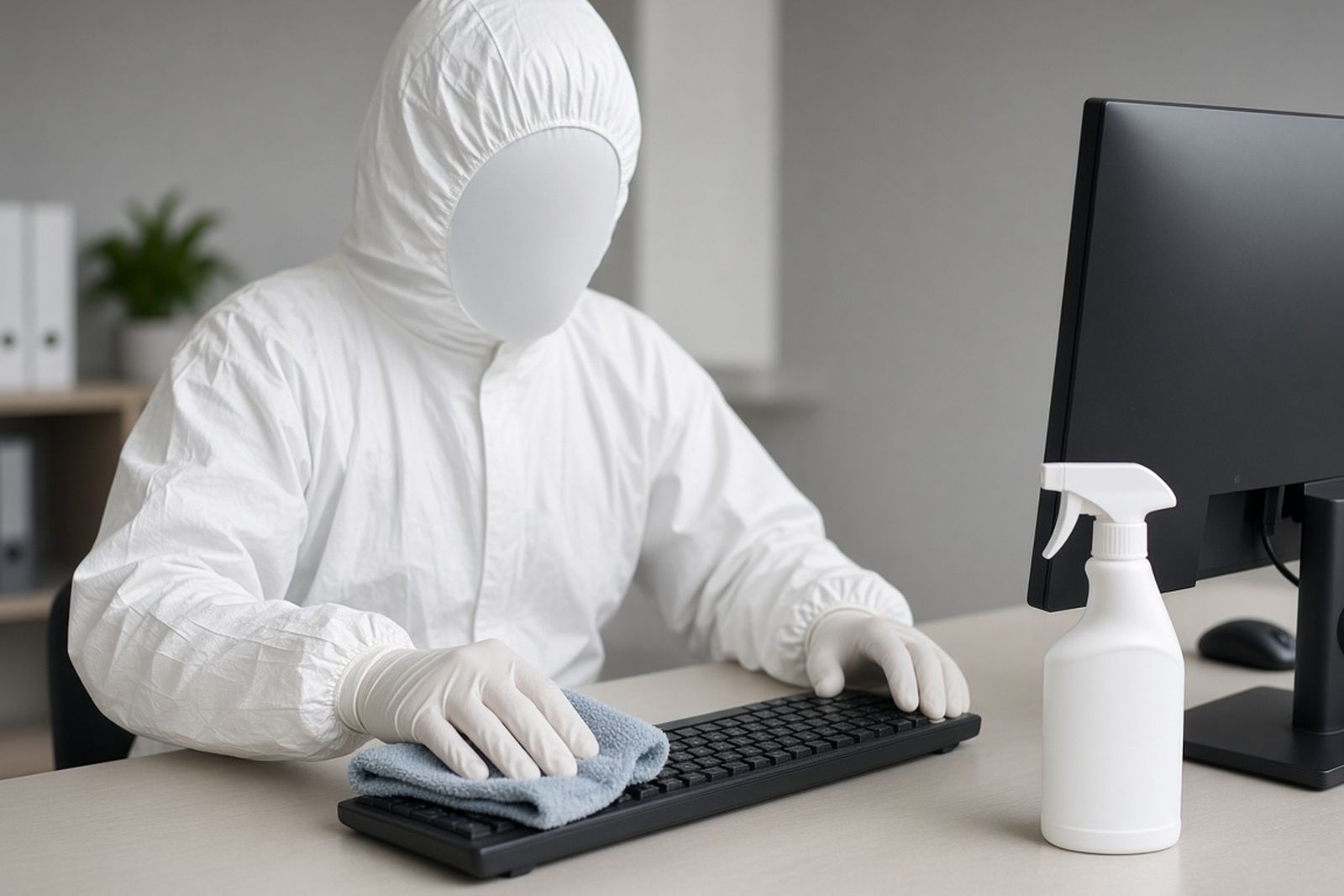
Sanitization & Fogging services
See how electrostatic spray, heat fogging, UV-C, and scheduled programs fit into a clean-first, then-disinfect plan for your building or fleet.
Insurance and payment
Which policies may respond, how to document a claim, and what to do if coverage is denied.
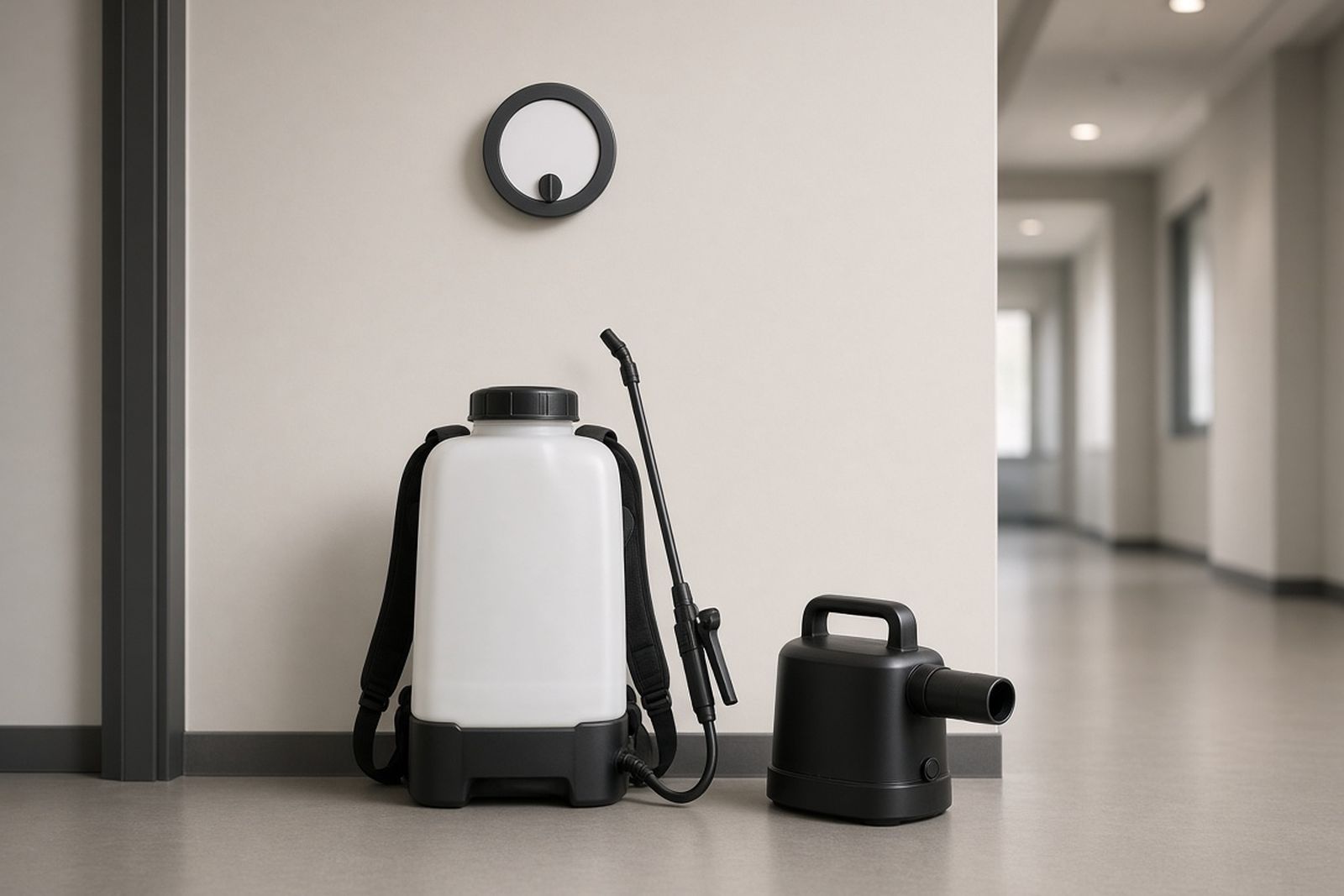
Planning tools
Estimate costs, vet companies, sort waste, and choose between wiping and fogging with tools built for offices, gyms, schools, and fleets.
Community polls
See how other facility managers weigh fogging contracts, air system control, label checks, and re-entry timing against cost and daily disruption.
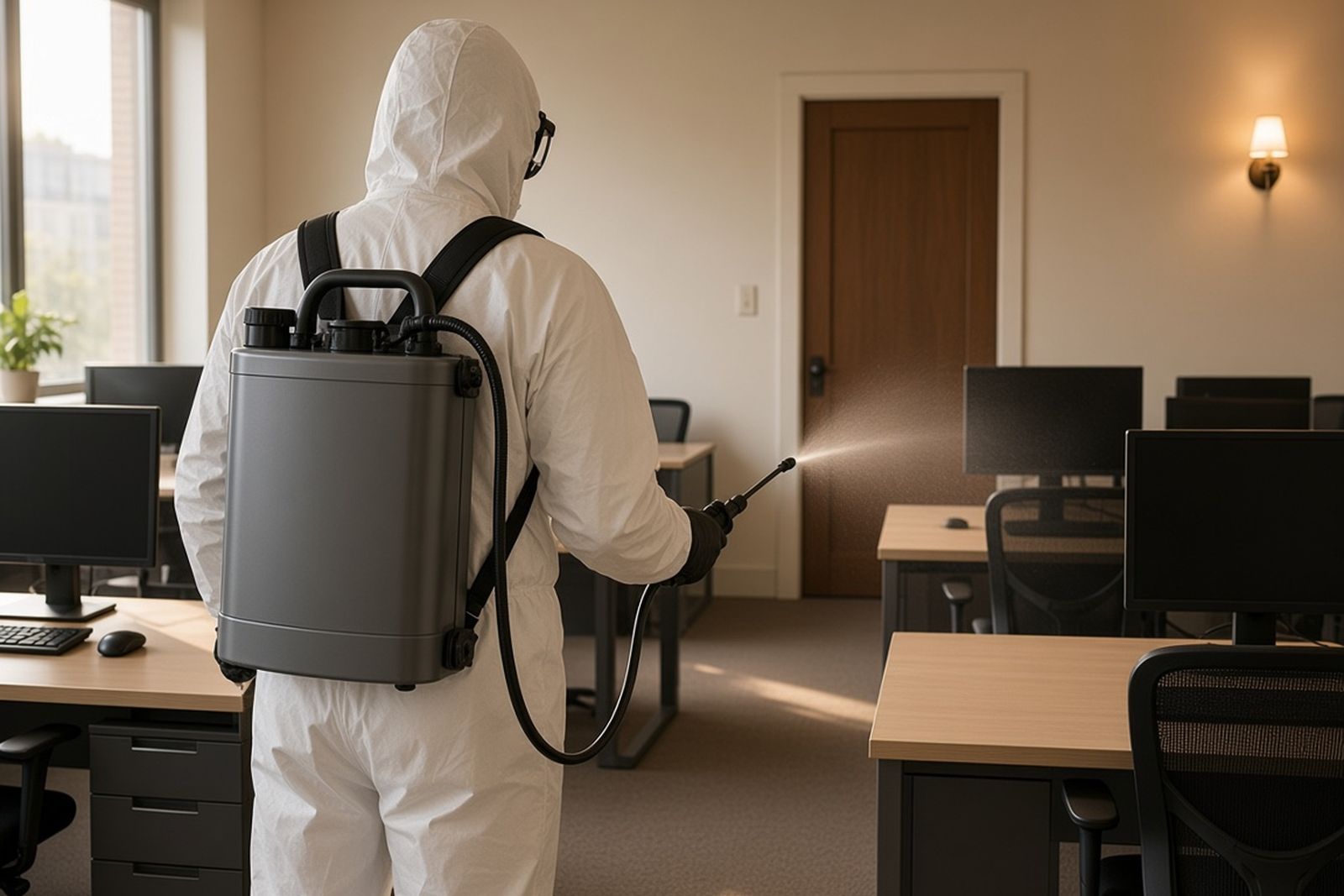
Knowledge quiz
Check whether you can spot a label mismatch, fogging with people present, or a skipped cleaning step. Then review the study guide.
Articles and resources
Read explainers on spray methods, product labels, re-entry timing, ozone risks, and why routine wiping still matters in every building.