Sanitization & Fogging location coverage standards
Why a city name alone is not local expertise.
We have not published city pages for this specialty yet. Pages stay unpublished until they contain researched local context and useful decision support. Use the form to ask about your area.
Get an email reply about sanitization & fogging
Send a short message to the follow-up inbox. A coordinator can reply by email. This form does not send emergency help; call 911 first if anyone is in danger.
Research before reach
A location is published only when its page includes meaningful local property, access, climate, jurisdiction, or documentation considerations.
Everything for one city on one page
Planning, safety, insurance, provider questions, sources, and documentation for each city sit together on a single guide.
No invented local offices
A city guide does not claim a storefront, parked crew, guaranteed arrival, job count, rating, or credential that has not been independently verified.
Use the national service guidance
The service and article libraries explain hazard controls, documentation, insurance questions, and provider verification without pretending those requirements are identical in every jurisdiction.
Not sure where to start?
Send a short message about your situation. Your request is sent to the follow-up inbox. A coordinator can reply by email.
Your request is sent to the follow-up inbox. A coordinator can reply by email.
If anyone is hurt or in danger, call 911 first.
Why location matters for sanitization & fogging
Where your building sits shapes a fogging or electrostatic job more than most sales sheets admit. Disinfectants are regulated as pesticides under federal law. Yet states run their own product registration. Some states expect anyone who applies germ-killing products for pay to hold a business applicator license, while others exempt that work. The type of building changes things again. A childcare room, a school cafeteria, a gym locker area, and a bus garage each have different rules about food surfaces, licenses, and who can be present. Climate plays a quieter role. In humid areas, mist settles slowly and surfaces stay damp longer. That can leave a sticky film on keyboards and weight benches. In hot, dry areas, droplets may dry up before the surface stays wet as long as the label says. And an air unit that cannot stay off for long in summer heat makes any plan built on shutting it down harder.
Several offices can have a say in how a disinfectant is applied at your address. None of them is a national fogging authority. Your state pesticide agency is often part of the department of agriculture. It oversees product registration and any applicator licenses. Staff there can tell you whether germ-killing spray work falls under that program. Call the local health department when food areas, pools, or shared kitchens are involved. State childcare licensing staff may have their own rules about products used around babies and toddlers. The local fire marshal or your alarm company cares about heat foggers. Heat and thick mist can set off smoke detectors. Your building engineer or air system contractor controls the vents and air units. For the crew itself, OSHA rules on chemical hazard warnings cover the chemicals brought onto your property.
A company's claim that its service is certified or hospital grade means little until you tie it to something you can check. Ask for the EPA registration number of every product it plans to use. Then read the label yourself. Confirm that the proposed method, such as electrostatic spraying or fogging, actually appears in the directions for use. Search your state's pesticide product database, or call the agency, to confirm the product may be sold and used where you are. Ask whether your state requires an applicator license for germ-killing spray work. If so, ask for the license number and the name of the person who holds it. Ask for a sample service log with client details removed. Look for the product batch, the areas treated, how long surfaces stayed wet, and the reopening time. Rules vary by state and county, so confirm with the local office rather than a vendor brochure.

What to verify locally
- Does your state treat paid disinfectant spraying as pesticide work that needs a license? If so, get the license number of the person who will spray.
- Get the EPA registration number of each product. Check that its label names the electrostatic or fogging method the company plans to use in your space.
- That each product is registered for sale and use in your state, since a federal registration number alone does not settle its status locally.
- Whether the local health department or childcare licensing office has rules for food surfaces, toys, cribs, or nap mats in your type of building.
- Who will turn off or watch the fire alarm during heat fogging? Ask if your alarm company or fire marshal wants notice before mist is made indoors.
- Ask how the company will work with your building engineer to shut off and restart the air units. This matters most where local heat or cold limits how long they can stay off.
National figures for context
These are national or research figures, not data for any one city.
- 500+
EPA's List N of surface disinfectants expected to kill SARS-CoV-2 grew from 85 products at launch in March 2020 to more than 500 products by October 2020.
Read with care: The count is a 2020 snapshot and the list has continued to change; inclusion does not mean a product is labeled for fogging or electrostatic use.
Source: EPA (2020)United States; EPA-registered surface disinfectants; March to October 2020
- 2016
EPA's 2016 Emerging Viral Pathogen policy has been activated for SARS-CoV-2 (January 2020), mpox (August 2024), Marburg (October 2024), and hantavirus and Ebola (May 2026).
Read with care: The policy is voluntary and allows only limited off-label claims in technical materials; it does not change the application methods allowed on a label.
Source: EPA (2026)United States; EPA-registered antimicrobial pesticides; activations listed as of 2026
- 180-460 ppm
A WHO expert review notes WHO's 2020 interim guidance strongly recommended against spraying or fogging disinfectants in occupied spaces, and lists U.S.-approved hypochlorous acid at 180 to 460 ppm.
Read with care: The fogging statement is quoted secondhand from WHO's May 2020 interim guidance, which was written for the COVID-19 context.
Source: WHO (2021)Global; WHO Essential Medicines expert review citing WHO COVID-19 surface disinfection guidance; 2021
These figures are public research and agency data, not this network's own job records. Keep each number with its population, year and limits; none of them predicts cost, timing or outcome at a specific property.
Local questions about sanitization & fogging
Does my state require a license to fog or spray disinfectant for hire?
It depends on where you are. Disinfectants are regulated as pesticides. So some states include paid disinfectant spraying in their pesticide applicator licenses. Others exempt it or cover only certain settings. The clearest answer comes from your state pesticide agency, which is often part of the department of agriculture. Ask whether a license type applies to disinfecting work in your kind of building. Then ask the company for the matching license number and check it with the agency's lookup tool.
Can a provider treat a childcare center the same way it treats an office?
Not safely by default. Childcare rooms hold toys, cribs, and surfaces that young children put in their mouths. Many product labels require a rinse with drinking water on food surfaces or mouthed items after the wet time. State childcare licensing rules may add their own rules about approved products and timing around when children are present. Ask the company how its plan changes for children's spaces. Confirm those rules with your licensing contact rather than relying on a general business routine.
Why would humidity or heat in my region change a fogging plan?
Disinfectants only work when a surface stays wet as long as the label says. In very dry or hot air, fine droplets can dry up before that time is up. So a company may need to change how it sprays or rely more on wiping. In muggy weather, mist lingers and surfaces dry slowly. That can leave a film on electronics or slick spots on gym floors. A company that knows your climate should explain how it checks wetness, rather than assuming one spray pass is enough.
Should I notify my alarm company before a thermal fogging visit?
Usually, yes. Heat foggers make a thick, warm mist that can set off smoke detectors. An unplanned alarm may bring out the fire department or raise sprinkler concerns in some systems. Talk with your alarm company and building owner about how detectors will be handled and who will turn them back on afterward. Ask whether your fire marshal expects notice ahead of time. Get the agreed plan in writing, so detectors are never left off once the crew leaves.
Is an EPA-registered disinfectant automatically allowed in my state?
Not automatically. Federal registration sets the label and the approved claims. But states usually require products to be registered for sale and use within their borders too. A product can hold a valid EPA number and still be missing from a state's list. Search your state pesticide agency's product database using the EPA registration number, or call the agency and ask. That quick check keeps you from approving a product that should not be used at your address.
Does a shared office building raise extra questions for electrostatic spraying?
It does. Shared hallways, elevators, and restrooms may belong to the landlord. Your lease may limit chemical use outside your suite. Neighboring tenants on the same air system could notice odor or residue if the vents are not managed. Ask property management who approves work in shared areas and whether other tenants must be told. Ask how the company will keep spray inside the rooms you hired it for. Settle those points before the visit is booked.
Where can I report a provider that used a product in a way its label does not allow?
Complaints about misused disinfectants usually go to your state pesticide agency. Using a registered product against its label directions is treated as breaking the label rules. Gather the product name, EPA registration number, date, areas treated, and any photos or service logs you got. If workers or building users had symptoms, note what happened and when. If someone is sick now, get medical care or call Poison Control before you file anything.
More on sanitization & fogging
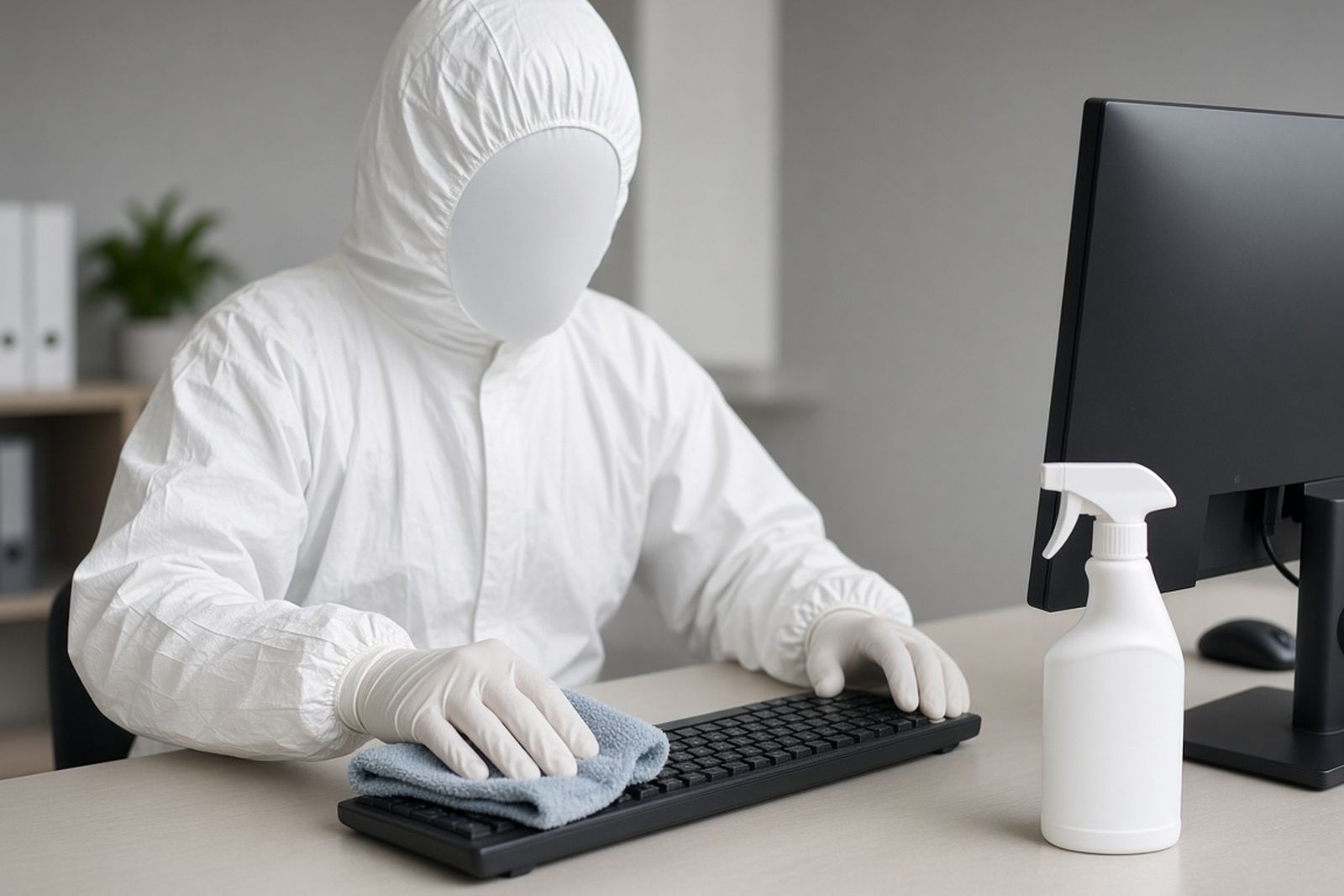
Sanitization & Fogging services
See how electrostatic spray, heat fogging, UV-C, and scheduled programs fit into a clean-first, then-disinfect plan for your building or fleet.
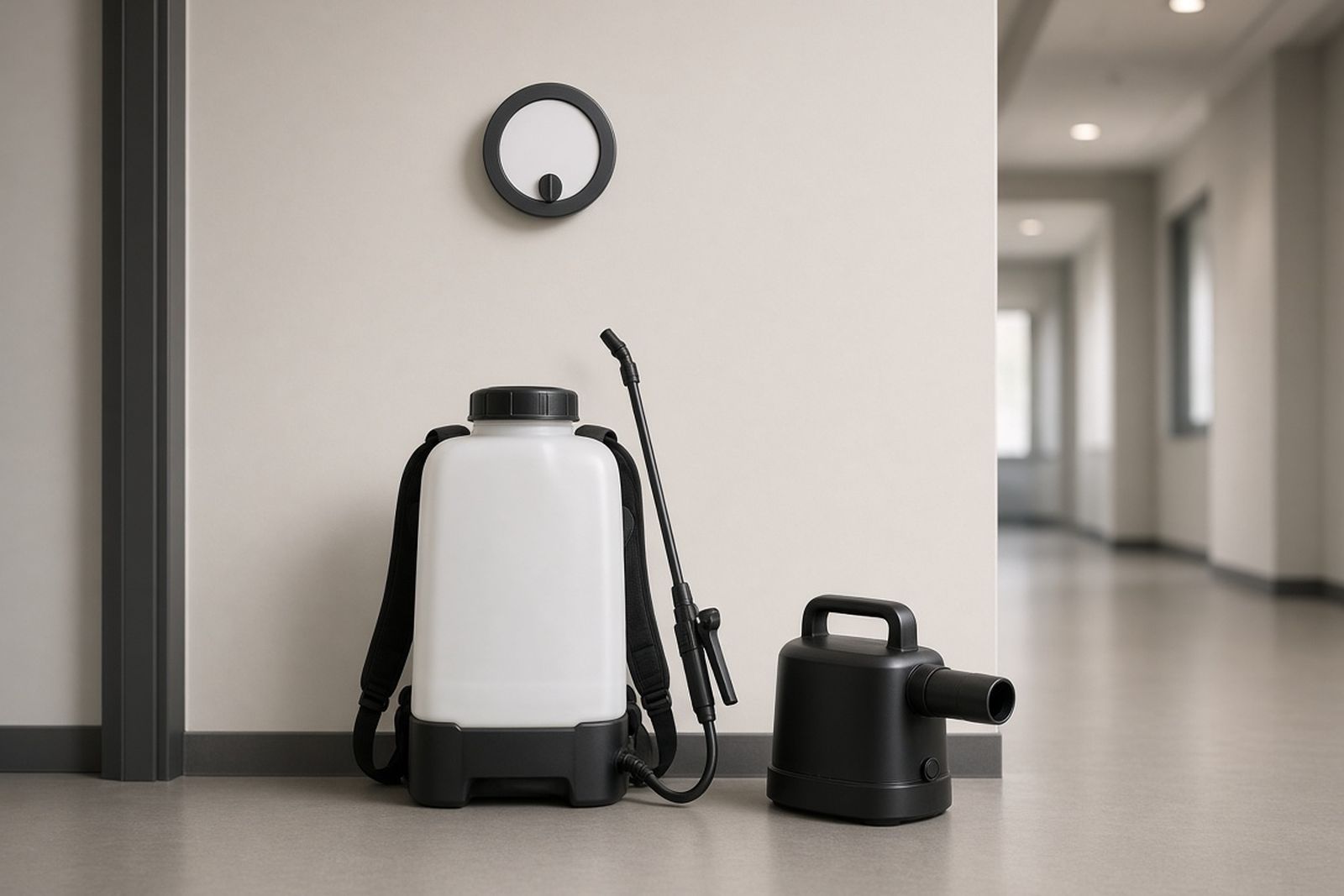
Costs explained
What drives the price, published cost ranges, and how to read a written quote line by line.
Insurance and payment
Which policies may respond, how to document a claim, and what to do if coverage is denied.
Planning tools
Estimate costs, vet companies, sort waste, and choose between wiping and fogging with tools built for offices, gyms, schools, and fleets.
Community polls
See how other facility managers weigh fogging contracts, air system control, label checks, and re-entry timing against cost and daily disruption.
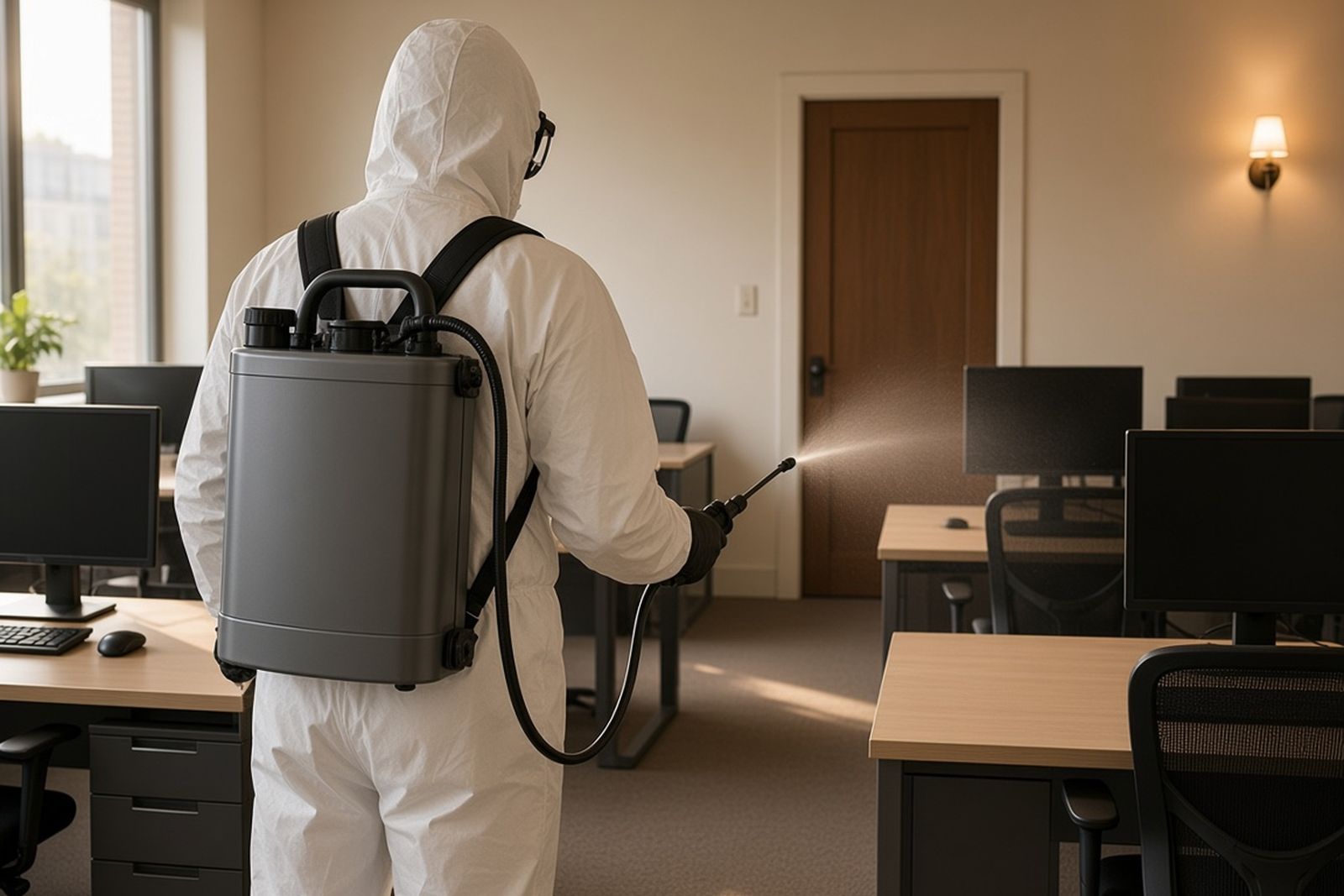
Knowledge quiz
Check whether you can spot a label mismatch, fogging with people present, or a skipped cleaning step. Then review the study guide.
Articles and resources
Read explainers on spray methods, product labels, re-entry timing, ozone risks, and why routine wiping still matters in every building.