Sanitization & Fogging: Process & What to Expect
Property-specific walkthroughs for sanitization & fogging: assessment, scope approval, hazard controls, material decisions, documentation, verification, and restoration handoff. Not every phase applies to every incident.
Posts in this category follow a disinfecting visit from the walkthrough to the moment you unlock the doors again. They show how a worker maps the surfaces people touch most. They explain why desks and counters get wiped before any sprayer is turned on. They describe what an electrostatic wand or heat fogger looks and sounds like in use. They also cover how long rooms usually sit empty afterward. Other articles explain how visit length depends on clutter, number of rooms, and how long the product must stay wet. They also cover what to do in the hours before a crew arrives after an illness outbreak is reported.
Get an email reply about sanitization & fogging
Send a short message to the follow-up inbox. A coordinator can reply by email. This form does not send emergency help; call 911 first if anyone is in danger.
Knowing the order of work helps you plan around it. You may need to book a visit for a weekend so classrooms can stay closed until it is safe to return. You may need someone to turn the air system back on, or you may need to tell staff to take laptops home. Once you know why cleaning comes first and why the log records wet time, you can check the finished work against the plan. You will not have to judge it by how strongly the room smells afterward. It also lets you set expectations with the people who use the building. A teacher or gym member who finds a closed door will know why, and when it will reopen.
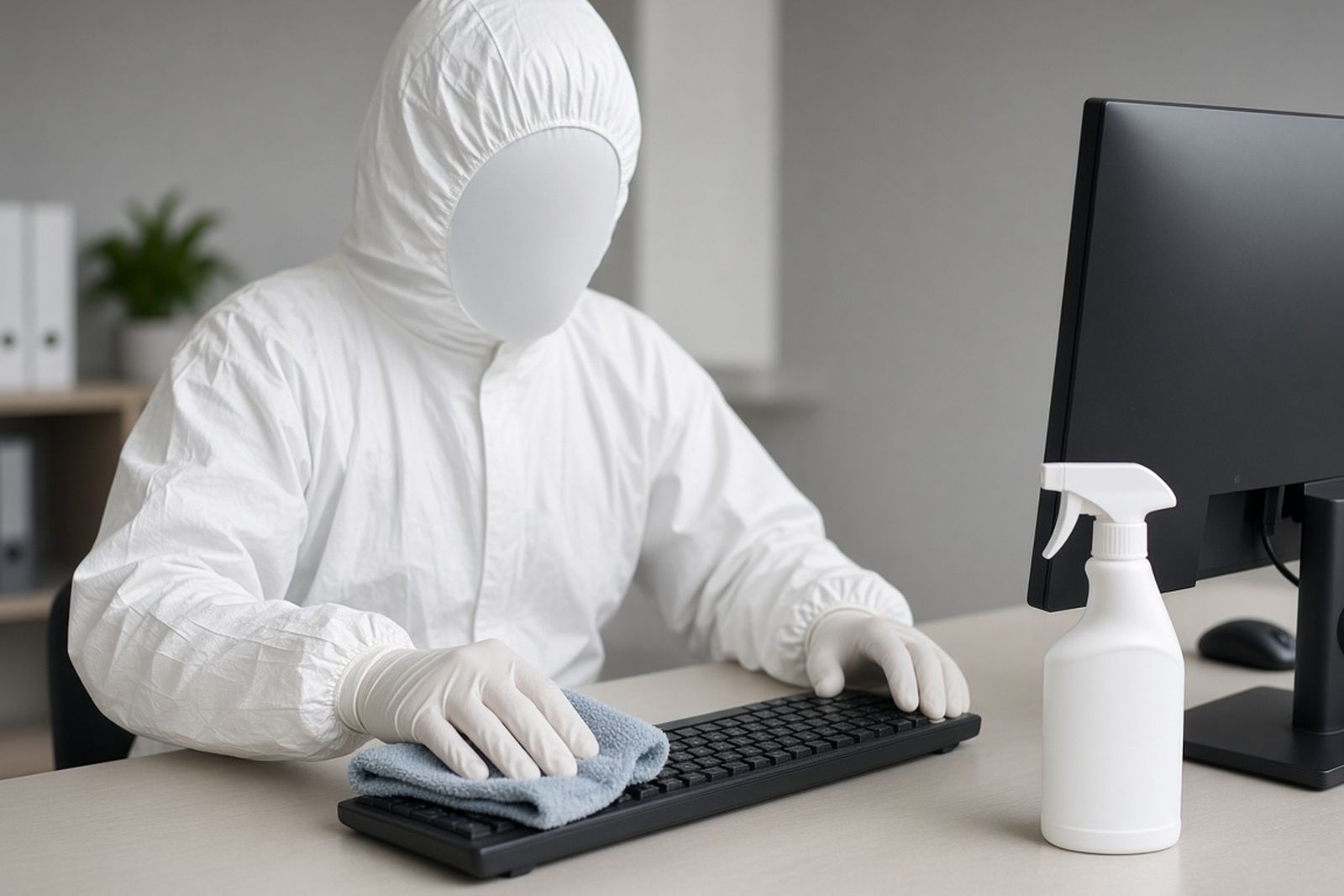
What to Expect During Professional Sanitization & Fogging
Before, during, and after a fogging or electrostatic visit: pre-cleaning, covering electronics, application, contact time, ventilation, and safe re-entry.
A professional sanitization or fogging visit usually includes a site review, a check of the product label, pre-cleaning of soiled surfaces, protection of electronics and food areas, application by the method the label allows, a required contact time, ventilation, and a re-entry check. Good providers also verify results with ATP swabs or similar tools and leave written records. Expect the space to be closed to people during the work.
How Long Does Sanitization & Fogging Take?
The spraying is the quick part. Pre-cleaning, room prep, label contact times, and re-entry waits decide how long a fogging or electrostatic job really takes.
A sanitization or fogging job takes longer than the spraying itself. Time goes to a walkthrough, cleaning surfaces first, preparing the room by shutting off air handling and covering sensitive items, applying the product, waiting out the label contact time, and then ventilating until the label's re-entry conditions are met. Room size, product choice, and how much pre-cleaning is needed set the total.
Urgent Sanitization & Fogging: What to Do Before a Provider Arrives
Facing an outbreak, a vomiting incident, or a contamination scare? Learn what to do before a sanitization crew arrives and why mixing chemicals is risky.
Before a sanitization or fogging provider arrives, separate people from the affected area, handle any medical needs first, and resist the urge to mix products or spray disinfectant everywhere. Clean up small, visible spills with a labeled product following its directions, and leave larger areas closed. Ventilate if safe, gather details about what happened and which rooms were involved, and check whether a health agency needs to be notified.
Sourced figures on process & what to expect
- 2h 20m
Hydrogen peroxide vapor room decontamination took a mean of 2 hours 20 minutes per patient room versus 32 minutes for conventional cleaning across 1,565 rooms in a U.S. hospital.
Read with care: Hospital-grade vapor systems differ from portable foggers used in homes and offices, and the study is from 2009.
Source: Infection Control & Hospital Epidemiology (2009)One U.S. hospital at 94% occupancy; 1,565 patient rooms; 2009
- 150 ppm
In a randomized trial in two Nigerian hospitals, hypochlorous acid at 150 ppm left 84.8% of surfaces below 2.5 cfu/cm2 versus 87.3% for sodium hypochlorite at 500 ppm.
Read with care: Two-hospital trial measuring bacterial counts, not viruses; the 2-point difference was within the trial's confidence interval.
Source: Microorganisms (PMC) (2022)Two hospitals in Abuja, Nigeria; aerobic colony counts on surfaces; published April 2022
- 45,550
U.S. poison centers logged 45,550 cleaner and disinfectant exposure calls in January through March 2020, and inhalation exposures to disinfectants rose 108.8% over the same period in 2019.
Read with care: Calls reflect reported exposures, not confirmed poisonings, and the spike coincided with pandemic-driven home cleaning.
Source: CDC MMWR (2020)United States; National Poison Data System; January to March 2020 versus 2019
These figures are public research and agency data, not this network's own job records. Keep each number with its population, year and limits; none of them predicts cost, timing or outcome at a specific property.
What research has found
Findings from published studies of people and properties in situations like this one. They describe what researchers observed in a specific group; they are not predictions for your case.
Used wipes retained spores during and after wiping.
All tested formulations contained agents capable of environmental stress cracking.
Process & What to Expect: common questions
Why does the crew wipe surfaces before using the sprayer?
Disinfectants work poorly through grime, crumbs, and body oils. Many labels require cleaning surfaces that look dirty first. Wiping removes that barrier so the spray can reach the surface itself. It also lets workers give extra attention to door handles, faucets, and shared equipment. Spray alone may coat those unevenly. Expect this step on every well-run visit.
What should I do to prepare my building before the provider arrives?
Clear desks and counters of paper and personal items. Cover or remove open food. Unplug or protect delicate electronics as the company directs. Make sure nobody plans to be inside during spraying. Tell the crew where the thermostat, air unit controls, and alarm panel are. Keep pets and fish tanks out of treated rooms, or ask how they will be protected.
How will I know when it is acceptable to reopen the rooms?
The company should give you a written reopening time based on the product label and its airing-out steps, not a guess. Ask what conditions must be met. Examples are surfaces being dry and the air units running for a set time. If a label requires rinsing food surfaces or toys, make sure that step is done before people return.
What should I have ready when a provider calls to schedule a visit?
Have a short note on what led to the service and a list of the rooms or vehicles involved, with rough sizes. List any delicate items, such as electronics, food areas, or medical equipment. Know who can open locked areas and reach the air system controls. Mention anyone with asthma or chemical sensitivity who uses the space. Having these details ready lets the company bring the right product and plan realistic timing.
Who should sign off on the service report at the end of a visit?
The person who knows the building and can confirm what was agreed. That is usually the facilities contact named before the visit. Before signing, that person should check that the listed rooms were treated. They should make sure skipped areas are noted and re-entry times are clear. If nobody from your side can be there, ask the company to email the report that same night. Then you can review it before reopening.
Can a large job be split across several nights?
Yes, and it is often the better choice for big or busy buildings. Splitting by floor or area gives each space enough time for cleaning first, wet time, and airing out without rushing. It also limits how much of the building is closed at once. Plan the order with care, so no one walks through treated areas while untreated ones are being prepared. Keep separate re-entry times for each area.
What should staff avoid doing between pre-cleaning and application?
After the cleaning staff finish, keep people from eating, setting down bags, or using the cleaned rooms. New dirt undoes the prep work. Do not bring in other cleaning products that could react with the company's disinfectant. Leave covers and signs in place. If there is a long gap between cleaning and spraying, ask the company whether the most-touched surfaces need a quick wipe again before spraying.
Related community polls
Every count is a real visitor vote; nothing is seeded or padded. One vote per poll per device, and you can change your answer.
A vendor offers to fog your classrooms at lunch while students are outside. What do you say?
How do you see repeat fogging contracts today?
More on sanitization & fogging
Sanitization & Fogging services
See how electrostatic spray, heat fogging, UV-C, and scheduled programs fit into a clean-first, then-disinfect plan for your building or fleet.
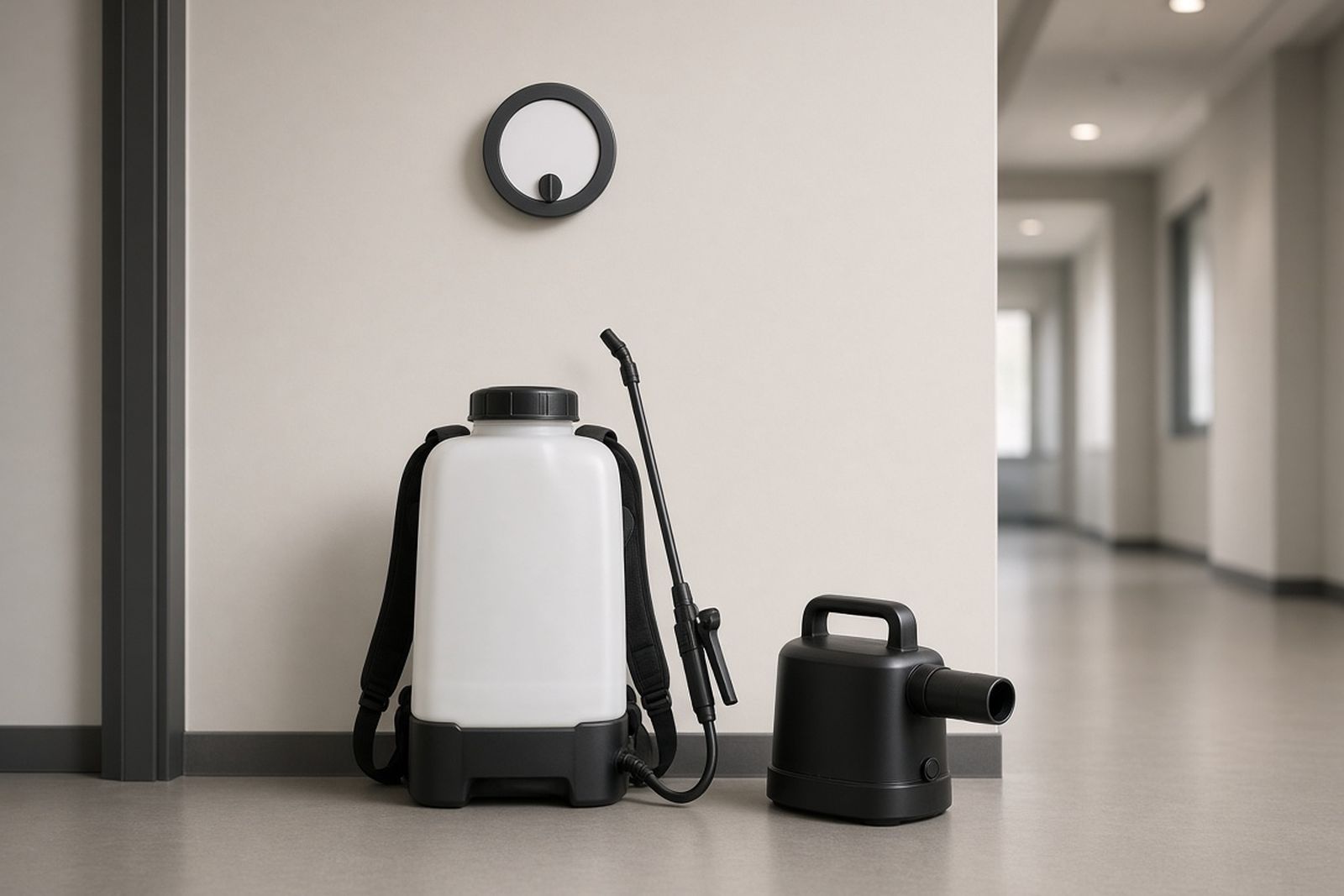
Costs explained
What drives the price, published cost ranges, and how to read a written quote line by line.
Insurance and payment
Which policies may respond, how to document a claim, and what to do if coverage is denied.
Planning tools
Estimate costs, vet companies, sort waste, and choose between wiping and fogging with tools built for offices, gyms, schools, and fleets.
Community polls
See how other facility managers weigh fogging contracts, air system control, label checks, and re-entry timing against cost and daily disruption.
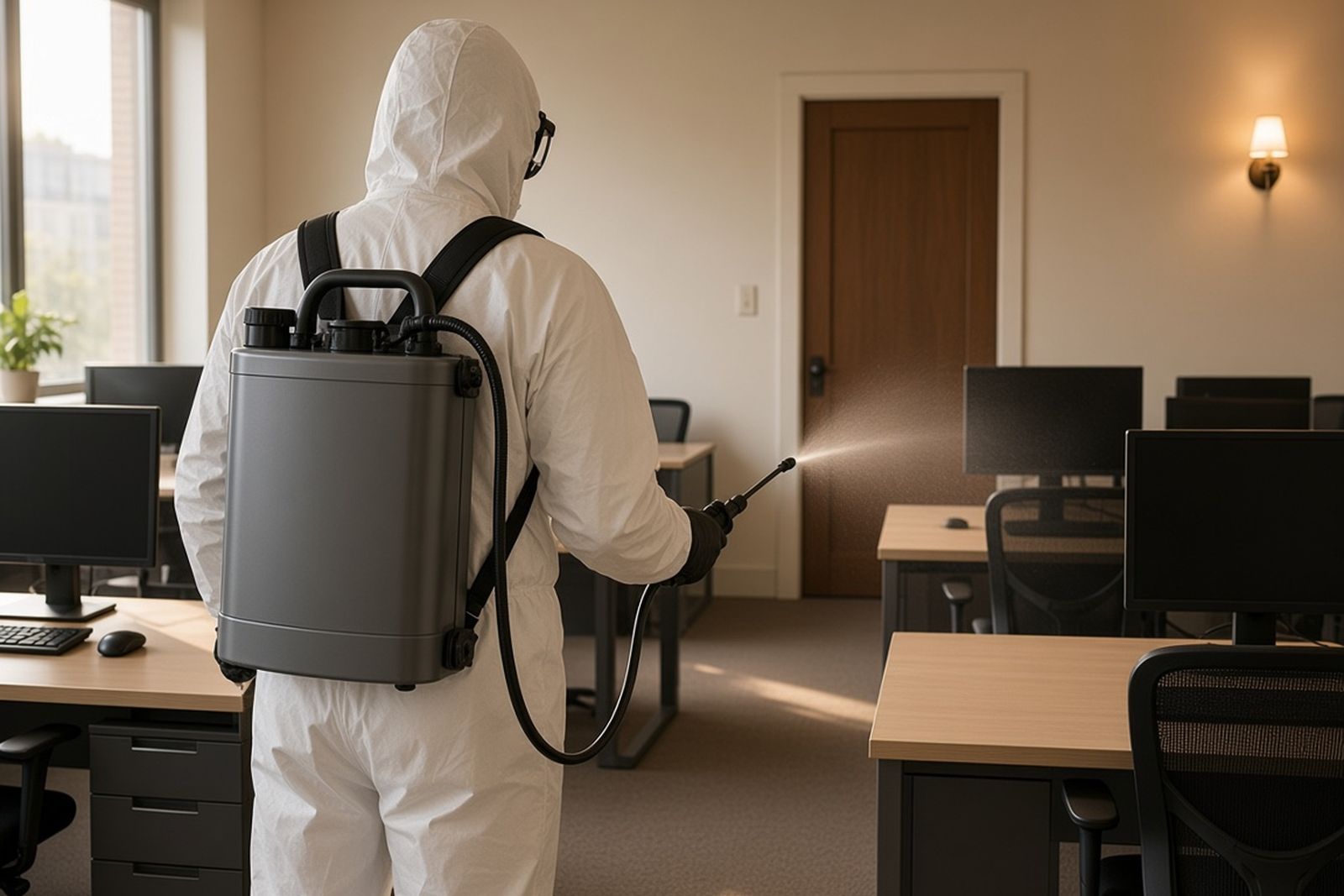
Knowledge quiz
Check whether you can spot a label mismatch, fogging with people present, or a skipped cleaning step. Then review the study guide.