Short answer
Red flags in sanitization and fogging services include products not labeled for fogging or electrostatic use, no cleaning before application, fogging occupied rooms, ozone sold as disinfection, claims of weeks-long protection, no stated re-entry time, and no product name or EPA registration number. A qualified company names its product, follows the label, cleans first, protects occupants, and documents the work.
Why fogging is easy to oversell
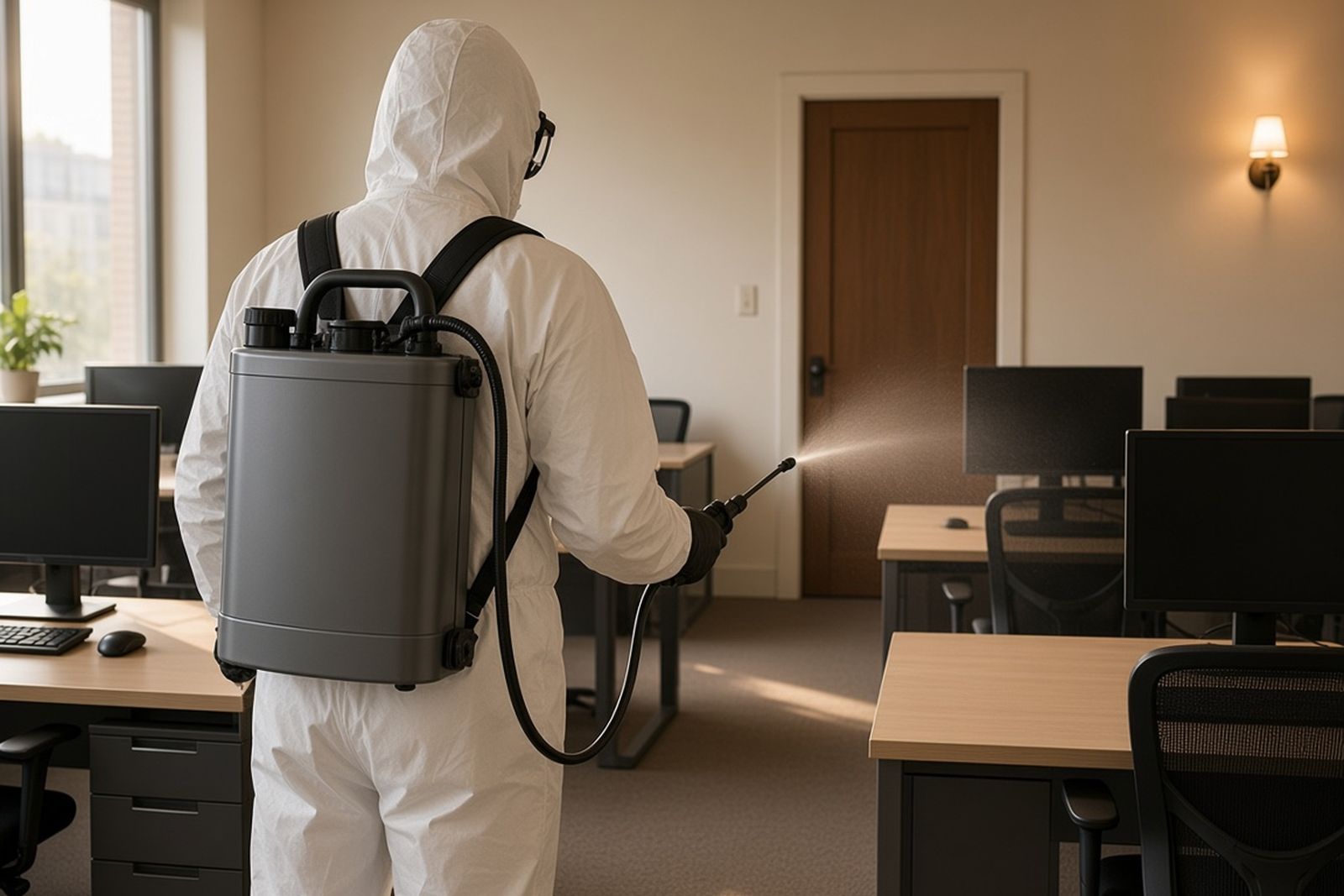
Fogging looks impressive. A technician in a respirator walks through a room, a fine mist fills the air, and within minutes the space seems transformed. For a business owner worried about an illness outbreak or a family recovering from a stomach bug, that visual can feel like proof that the problem is solved.
The reality is more nuanced. Fogging and electrostatic spraying can be useful tools when the product is labeled for that method and the surfaces have already been cleaned. They are not a substitute for cleaning, and they are not appropriate for every situation.
Because the service is so visual, some providers lean on appearance rather than method. The warning signs below help you look past the mist and judge whether a company is actually doing what the product and the situation require.
Demand for fogging surged during the pandemic, and many new providers entered the market quickly. Some built solid practices. Others bought a sprayer, printed a flyer, and learned on the job. The equipment is easy to buy; the judgment about when and how to use it is not.
Red flag 1: a product not labeled for fogging
This is the single most important question, and many customers never ask it. Disinfectant labels are legally binding directions for use, and they specify how a product may be applied. A product approved for wiping or trigger spraying is not automatically approved for fogging.
The EPA, in guidance updated in 2026, does not recommend applying disinfectants by fogging, fumigation, wide-area or electrostatic spraying, or drones unless the product label specifically includes directions for that method. A company that cannot show you the label, or that says any disinfectant works in its machine, is ignoring that guidance.
Ask for the product name and its EPA registration number before the job. You can look the product up yourself and read the label directions. A trustworthy provider will send you the label and safety data sheet without hesitation.
- No product name or EPA registration number provided.
- A claim that any disinfectant can be fogged.
- Homemade or unlabeled solutions poured into sprayers.
- No safety data sheet available on request.
- Dilution described as roughly or by eye.
Red flag 2: no cleaning before the fog
Disinfectants work best on surfaces that are already clean. Dirt, grease, food residue, and bodily fluids can block the product from reaching germs. That is why most disinfectant labels call for cleaning heavily soiled surfaces first.
A company that arrives, fogs, and leaves without any cleaning step is offering less than it may seem. Be especially cautious after incidents involving vomit, feces, blood, or visible contamination. Those need physical cleanup before any spraying makes sense.
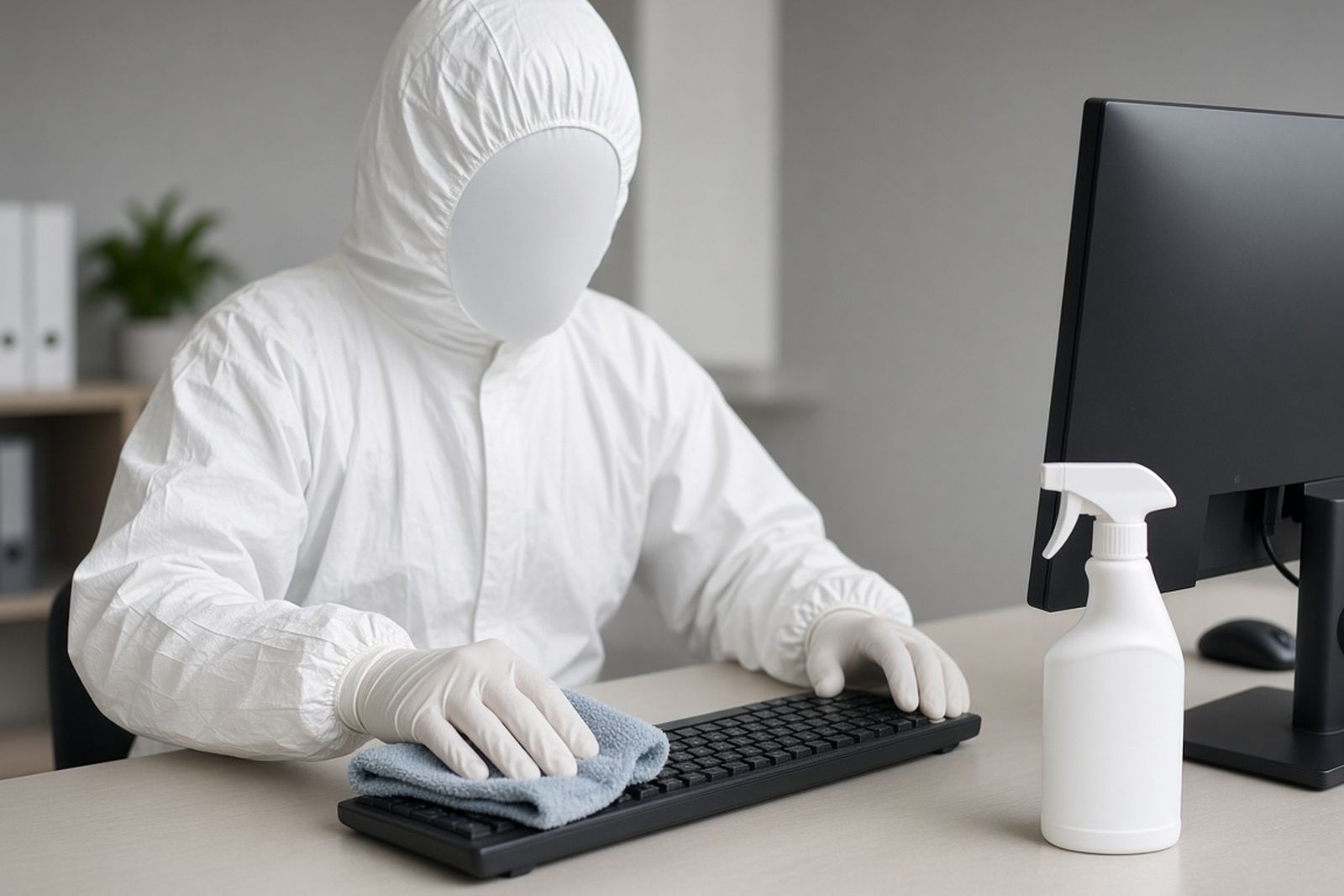
Good providers either include a cleaning step in their scope or confirm in writing that your staff will complete it beforehand. They also explain which high-touch surfaces may still need to be wiped by hand, since mist does not always reach every side of an object.
Red flag 3: promises of complete coverage
Some marketing suggests that mist or electrostatically charged droplets wrap completely around every object in a room, reaching every hidden surface. Real rooms are less tidy than the brochure.
Sprayers and foggers are not useless, but coverage depends on technique, distance, and direction, and that the back sides of objects may be missed.
Be wary of any provider that promises complete coverage of every surface in a room with a single pass. Ask how the technician handles the undersides of desks, the backs of chairs, keyboards, and other objects, and whether some items are wiped by hand.
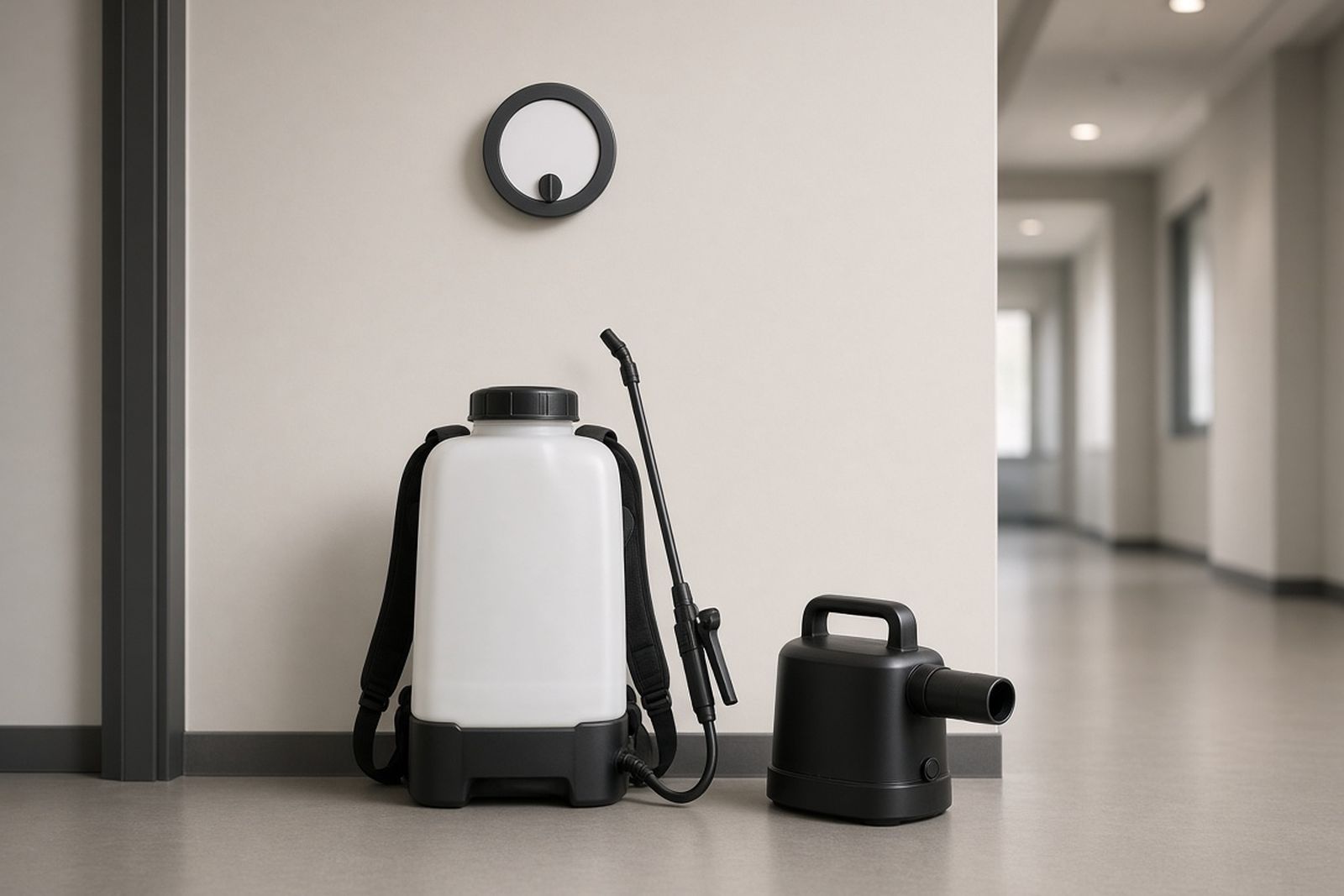
Machine choice matters too. Foggers, misters, and electrostatic sprayers produce very different droplet sizes and behave differently in a room. A knowledgeable technician can explain why a particular device suits your space and product, rather than using one machine for every job.
Red flag 4: ozone sold as disinfection
Some companies offer ozone generators as a way to disinfect a room or kill germs in the air. Ozone has legitimate uses in odor control under carefully controlled, unoccupied conditions, but it is not a reliable disinfection method at levels that are safe for people.
The EPA states that, at concentrations not exceeding public health standards, ozone applied to indoor air does not effectively remove viruses, bacteria, mold, or other biological pollutants. Higher concentrations can irritate the lungs and damage materials, and they require the space to be vacated and ventilated.
If a company presents ozone as its disinfection method, ask what registered disinfectant it uses instead and how surfaces will actually be treated. If the answer is that ozone takes care of everything, keep looking.
Red flag 5: no plan for occupants and pets
Fogging and wide-area spraying put fine droplets into the air. Occupants, pets, and anyone with asthma or chemical sensitivities should not be present during application, and they should not return until the product's label allows it.
A qualified provider will tell you who must leave, how long the space must stay empty, and what ventilation is needed before re-entry. It will also explain what to do with food, dishes, children's toys, aquariums, and electronics before treatment.
Be cautious if a company suggests fogging while people are working or sleeping in the space, or cannot tell you a re-entry time. Because disinfectants are regulated as pesticides, your state pesticide regulatory agency can tell you whether any notification or licensing requirements apply in your type of building.
- No instructions on who must leave and for how long.
- No re-entry time based on the product label.
- No plan for covering or removing food and food-contact surfaces.
- No mention of ventilation after treatment.
- Technicians without respiratory protection during fogging.
Red flag 6: promises fogging cannot keep
Disinfection kills germs on surfaces at the time of treatment. Once people return and touch things again, surfaces can be recontaminated. Claims that a single fogging will protect your space for weeks or months deserve careful questioning.
Some products are registered with residual claims, but those claims are specific, limited, and printed on the label. A company that promises long-lasting protection without pointing to label language is overstating what it sells.
Also question statements that fogging kills every germ, guarantees that no one will get sick, or makes routine cleaning unnecessary. Honest providers explain that fogging can be one part of a broader cleaning and disinfection plan, not a replacement for it.
Pricing can reveal overselling as well. A quote that bundles repeated monthly fogging without explaining why it is needed, or that charges extra for a vague protective coating, deserves a closer look. Ask what problem each visit is meant to solve and what evidence would show it worked.
Two quotes for a daycare after a stomach bug
An illustrative case shows how two quotes for the same job can differ. A small daycare has several children go home sick with vomiting in the same week. The director wants the building treated over the weekend so it can reopen Monday with confidence.
The first company quotes a flat fee for whole-building fogging, says its solution kills everything and keeps working for a month, and does not mention cleaning. It cannot name the product.
The second company asks about the illness, recommends cleaning of all vomit-affected areas and high-touch surfaces first, and names an EPA-registered disinfectant labeled for the relevant organisms and for electrostatic application. It explains that children's toys will be removed and washed separately, that the building must stay empty for the label's re-entry period, and that tables and door handles will also be wiped by hand. It provides the label and safety data sheet in advance.
The director hires the second company. On Monday, staff have a written record of the products used, the areas cleaned, and the re-entry time followed, which they can share with parents who ask.
How can you vet a fogging company quickly?
A short list of questions goes a long way. Ask them by phone and request the answers in writing with the estimate.
What product will you use, and what is its EPA registration number? Does the label allow fogging or electrostatic application? Will you clean before you apply it, or should we? Who needs to leave, and when can we return? How do you handle surfaces the mist may not reach? What documentation will we receive?
A provider that answers clearly, sends the label without being asked twice, and talks about fogging as one step in a larger process is showing the knowledge the job requires. A provider that leans on the visual drama of the mist, and not on the details, is one to pass over.