Free sanitization & fogging tool
Sanitization & Fogging Waste & Disposal Classifier
Five questions about the material point to the likely waste category and which authority to confirm the rules with.
A disinfecting service makes less waste than a trauma cleanup. But that waste still needs the right path. And things change fast when a visit combines removing a mess with spraying. The Waste and Disposal Classifier asks five questions about the material in front of you. Is it a sharp object that could puncture? Is it wet with blood, vomit, sewage, or another body fluid? Is it a chemical product, concentrate, or container with leftovers in it? Is it a soft material, like carpet, padded seating, or a mat, that soaked up product or contamination? Did it come from a school, office, restaurant, vehicle, or home? From your answers, it suggests a likely category. It also names the kind of office to confirm it with.
The result is a starting point, not a final ruling. Several things vary by state and county. These include what counts as regulated medical waste and the rules for pouring out disinfectant concentrate and rinse water. They also include how business waste differs from household waste. So check with the local office before anything leaves the property. The classifier is most useful for the gray areas. Examples are a container of leftover concentrate and cloths used on a surface that had vomit on it. Others are foam mats that soaked up product, or covers used to protect electronics during spraying. Working through the questions also builds a good habit. You learn to ask your company to keep waste types apart and to put the disposal path for each in writing.
How to use it
- 1Describe one material at a time, since a single visit can produce several kinds of waste.
- 2Answer the five questions based on what you can see without handling the material.
- 3Read the likely category and the office it names. Confirm with your company or the local agency before you throw anything out.
- 4Repeat for each kind of material and keep the results with your service records.
Prefer to ask a person?
Your request is sent to the follow-up inbox. A coordinator can reply by email. Not for emergencies; call 911 first if anyone is in danger.
Work out the likely waste path
Sanitization & Fogging waste and disposal classifier
Points you to the likely waste category and who confirms the rule. State and local definitions control; verify before anything leaves the property.
Likely regulated medical waste (biohazard)
- Materials saturated with blood or other potentially infectious material, or that would release liquid if compressed, are treated as regulated medical waste in most states.
- Packaging usually means red bags inside rigid containers, labeled with the biohazard symbol, and a licensed transporter with a manifest.
Who confirms the rule
- State health or environmental agency (regulated medical waste program)
- The remediation provider, who should name the transporter and treatment facility in writing
This is an educational sorting aid, not a regulatory determination. Waste rules vary by state and county.
A worked example
Picture a made-up office manager. A company has just cleaned and electrostatically disinfected a break room where an employee was sick. She reviews what it left behind. There is a bag of wipes and paper towels used to clean up the vomit. There is a half-used bottle of disinfectant concentrate. There is a roll of plastic sheeting used to cover the coffee maker and the microwave. And there is a fabric chair cushion that was sprayed and is still damp. She runs each one through the classifier. The cleaning wipes get a yes for body fluid contact. The tool points toward regulated medical waste handling. It names the state environment or health agency to confirm with, and notes that some places treat small amounts differently. The concentrate gets a yes for chemical product. The tool points to the label and safety data sheet for disposal steps. It names the local hazardous waste program as the office to ask, and warns not to pour it down the drain without checking. The plastic sheeting gets a no on everything except where it came from, and the tool suggests regular trash. The cushion gets a yes for soft material and an unsure on contamination. The tool suggests asking the company whether it stayed wet long enough or should be replaced. She sends all four results to the company and asks for the disposal paths in writing.
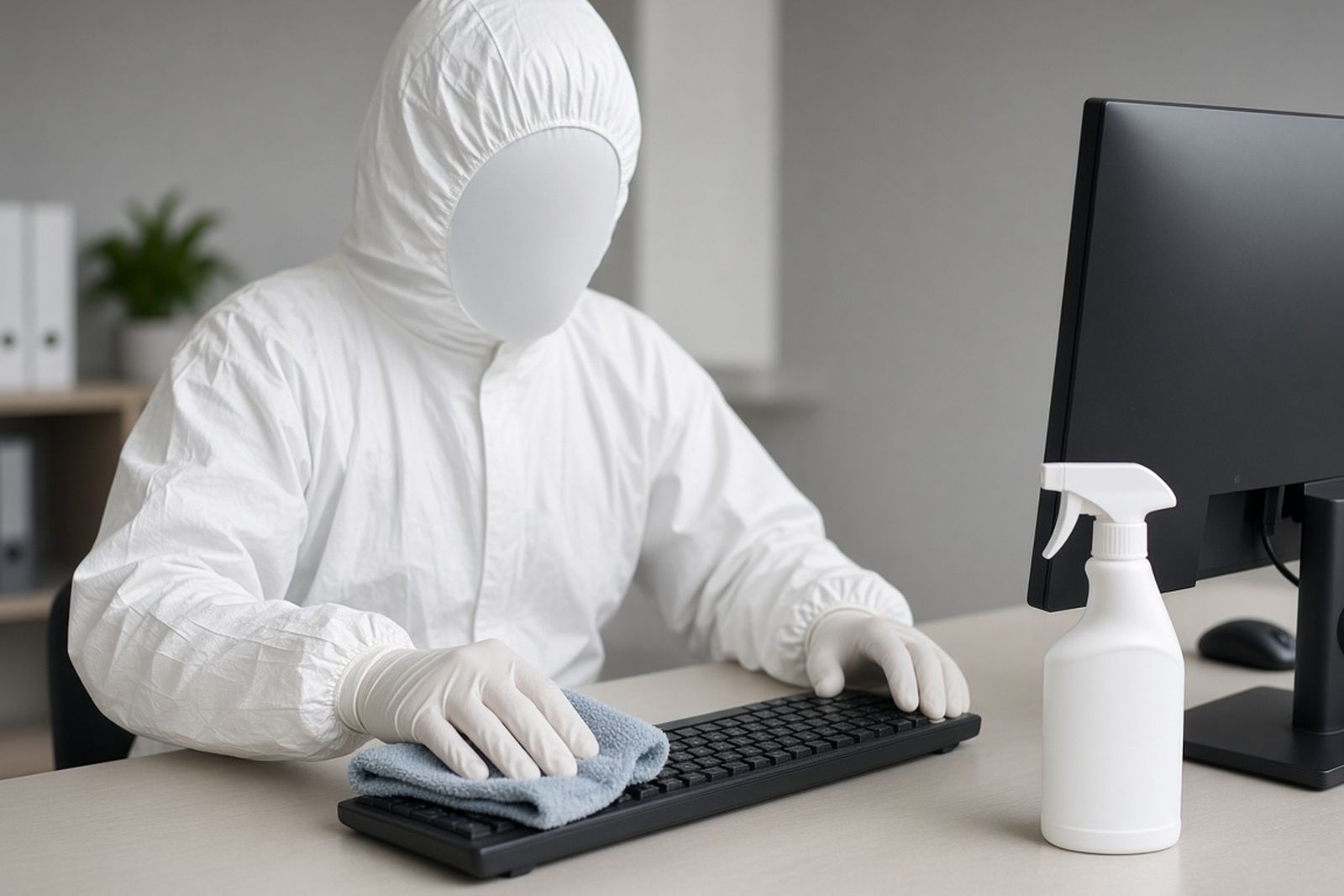
Numbers behind waste classifier decisions
- >6-log
A 2026 peer-reviewed lab study found electrostatic spraying of 2% hydrogen peroxide with a 10-minute contact time achieved more than a 6-log reduction of E. coli on 16 surface types.
Read with care: Single lab study with one organism and pre-inoculated surfaces; results depend on the 10-minute wet contact time being achieved.
Source: Infection, Disease & Health (Elsevier) (2026)Laboratory environment in India; E. coli on 16 inanimate surfaces; single research group
- 250 RLU
A 1,300-bed UK teaching hospital study proposed a stricter ATP pass/fail benchmark of 250 RLU for surfaces, revised down from the earlier general benchmark of 500 RLU.
Read with care: RLU values are not comparable across meter brands, and ATP measures organic residue, not whether pathogens were killed.
Source: Journal of Hospital Infection (2008)One UK NHS teaching hospital; one ATP test and device combination; 2008
- 9 devices
In EPA testing of six electrostatic sprayers, two foggers and a garden sprayer, most devices produced droplets of 40 microns or larger and showed minimal wrap-around deposition on an 8-inch cylinder.
Read with care: Laboratory deposition testing on a single object shape; manufacturer-recommended coverage varied widely from 2 to 53 ounces per 1,000 square feet.
Source: EPA / PLOS ONE (2021)United States; EPA Office of Research and Development laboratory study of nine commercial devices; 2021
- 20 seconds
A portable 254 nm UV-C device at 1 cm for 20 seconds fully inactivated five bacterial species and cut mean hospital-surface colony counts from 63.2 to 3.6.
Read with care: Efficacy was measured at 1 cm distance; UV-C output falls off quickly with distance and does not reach shadowed surfaces.
Source: Photodiagnosis and Photodynamic Therapy (PMC) (2020)Brazilian hospital surfaces and six reference strains; single device; 2020
These figures are public research and agency data, not this network's own job records. Keep each number with its population, year and limits; none of them predicts cost, timing or outcome at a specific property.
Waste & Disposal Classifier questions for sanitization & fogging
Are used wipes and cloths from a disinfection visit regulated waste?
Usually not, if they only picked up disinfectant and everyday dirt. It is a different matter if they were used to clean blood, vomit, sewage, or other body fluids. That is common when a visit follows an illness event. That is why the classifier asks about contact with fluids. Rules vary by state and county, so check with the local office before you throw them out.
How should leftover disinfectant concentrate be handled?
Follow the product label and safety data sheet. They often say to rinse containers three times, and they may forbid pouring concentrate down a drain. Diluted, ready-to-use mix is often fine to pour down the drain, but not always. The classifier points you to the local hazardous waste program as the office to confirm with. Your company should take unused product with it, not leave it on site.
What about the coverings used to protect electronics and food surfaces?
Plastic sheeting and tape that only caught overspray are regular trash in most settings. But they may have been used in a space with body fluids or sewage before it was cleaned. If so, treat them like any other contaminated material and run them through the classifier on their own. Ask the company to remove and bag the covers before it puts the space back in order.
Does the classifier handle porous materials that absorbed product?
It asks whether the material is soft and whether it may be contaminated. Then it suggests whether the item is likely regular trash, needs a closer look, or should be discussed with the company for replacement. Foam mats, padded seats, curtains, and carpet often cannot stay wet as long as the label requires. That is a separate question from how they are thrown out.
Who confirms how leftover disinfectant concentrate and empty fogger canisters should be discarded?
The guide points to the type of office rather than making the final call. Chemical products and their containers usually go through the local hazardous waste program. Anything classed as medical waste falls under the state environment or health agency. Regular trash goes to the local trash office. Your company should know these paths. It should record the category for each material on the service record.
What if my waste hauler disagrees with the category the tool suggests?
Follow your hauler and the local office. They know the rules where you are, and the tool offers only a starting point. Ask the hauler to explain the difference so you understand it next time. Note the answer in your records. If the disagreement involves material from a biohazard cleanup, confirm the path with your state agency before anything leaves the property.
Can I use the classifier for leftover products from an old disinfection program?
Yes. Answer the questions for each item. Examples are a half-used jug of concentrate, an unlabeled bucket of mix, or old sprayer parts. The classifier will point you toward a likely path and the office to confirm it with. Treat unknown liquids as chemical waste rather than pouring them out. For anything you can still identify, check the disposal section of the product label.
Related community polls
Every count is a real visitor vote; nothing is seeded or padded. One vote per poll per device, and you can change your answer.
A vendor offers to fog your classrooms at lunch while students are outside. What do you say?
How do you see repeat fogging contracts today?
Other sanitization & fogging tools
Cost Range Estimator
Set the affected area, surface types, severity and extras to see an educational cost range and the factors that move it.
OpenProvider Vetting Checklist
Fifteen questions to ask any remediation provider, a readiness score, and a copyable list of what is still unanswered.
OpenInsurance Claim Organizer
A guided checklist from finding the policy to tracking the carrier decision, with a printable summary of where the claim stands.
OpenFirst 24 Hours Planner
Tell the planner a few facts about the situation and get an ordered list of who to call, what not to touch, and what to photograph.
OpenDIY or Call a Pro? Risk Check
Eight yes-or-no questions that produce a risk level and explain when professional help is the safer choice.
OpenMore on sanitization & fogging
Sanitization & Fogging services
See how electrostatic spray, heat fogging, UV-C, and scheduled programs fit into a clean-first, then-disinfect plan for your building or fleet.
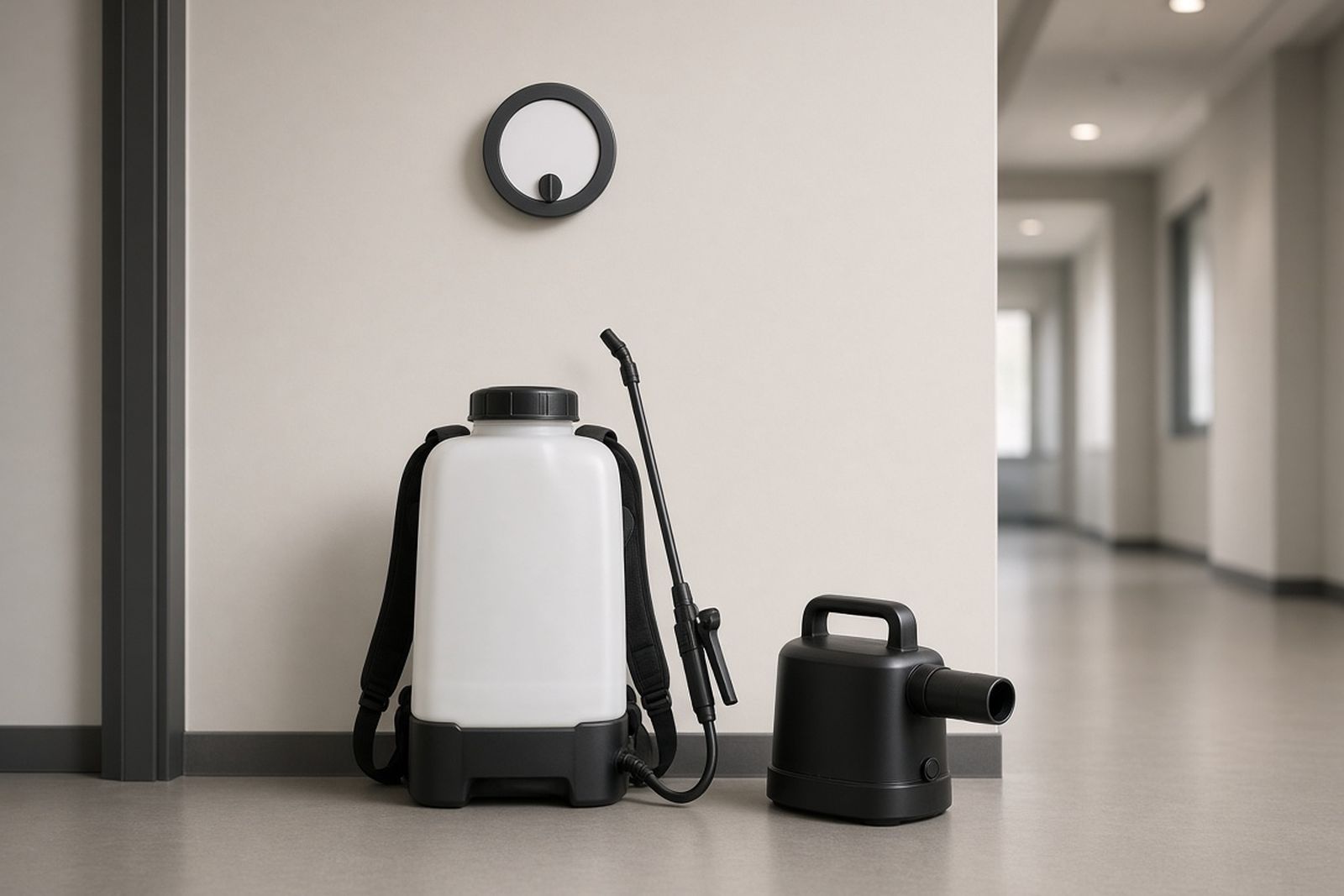
Costs explained
What drives the price, published cost ranges, and how to read a written quote line by line.

Insurance and payment
Which policies may respond, how to document a claim, and what to do if coverage is denied.
Community polls
See how other facility managers weigh fogging contracts, air system control, label checks, and re-entry timing against cost and daily disruption.
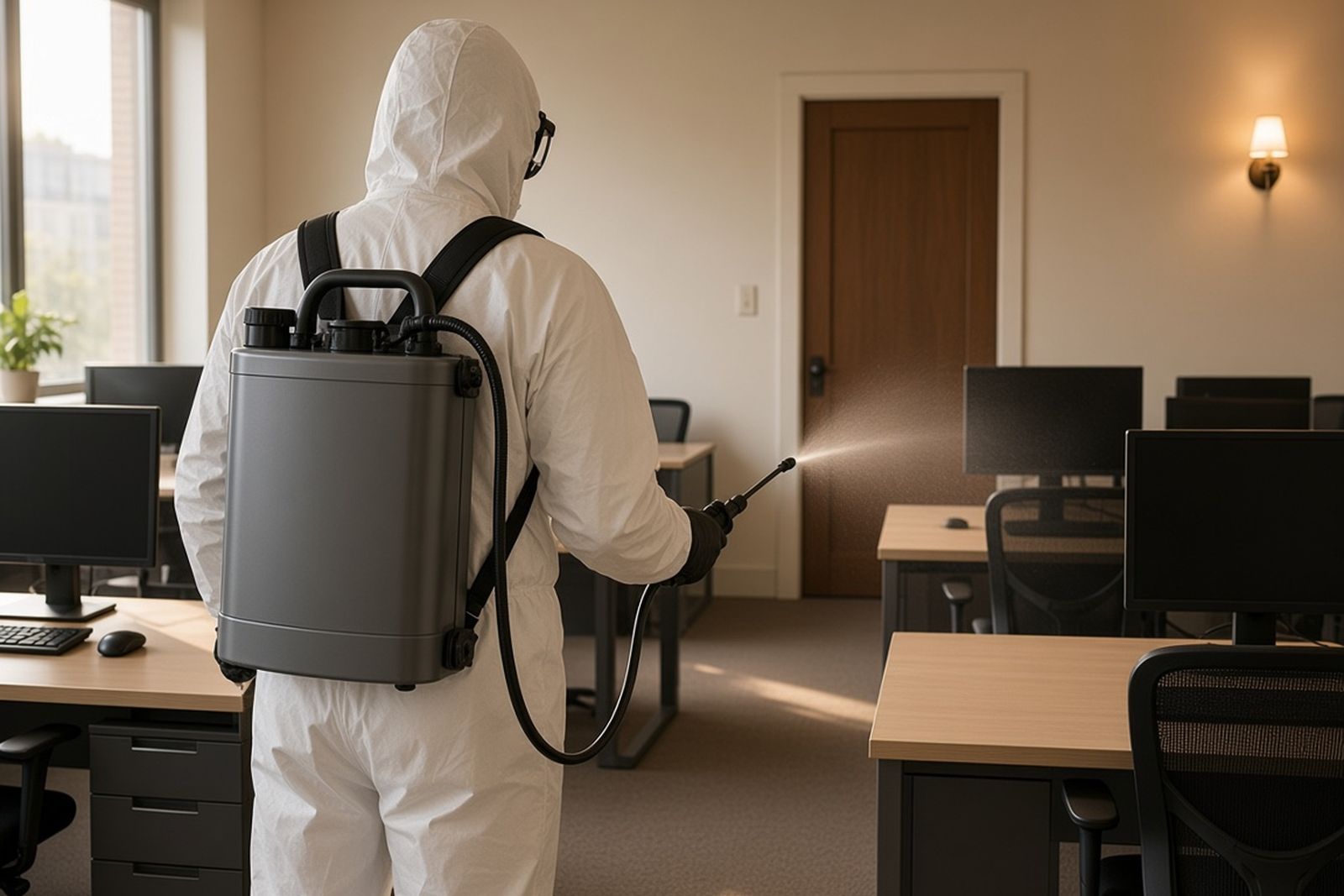
Knowledge quiz
Check whether you can spot a label mismatch, fogging with people present, or a skipped cleaning step. Then review the study guide.
Articles and resources
Read explainers on spray methods, product labels, re-entry timing, ozone risks, and why routine wiping still matters in every building.