Short answer
Before hiring a sanitization or fogging company, ask which product it will use and whether the label allows its application method, whether it pre-cleans, what contact and re-entry times apply, how it protects electronics and materials, how it handles occupants with sensitivities, how it verifies results, what training its technicians have, what records you receive, how the contract is structured, and when it would recommend against fogging.
Why choosing a fogging provider is harder than it looks
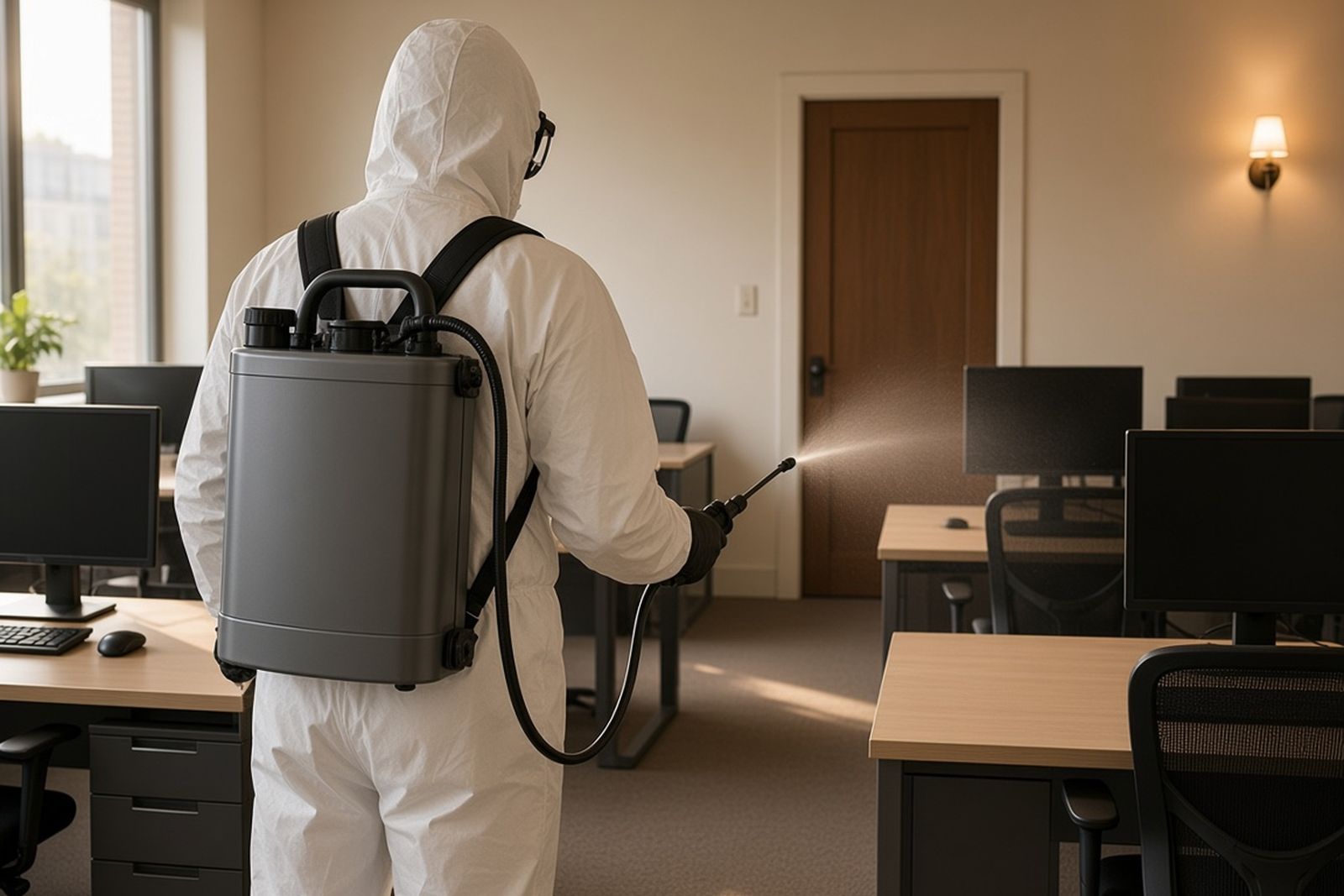
Sanitization services are easy to market. A photo of a technician in a suit surrounded by mist looks reassuring, and phrases like hospital-grade or kills germs on contact appear on almost every flyer. What those materials rarely explain is which product is being used, whether it is approved for that application method, and whether the service includes the cleaning that makes disinfection work.
The questions below are designed to get past the marketing. They work for a one-time treatment after an illness or biohazard event, and for evaluating a recurring program for an office, school, gym, clinic, or vehicle fleet.
Ask the same questions of every provider, write down the answers, and ask for key points in writing. Specific, confident answers are a good sign. Vague ones tell you just as much.
Before you call, be clear with yourself about why you want the service. Are you responding to a specific event, like a norovirus outbreak or a blood spill, or looking for ongoing reassurance for staff and visitors? The answer shapes which questions matter most. An event response calls for the right product and thorough cleaning of the affected areas. An ongoing program calls for sustainable scheduling, verification, and a contract you can live with.
Questions 1 and 2: the product, and whether its label allows fogging
First question: What is the exact product name and EPA registration number? Any legitimate provider will tell you. With the registration number, you can look up the product yourself and see which organisms it is labeled to kill, which surfaces it is approved for, and what safety precautions apply.
Second question: Does the product label specifically allow the application method you plan to use? Not every disinfectant can legally be fogged or sprayed electrostatically. If the label only describes wiping or mopping, using it in a fogger is outside its approved use. A provider should be able to point to the section of the label that covers their method.
If a company cannot answer either question, or says the product is proprietary and they cannot share details, that is a strong reason to look elsewhere.
Ask, too, whether the provider ever switches products, and whether you will be told if they do. Supply shortages and price changes happen, and a substitute product may have a different contact time, different label directions, or different compatibility with your surfaces. A good provider will notify you and update your records rather than swapping quietly.
Question 3: Do you clean before you disinfect?
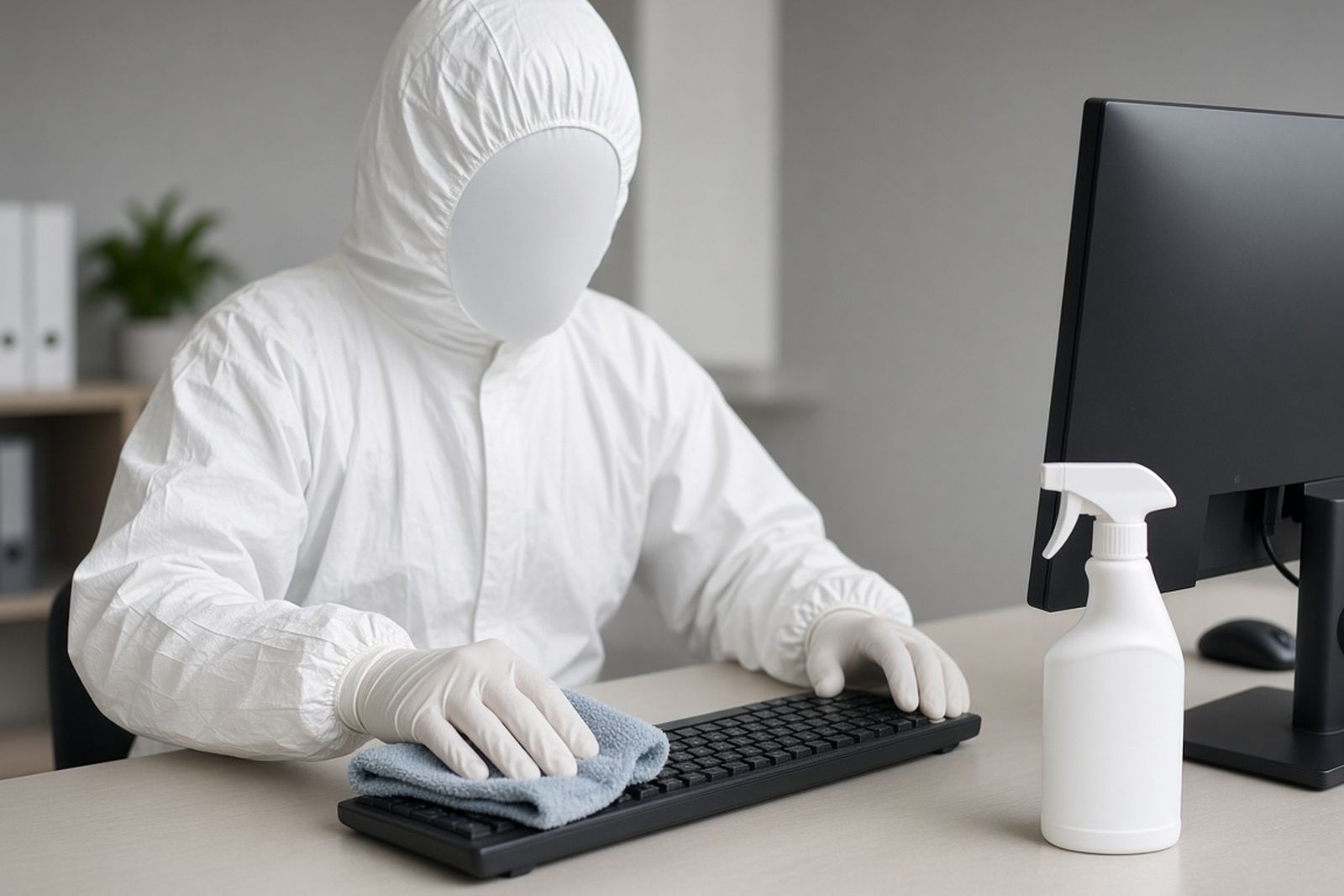
Pre-cleaning is where much of the real value lies. Dirt, grease, and organic material shield microbes and can use up the active ingredient in a disinfectant. Many product labels call for cleaning first. Ask whether the provider will wipe down high-touch and visibly soiled surfaces before application, or whether they expect the space to be clean when they arrive.
The broader point is simple: hands-on cleaning and wiping remain the foundation, and automated methods work best as a supplement to them.
A provider who treats fogging as a replacement for cleaning, rather than an addition, is selling a shortcut.
Clarify who does the pre-cleaning, as well. Some providers include it in their price; others expect your janitorial staff to finish before the crew arrives. Either arrangement can work, but only if everyone knows which one is in place and the timing is coordinated so surfaces are clean and dry when application begins.
Questions 4 and 5: contact time, re-entry, and equipment protection
Fourth question: How long must surfaces stay wet, and when can people return? Every product has a contact time, and many have re-entry instructions. Ask for both in writing, along with any HVAC adjustments needed. This is essential for planning, especially if the space must reopen on a schedule.
Fifth question: How will you protect electronics, plastics, and sensitive materials? Some disinfectants can damage finishes, fabrics, or equipment over time. Ask whether the provider covers electronics, avoids certain surfaces, or chooses products with your materials in mind. Repeated treatments on medical equipment, gym machines, or touchscreens deserve particular care.
- Covering or unplugging computers, phones, and screens.
- Protecting food-contact surfaces and kitchen areas.
- Avoiding or pre-testing delicate finishes and fabrics.
- Confirming compatibility with manufacturer cleaning guidance for equipment.
Question 6: How will you account for people with asthma or chemical sensitivities?
Airborne disinfectants can irritate the lungs, eyes, and skin, and some people are more sensitive than others. Ask how the provider handles buildings with staff, students, or residents who have asthma, allergies, or other sensitivities. Good answers include choosing lower-irritant products where appropriate, extending ventilation time, scheduling treatment when the building is empty, and giving you the Safety Data Sheet in advance.
If your space serves children, older adults, or medically vulnerable people, share that detail early. It may change the product, the method, or whether fogging is appropriate at all.
It is reasonable to ask the provider to share the Safety Data Sheet with any staff member who has concerns, and to post a notice with the date and product before each treatment. Openness about what is being applied tends to reduce complaints and helps people who are sensitive make their own plans for that day.
Questions 7 and 8: verification and technician training
Seventh question: How will you show that the treatment worked? Look for providers who use ATP swabs or other measurement tools before and after, and who share the readings with you. Verification turns a promise into data you can track over time.
Eighth question: What training do your technicians have? Ask about training in product handling, respiratory protection, and the specific equipment they use. In some states, applying certain antimicrobial products commercially may involve licensing or certification, so ask your state department of agriculture or pesticide regulatory office whether any license applies to the service you are buying.
Ask whether the same technicians will usually service your building. Consistency matters: a crew that knows your layout, sensitive equipment, and problem areas tends to do better work than a rotating cast of strangers. Also ask how new technicians are supervised during their first visits.
Questions 9 and 10: What records will I receive, and when would you advise against fogging?
Ninth question: What documentation do you provide after each visit? At minimum, you should receive the date, areas treated, product and registration number, application method, contact and re-entry times, and any verification readings. For recurring contracts, ask whether records are available online and how long they are kept.
Tenth question: When would you tell a client that fogging is not the right tool? This is perhaps the most telling question on the list. A trustworthy provider will describe situations where targeted cleaning and wiping would work better, where the label does not support fogging, or where the risk does not justify it. A provider who says fogging is right for every situation is telling you something about their priorities.
Be wary of claims that one treatment protects surfaces for weeks. Unless the specific product label supports residual activity on those surfaces, that promise goes beyond what the provider can back up.
Putting the questions to work: three quotes for one office
Here is a composite example of how the questions sort providers. Say you manage a 40-person office. After a rough flu season, leadership asks you to look into a monthly fogging service. You call three companies.
The first quotes a low monthly price, says its solution kills everything, and will not name the product. The second names an EPA-registered product, confirms its label allows electrostatic application, and includes pre-cleaning of high-touch areas, but offers no testing. The third names its product, shows you the label section for electrostatic use, includes pre-cleaning, and adds quarterly ATP readings on shared surfaces. It also suggests that break room and restroom surfaces may need more attention than open desk areas.
In that example, the third provider costs somewhat more but gives you a transparent, measurable program focused where people actually share surfaces. You might negotiate to start with a three-month trial and review the ATP results before committing to a longer term.
Contract terms that deserve a second look
Recurring sanitization agreements can lock you in for longer than you expect. Read the fine print before signing, and ask for changes if something does not fit your needs.
- Contract length and automatic renewal clauses.
- Cancellation notice periods and fees.
- What happens if a scheduled visit is missed.
- Whether prices can change during the term.
- Who is responsible if equipment or finishes are damaged.
- How verification results are shared and what happens if they fall short.