Sanitization & Fogging: Choosing a Company
Evidence to request from sanitization & fogging providers: business identity, applicable training, insurance, scope assumptions, waste routing, verification, availability, and responsibility for subcontractors.
Posts here help you judge disinfecting and fogging companies on how they work, not on their ad photos. You will find questions to ask before signing. You will also find red flags, such as promises of total sterilizing or refusing to name products. There is advice on checking applicator licenses where your state requires them. Other articles explain what training and written programs a trustworthy company should be able to describe. They also show how to compare a local cleaning firm that added fogging with a national disinfecting brand. Posts also cover what a sample service log should include.
Get an email reply about sanitization & fogging
Send a short message to the follow-up inbox. A coordinator can reply by email. This form does not send emergency help; call 911 first if anyone is in danger.
Choosing with care matters, because these companies bring chemicals into spaces where children learn, people exercise, and staff spend their days. A company that names its products and shows you the label wording behind its method is easier to hold to account. So is one that gives you written reopening times. Learning the right questions also helps you turn down an upsell for a service your building does not need. Many buildings get pitched a fogging add-on during a tense week. A calm checklist makes it easier to say no until the proposal is backed by labels and a clear scope of work. The same questions help you judge the company you already use when its contract comes up for renewal.
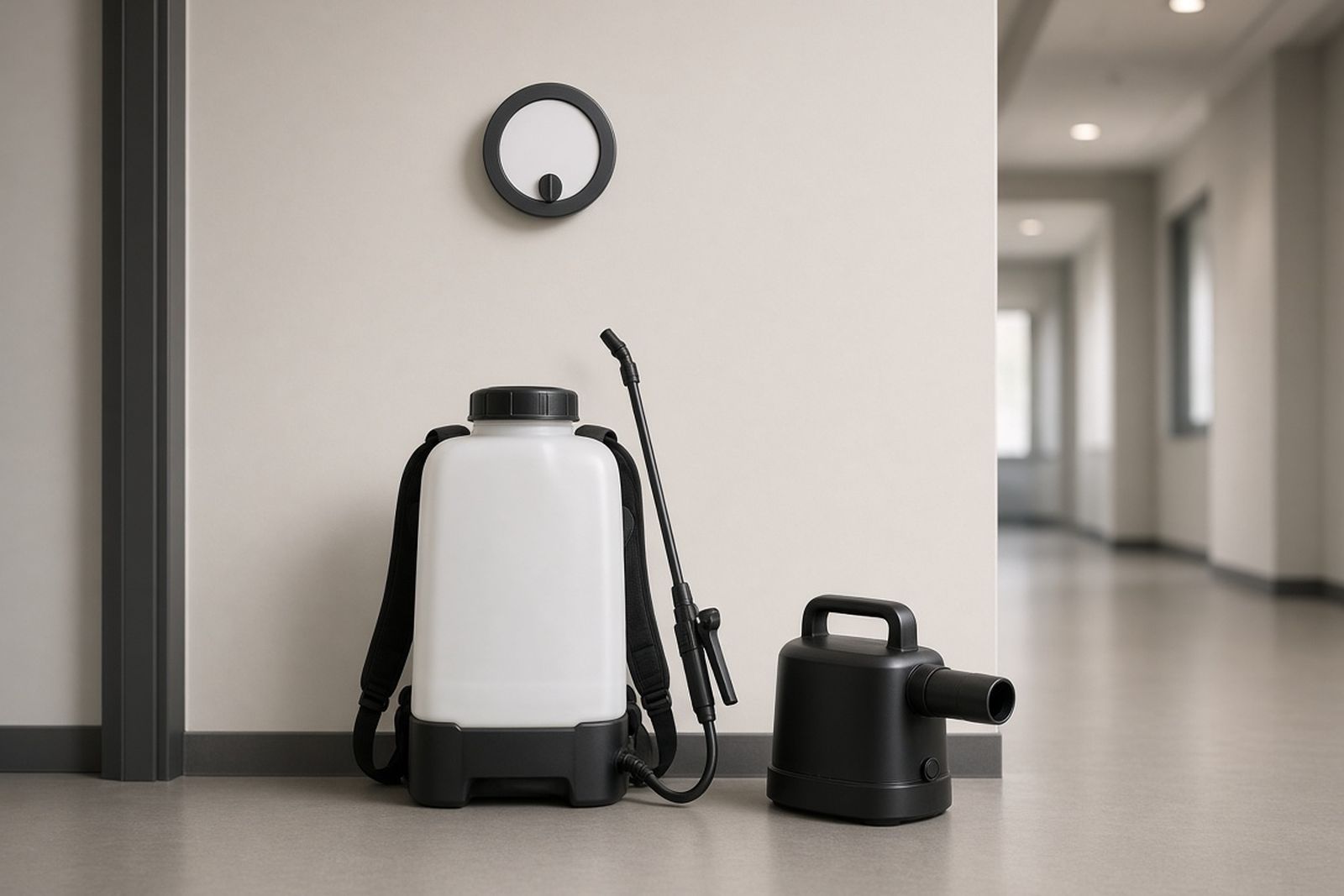
10 Questions to Ask Before Hiring a Sanitization & Fogging Company
Weighing a fogging or electrostatic spraying contract? Ask these ten questions about product labels, pre-cleaning, re-entry, equipment safety, and testing.
Before hiring a sanitization or fogging company, ask which product it will use and whether the label allows its application method, whether it pre-cleans, what contact and re-entry times apply, how it protects electronics and materials, how it handles occupants with sensitivities, how it verifies results, what training its technicians have, what records you receive, how the contract is structured, and when it would recommend against fogging.

Red Flags When Hiring Sanitization & Fogging Services
Fogging with off-label products, skipping cleaning, ozone claims, and no re-entry time are warning signs. How to vet a sanitization or fogging company.
Red flags in sanitization and fogging services include products not labeled for fogging or electrostatic use, no cleaning before application, fogging occupied rooms, ozone sold as disinfection, claims of weeks-long protection, no stated re-entry time, and no product name or EPA registration number. A qualified company names its product, follows the label, cleans first, protects occupants, and documents the work.
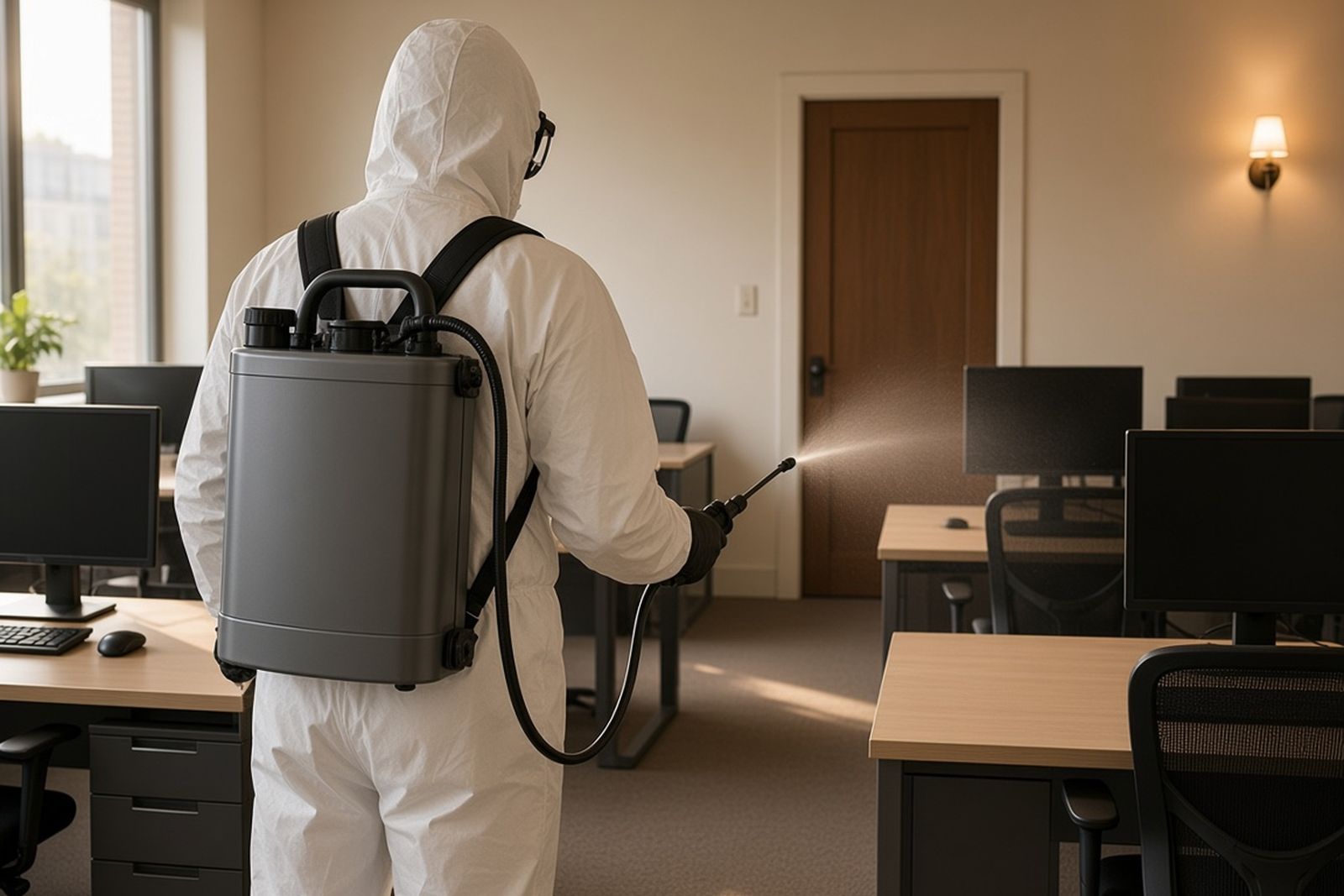
Training, Documentation, and Credentials for Sanitization & Fogging
Which licenses, training, and records matter when hiring a fogging or electrostatic disinfection crew? Pesticide rules, respirators, labels, and job reports.
Sanitization and fogging have no single national certification. What matters is whether the company follows state pesticide applicator rules where they apply, trains staff on respiratory protection and chemical hazards, uses products labeled for the application method, and documents each job with the product, EPA registration number, dilution, contact time, areas treated, and re-entry time. Verify state requirements with your pesticide regulatory agency.
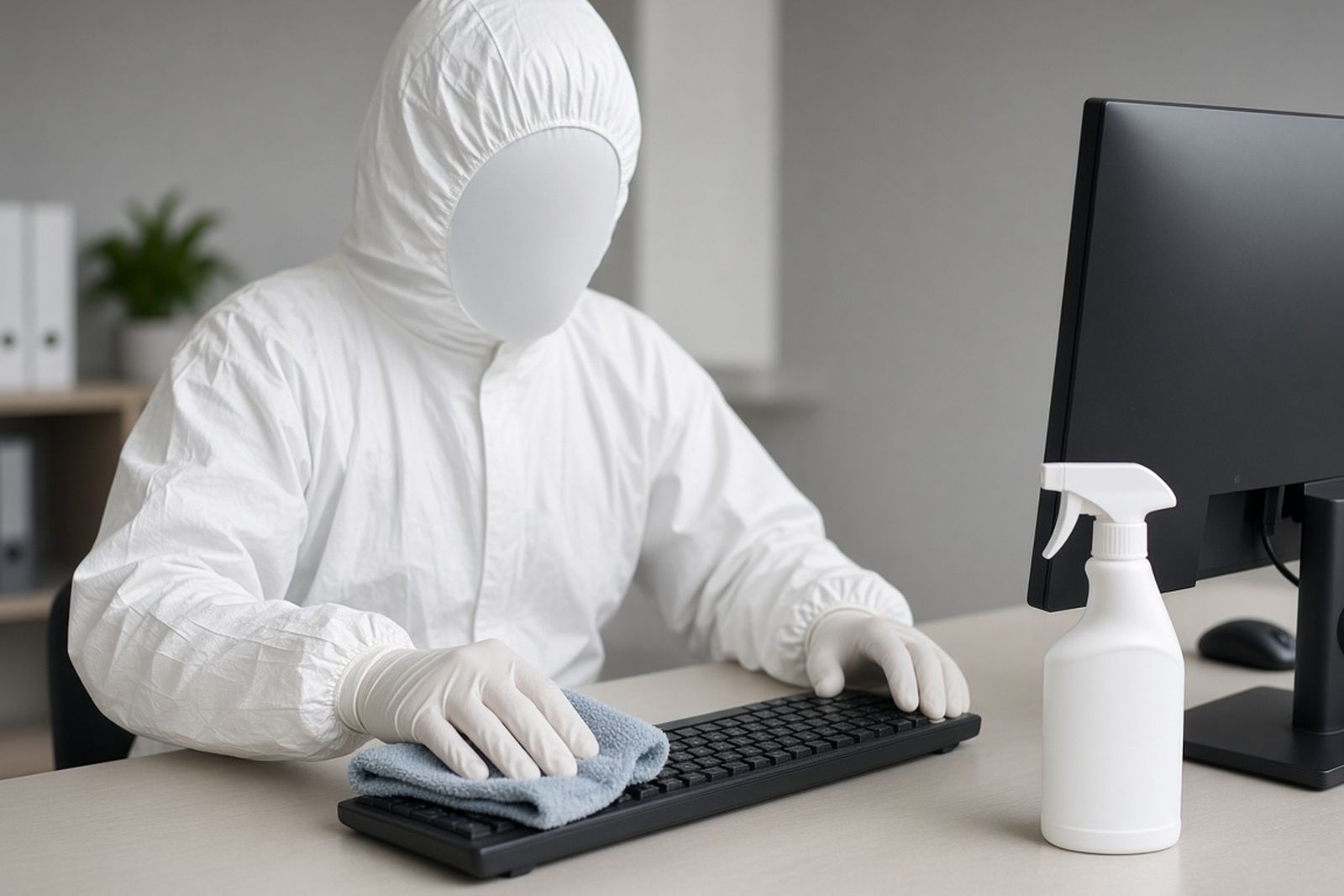
How to Compare Local and National Sanitization & Fogging Providers
Local cleaning firm or national disinfection brand? Compare label knowledge, who applies the product, multi-site consistency, contracts, and reporting.
Local and national fogging providers can both deliver label-compliant, well-documented service. Local firms may offer closer oversight, flexible scheduling, and knowledge of area licensing. National providers may offer uniform procedures and reporting across many sites but often rely on franchisees or subcontractors. Compare them on product labels, who applies the product, pre-cleaning expectations, re-entry plans, contract terms, and the reports you receive after each visit.
Sourced figures on choosing a company
- >6-log
A 2026 peer-reviewed lab study found electrostatic spraying of 2% hydrogen peroxide with a 10-minute contact time achieved more than a 6-log reduction of E. coli on 16 surface types.
Read with care: Single lab study with one organism and pre-inoculated surfaces; results depend on the 10-minute wet contact time being achieved.
Source: Infection, Disease & Health (Elsevier) (2026)Laboratory environment in India; E. coli on 16 inanimate surfaces; single research group
- 9 devices
In EPA testing of six electrostatic sprayers, two foggers and a garden sprayer, most devices produced droplets of 40 microns or larger and showed minimal wrap-around deposition on an 8-inch cylinder.
Read with care: Laboratory deposition testing on a single object shape; manufacturer-recommended coverage varied widely from 2 to 53 ounces per 1,000 square feet.
Source: EPA / PLOS ONE (2021)United States; EPA Office of Research and Development laboratory study of nine commercial devices; 2021
- 20 seconds
A portable 254 nm UV-C device at 1 cm for 20 seconds fully inactivated five bacterial species and cut mean hospital-surface colony counts from 63.2 to 3.6.
Read with care: Efficacy was measured at 1 cm distance; UV-C output falls off quickly with distance and does not reach shadowed surfaces.
Source: Photodiagnosis and Photodynamic Therapy (PMC) (2020)Brazilian hospital surfaces and six reference strains; single device; 2020
These figures are public research and agency data, not this network's own job records. Keep each number with its population, year and limits; none of them predicts cost, timing or outcome at a specific property.
What research has found
Findings from published studies of people and properties in situations like this one. They describe what researchers observed in a specific group; they are not predictions for your case.
Microorganisms decreased significantly on sampled surfaces after treatment.
Biological indicators demonstrated a six-log spore reduction under the tested conditions.
Choosing a Company: common questions
What should I ask a fogging company before signing a contract?
Ask which products it will use and their EPA registration numbers. Ask whether the labels allow the proposed method and whether cleaning first is included. Ask how long rooms must stay empty and what log you will get. Ask whether your state requires an applicator license, and who holds it. Clear, specific answers matter more than polished marketing.
What claims should make me wary of a sanitization provider?
Be careful with promises that one visit will sterilize a building. The same goes for claims that protection lasts for weeks, or that no cleaning is needed first. A strong scent offered as proof that it worked is another warning sign. So is a company that is slow to share product names, labels, or safety data sheets before work begins.
Should I choose my regular janitorial company for fogging too?
It can work if the company has trained staff, the right equipment, and products whose labels support the method. The upside is that it already knows your building and cleaning schedule. Ask the same questions you would ask any specialist. Make sure the cleaning contract clearly separates routine cleaning from the disinfectant spraying and its records.
Should I choose a provider that also sells equipment and products?
That is not a problem by itself, but watch for pressure to buy more than you need. A company with its own product line may lean toward those products, even when another would suit your surfaces better. Ask why it chose the product for your building. Ask whether it would use a different one if that label fit better. Keep the service choice separate from any equipment purchase.
What if the only providers near me fog without pre-cleaning?
Do the cleaning yourself and hire the company only for spraying. Get written confirmation of what state the surfaces will be in. Give your cleaning staff a clear list of surfaces to clean first. Ask the company to walk the space and point out anything that is not ready. If no company will follow the label, a strong in-house wiping program may serve you better than fogging.
What does a strong sample service report look like?
It lists the date and times, and each area treated or skipped. It gives the product name and registration number, the dilution, and the spray method and device. It shows how long surfaces stayed wet and the re-entry time for each area. It notes the air system settings, the worker's name, and any test readings or problems. It uses plain words and avoids claims like certified germ free. Ask to see one with client details removed before you sign.
Is a provider that recommends less service being careful or lazy?
Usually careful. A company that suggests fewer visits, smaller areas, or wiping instead of fogging is putting your needs ahead of its income. Ask it to explain its reasons. If the reasons tie back to the label, the risk, and your building, that is a sign it knows its work. If it seems to be dodging work it finds a hassle, the explanation will usually be vague.
Related community polls
Every count is a real visitor vote; nothing is seeded or padded. One vote per poll per device, and you can change your answer.
A vendor offers to fog your classrooms at lunch while students are outside. What do you say?
How do you see repeat fogging contracts today?
More on sanitization & fogging
Sanitization & Fogging services
See how electrostatic spray, heat fogging, UV-C, and scheduled programs fit into a clean-first, then-disinfect plan for your building or fleet.
Costs explained
What drives the price, published cost ranges, and how to read a written quote line by line.
Insurance and payment
Which policies may respond, how to document a claim, and what to do if coverage is denied.
Planning tools
Estimate costs, vet companies, sort waste, and choose between wiping and fogging with tools built for offices, gyms, schools, and fleets.
Community polls
See how other facility managers weigh fogging contracts, air system control, label checks, and re-entry timing against cost and daily disruption.
Knowledge quiz
Check whether you can spot a label mismatch, fogging with people present, or a skipped cleaning step. Then review the study guide.