Sanitization & Fogging: Health & Wellness
Privacy, decision-load, trauma-aware communication, and verified support resources for people managing sanitization & fogging. Educational remediation content is not mental-health treatment.
The health and wellness category looks at the human side of disinfecting work. That matters most when it follows an illness outbreak at a school, gym, or workplace. Posts show how to talk with anxious parents, members, or staff about what the service will and will not do. They cover planning around people with asthma or chemical sensitivity. They also show how to ease the disruption of closed rooms and moved activities. Other articles point to counseling and support when an outbreak has caused serious illness or loss in your community. Posts also cover pacing reopenings so routines come back gently.
Get an email reply about sanitization & fogging
Send a short message to the follow-up inbox. A coordinator can reply by email. This form does not send emergency help; call 911 first if anyone is in danger.
Facility managers often carry the job of calming everyone while handling their own worry. Clear, honest messages about cleaning routines tend to calm people better than dramatic fogging displays. These articles help you balance cleanliness with comfort. They help you protect people who react to chemical smells. They also help you look after yourself while your building gets through a stressful time. Sometimes the most useful step is just telling people what is being done and when, then keeping that promise. A steady schedule, a named contact for questions, and an honest account of limits usually build more trust than any amount of visible mist. They also give you some breathing room.
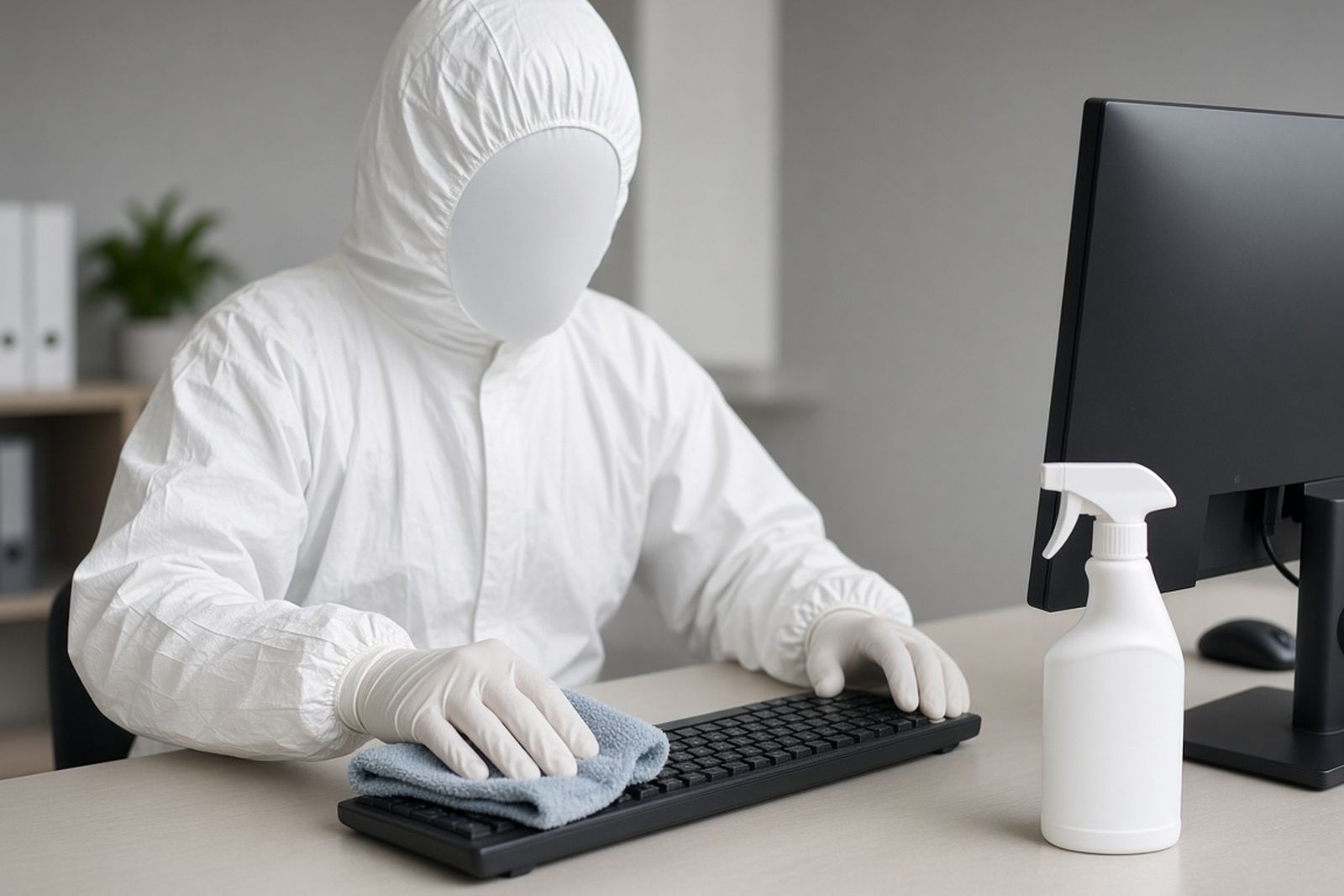
Managing Stress and Disruption During Sanitization & Fogging
After an outbreak, fear of germs and worry about chemicals can collide. Ways to manage stress, closures, and household disruption around a fogging service.
Sanitization and fogging services often happen during stressful moments: an illness in the household, an outbreak at work, or worried customers. Owners may feel fear of spreading germs, anxiety about chemicals, guilt, and frustration with closures. You can ease the strain by getting clear product and re-entry information, planning the disruption, communicating calmly with others, and avoiding anxiety-driven overcleaning with risky chemical mixtures.

Mental Health Resources During Sanitization & Fogging
An outbreak at home or work can leave lingering worry about germs. Support for health anxiety, guilt, grief, and staff strain around fogging decisions.
Fogging is often requested during stressful moments: an illness in the family, an outbreak at work, or a death from an infectious disease. It is normal to feel anxious, guilty, or on edge, and to want the most thorough option. Support is available through your doctor, counselors, employee assistance programs, SAMHSA's Disaster Distress Helpline, and the 988 Suicide and Crisis Lifeline for anyone in crisis.
Sourced figures on health & wellness
- HR 1.12
Among 61,539 U.S. female nurses followed for six years, weekly disinfectant use showed no significant association with new asthma diagnoses (hazard ratio 1.12, 370 cases).
Read with care: Self-reported exposure and diagnoses; the same cohort found associations with COPD, so the absence of an asthma link is not an all-clear.
Source: American Journal of Industrial Medicine (PMC) (2019)Nurses' Health Study II; 61,539 U.S. female nurses without prior asthma; 2009 to 2015
- HR 1.38
Weekly disinfectant use for surface cleaning was associated with a 38% higher rate of new COPD diagnoses among 73,262 U.S. female nurses over six years.
Read with care: Observational study of occupational exposure in healthcare workers; it cannot prove causation or be applied directly to one-time fogging services.
Source: JAMA Network Open (2019)Nurses' Health Study II; 73,262 nurses; 582 incident COPD cases; 2009 to 2015
- 45,550
U.S. poison centers logged 45,550 cleaner and disinfectant exposure calls in January through March 2020, and inhalation exposures to disinfectants rose 108.8% over the same period in 2019.
Read with care: Calls reflect reported exposures, not confirmed poisonings, and the spike coincided with pandemic-driven home cleaning.
Source: CDC MMWR (2020)United States; National Poison Data System; January to March 2020 versus 2019
These figures are public research and agency data, not this network's own job records. Keep each number with its population, year and limits; none of them predicts cost, timing or outcome at a specific property.
What research has found
Findings from published studies of people and properties in situations like this one. They describe what researchers observed in a specific group; they are not predictions for your case.
Microorganisms decreased significantly on sampled surfaces after treatment.
The comparison found no significant difference between preceding cleaning with and without UV.
Health & Wellness: common questions
How should I explain a disinfection visit to worried parents or staff?
Describe what will be done in plain words. Say which rooms, when, which product, and when spaces reopen. Stress that cleaning of often-touched surfaces goes on every day. Explain that the visit supports handwashing and staying home when sick, and does not replace them. Do not promise that the building is now germ-free.
What if someone in our building is sensitive to disinfectant odors?
Ask the company about lower-odor products that still fit your needs and the label rules. Schedule spraying well before the person returns, and air out the space for longer afterward. Tell the people affected about the schedule ahead of time. If symptoms occur, encourage them to talk with their doctor and share the product's safety data sheet.
Where can staff find support after an outbreak caused serious illness?
An employee assistance program, if you have one, can connect staff with counseling. Local health departments and community groups may share grief and support resources after a severe outbreak. If anyone feels overwhelmed or unsafe, urge them to contact a crisis line or emergency services right away. Check in with your team in the weeks that follow.
How can staff raise health concerns about treatments without worrying about backlash?
Name one person to receive concerns. Make clear that raising them is welcome, and respond quickly. Share product details and schedules before each treatment so people can plan. Keep a simple log of concerns and what was done about them. When staff see that concerns lead to changes, like a longer airing-out time or a different product, they are more likely to speak up.
Should pregnant employees avoid recently treated areas?
They should talk with their doctor and share the product's safety data sheet. Many employers offer a short-term workspace away from treated areas for a while after re-entry. That is a simple, low-cost adjustment. Pregnant staff should not handle concentrate or run sprayers without medical advice. Offer the option without making anyone share more than they want to.
How can I ease children's worries when they return to a treated classroom?
Keep the explanation simple. The room got an extra careful cleaning so everyone can stay healthy. Let children see that the room looks the same and that their things are where they left them. Follow the usual routine. If a child mentions a smell, reassure them that the room was aired out. Tell families what was done so they can answer questions at home.
How can a manager tell whether staff worry is about germs or about chemicals?
Ask open questions and listen, since people often feel both. Someone who asks when the room was treated and what was used may be worried about chemicals. Someone who asks whether surfaces are safe to touch may be worried about germs. Answer each worry directly. Give product details for one and cleaning details for the other. That calms people faster than general comfort.
Related community polls
Every count is a real visitor vote; nothing is seeded or padded. One vote per poll per device, and you can change your answer.
A vendor offers to fog your classrooms at lunch while students are outside. What do you say?
How do you see repeat fogging contracts today?
More on sanitization & fogging
Sanitization & Fogging services
See how electrostatic spray, heat fogging, UV-C, and scheduled programs fit into a clean-first, then-disinfect plan for your building or fleet.
Costs explained
What drives the price, published cost ranges, and how to read a written quote line by line.
Insurance and payment
Which policies may respond, how to document a claim, and what to do if coverage is denied.
Planning tools
Estimate costs, vet companies, sort waste, and choose between wiping and fogging with tools built for offices, gyms, schools, and fleets.
Community polls
See how other facility managers weigh fogging contracts, air system control, label checks, and re-entry timing against cost and daily disruption.
Knowledge quiz
Check whether you can spot a label mismatch, fogging with people present, or a skipped cleaning step. Then review the study guide.