Sanitization & Fogging: Regulations
How to identify the worker-safety, waste, transport, environmental, and local rules that may apply to sanitization & fogging. Confirm jurisdiction-specific requirements with the issuing authority.
The rules category explains the rules that shape how disinfectants may be sold, used, and thrown out in your building. Posts cover why disinfectants fall under federal pesticide law and why the label works as a legal document. They explain how state agencies register products and sometimes license business applicators. They also cover how OSHA rules on chemical hazard warnings and breathing protection apply to the workers doing the job. Other articles walk you through looking up the rules for leftover concentrate, empty containers, and covers used during a visit. You will also read how childcare and food settings can bring separate license or health code rules into a job.
Get an email reply about sanitization & fogging
Send a short message to the follow-up inbox. A coordinator can reply by email. This form does not send emergency help; call 911 first if anyone is in danger.
Knowing how the rules fit together lets you check a vendor instead of trusting a sales pitch. Product registration and applicator licenses vary from state to state. So these posts focus on which agency to contact and which document to ask for. They do not list rules that may not apply to you. That approach helps you catch a proposal that uses a spray method the label does not list, or an unregistered product. You can catch it before it reaches your classrooms or locker rooms. It also gives you a paper trail if a parent, member, or employee later asks what was used and who approved it. Keeping that record handy makes those talks calmer and more factual.

OSHA Regulations and Sanitization & Fogging
Fogging puts disinfectant into the air that workers breathe. See how OSHA chemical, PPE, and respirator rules shape a safe fogging job and what you should ask.
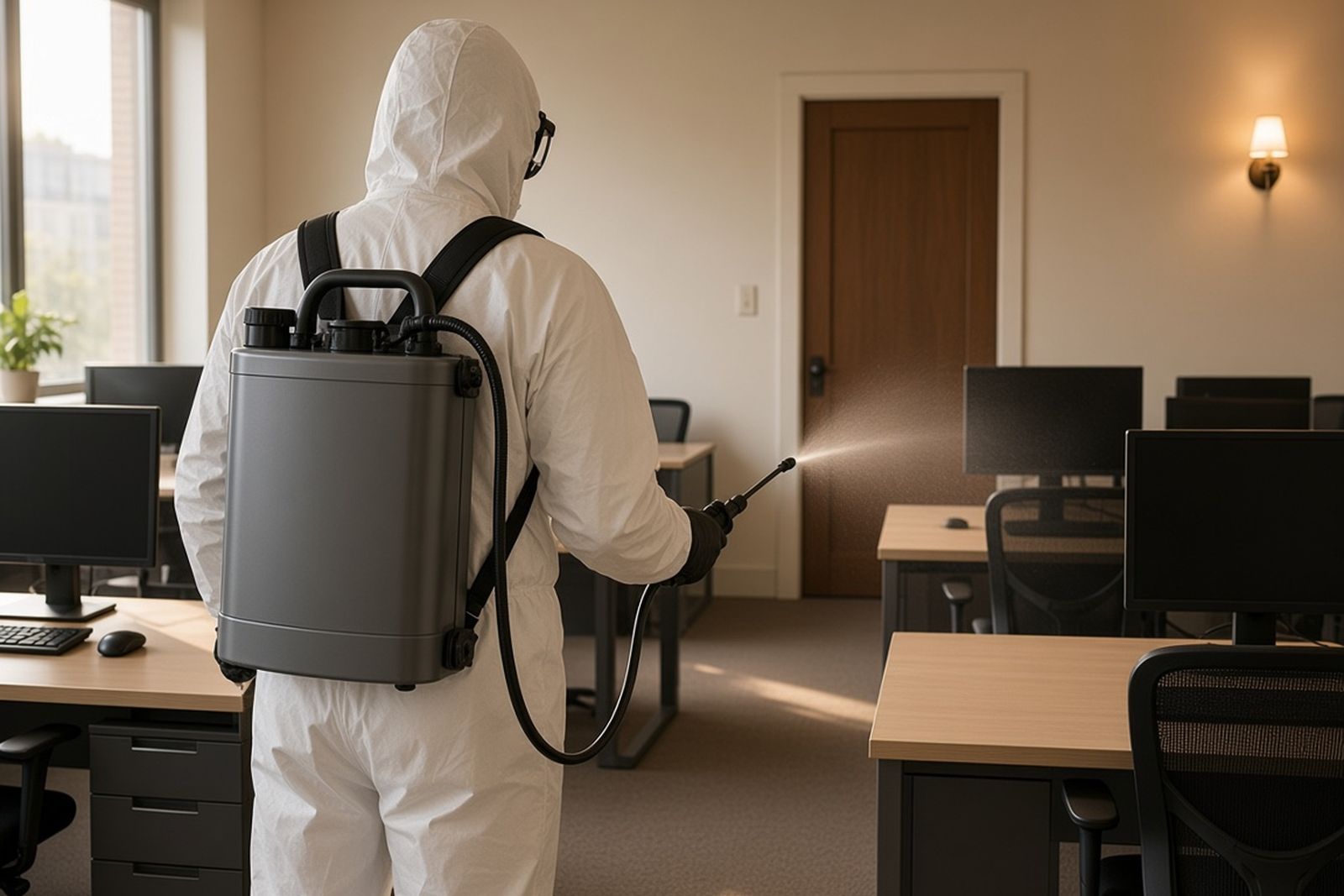
OSHA rules protect the technicians who apply disinfectants by fogging or electrostatic spraying, not the building itself. Hazard communication requires labels, safety data sheets, and training. PPE and respiratory protection rules apply when mist or vapor could be inhaled, and exposure limits cap airborne levels of some chemicals. Employers who have their own staff fog, or who let workers back into treated rooms, carry duties too.
Which Federal, State, and Local Rules Apply to Sanitization & Fogging?
Fogging sits under federal pesticide labels, state product registration, applicator licensing, OSHA, and local health codes. See which layer applies to you.
Sanitization and fogging are governed mainly through pesticide law, because disinfectants are registered pesticides. EPA registers products and approves label directions, including whether fogging is allowed. States register products for sale and may license commercial applicators. OSHA protects workers, and local health codes set expectations for food service, childcare, and healthcare settings. Check the label first, then state and local rules.
How to Research Waste Rules for Sanitization & Fogging
Leftover tank mix, empty jugs, spent cartridges, and wipes all need a disposal plan. Learn how to research waste rules for sanitization and fogging jobs.
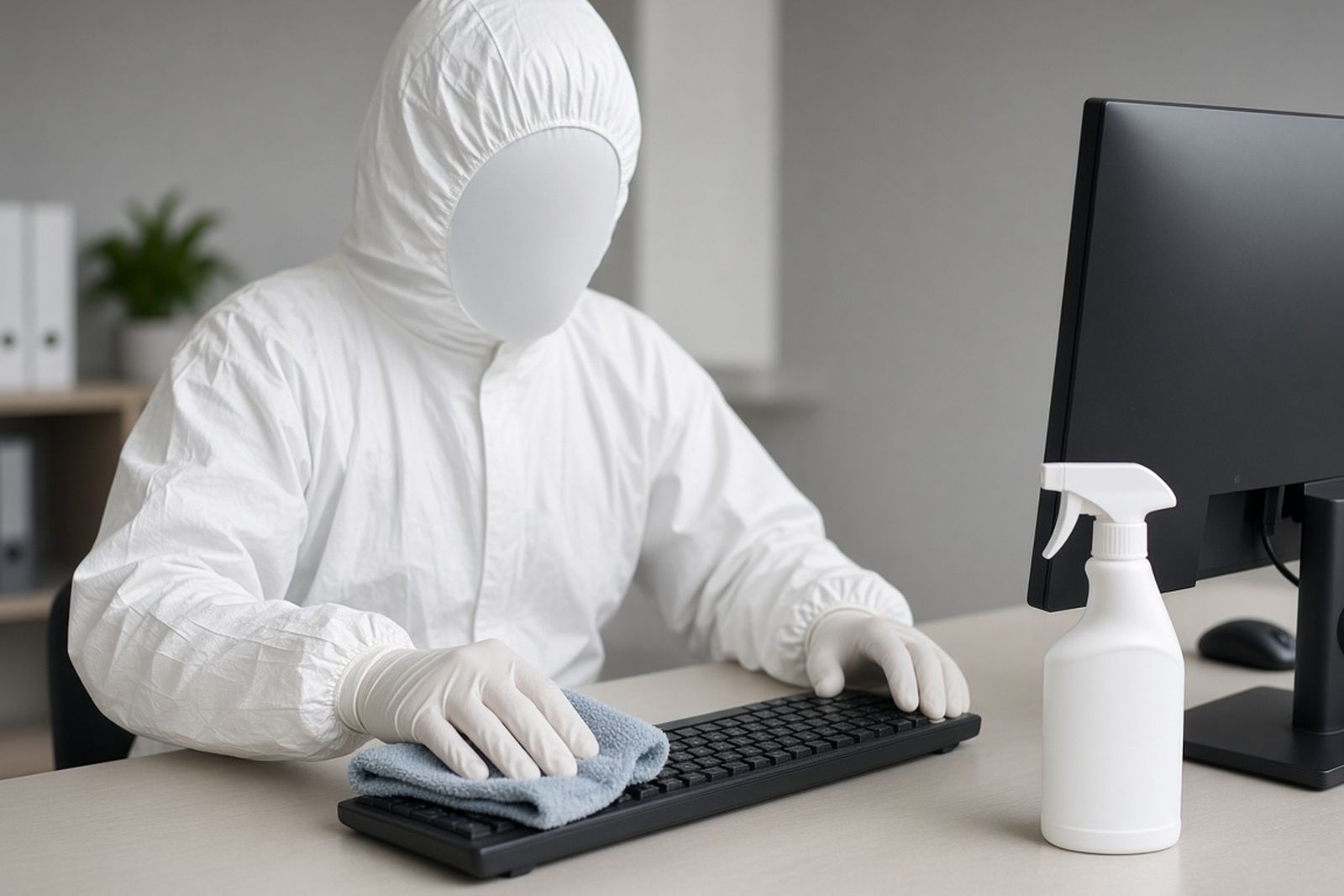
To research waste rules for sanitization and fogging, start with each product label's storage and disposal section, which is legally binding. Then sort the waste: leftover diluted solution, concentrate, empty containers, used wipes and PPE, and spent cartridges. Check local sewer rules before pouring anything down a drain, and household or commercial hazardous waste programs for concentrates. Waste from biohazard cleanups may follow stricter rules.
Sourced figures on regulations
- >6-log
A 2026 peer-reviewed lab study found electrostatic spraying of 2% hydrogen peroxide with a 10-minute contact time achieved more than a 6-log reduction of E. coli on 16 surface types.
Read with care: Single lab study with one organism and pre-inoculated surfaces; results depend on the 10-minute wet contact time being achieved.
Source: Infection, Disease & Health (Elsevier) (2026)Laboratory environment in India; E. coli on 16 inanimate surfaces; single research group
- 20 seconds
A portable 254 nm UV-C device at 1 cm for 20 seconds fully inactivated five bacterial species and cut mean hospital-surface colony counts from 63.2 to 3.6.
Read with care: Efficacy was measured at 1 cm distance; UV-C output falls off quickly with distance and does not reach shadowed surfaces.
Source: Photodiagnosis and Photodynamic Therapy (PMC) (2020)Brazilian hospital surfaces and six reference strains; single device; 2020
- 250 RLU
A 1,300-bed UK teaching hospital study proposed a stricter ATP pass/fail benchmark of 250 RLU for surfaces, revised down from the earlier general benchmark of 500 RLU.
Read with care: RLU values are not comparable across meter brands, and ATP measures organic residue, not whether pathogens were killed.
Source: Journal of Hospital Infection (2008)One UK NHS teaching hospital; one ATP test and device combination; 2008
These figures are public research and agency data, not this network's own job records. Keep each number with its population, year and limits; none of them predicts cost, timing or outcome at a specific property.
What research has found
Findings from published studies of people and properties in situations like this one. They describe what researchers observed in a specific group; they are not predictions for your case.
Conferences and study days were a major source of biofilm knowledge.
Floors were disinfected less consistently than high-touch surfaces.
Regulations: common questions
Why is a disinfectant label treated as a legal requirement?
Under federal pesticide law, the label is the approved set of instructions. Using a product in a way that does not match its label is generally against the law. That covers the spray method, the dilution, how long surfaces must stay wet, and the required safety gear. When a vendor proposes fogging, the label must support that method for the product chosen.
Which OSHA rules apply to a fogging crew?
OSHA rules on chemical hazard warnings require employers to inform and train workers about the chemicals they use. That includes access to safety data sheets. If a product or method calls for masks, the employer's breathing protection program applies. These rules protect the company's workers. Ask the company how it meets them rather than assuming it does.
How should leftover disinfectant from a visit be disposed of?
Follow the storage and disposal section of the product label first. Unused concentrate and rinse water may not belong down a drain or in regular trash. That depends on the product and your local rules. The company should normally take its own leftover product away with it. If you are not sure, ask your state environment agency or local waste office.
Does my state regulate who can apply disinfectants for hire?
Some states do and some do not, and the categories vary. Many states license business pesticide applicators. Some include paid disinfecting work, and others exempt it. Your state pesticide agency, often part of the department of agriculture, can tell you what applies to fogging or electrostatic spraying in your type of building. Ask the company what license it holds, too.
Who handles complaints about disinfectant misuse?
State pesticide agencies usually handle concerns about pesticide use, and disinfectants fall under pesticide law. That agency is usually the right contact if a product was used in a way its label does not allow. The same goes if people were exposed during spraying. Concerns about worker exposure may also involve workplace safety agencies. Local health departments can help with concerns in food service or childcare settings.
Do schools and childcare centers face extra rules on disinfectant use?
Often, yes. State licensing standards for childcare and school district policies may cover which products can be used, when, and how families are told. Some states have rules for pesticide use in schools that may reach disinfectants. Check with your licensing agency, district office, or state pesticide agency before you book any fogging or electrostatic treatment in these settings.
Is a provider allowed to mix its own disinfectant blend?
A homemade blend is not a registered product. So it has no approved label, no germ-killing claims, and no directions for fogging. Mixing registered products can also create dangers and cancel their label claims. Companies should use registered products at the dilutions their labels list. If a company describes its own secret or custom mix, ask for its registration number and label. Without them, turn down the service.
Related community polls
Every count is a real visitor vote; nothing is seeded or padded. One vote per poll per device, and you can change your answer.
A vendor offers to fog your classrooms at lunch while students are outside. What do you say?
How do you see repeat fogging contracts today?
More on sanitization & fogging
Sanitization & Fogging services
See how electrostatic spray, heat fogging, UV-C, and scheduled programs fit into a clean-first, then-disinfect plan for your building or fleet.
Costs explained
What drives the price, published cost ranges, and how to read a written quote line by line.
Insurance and payment
Which policies may respond, how to document a claim, and what to do if coverage is denied.
Planning tools
Estimate costs, vet companies, sort waste, and choose between wiping and fogging with tools built for offices, gyms, schools, and fleets.
Community polls
See how other facility managers weigh fogging contracts, air system control, label checks, and re-entry timing against cost and daily disruption.
Knowledge quiz
Check whether you can spot a label mismatch, fogging with people present, or a skipped cleaning step. Then review the study guide.