Short answer
A sanitization or fogging job takes longer than the spraying itself. Time goes to a walkthrough, cleaning surfaces first, preparing the room by shutting off air handling and covering sensitive items, applying the product, waiting out the label contact time, and then ventilating until the label's re-entry conditions are met. Room size, product choice, and how much pre-cleaning is needed set the total.
The spraying is the short part
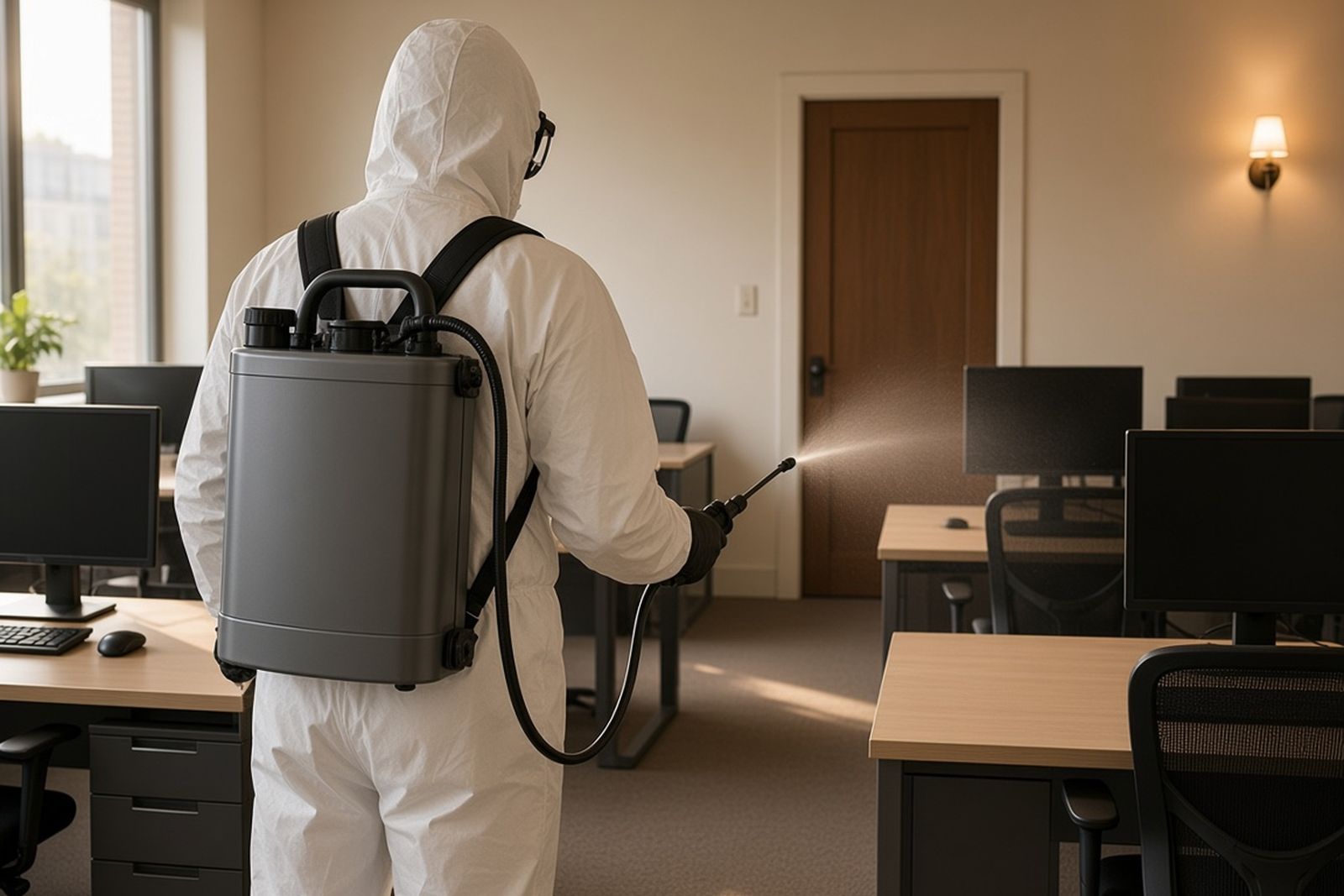
Watching a technician move through a room with a fogger or electrostatic sprayer, you might think the job is nearly done once the mist clears. In reality, application is one step in a sequence, and often not the longest one.
The steps before application, such as cleaning, preparing the room, and moving people out, and the steps after, such as waiting through contact time and ventilating, make up most of the schedule. Skipping them makes the job faster on paper but can make it ineffective or unsafe.
When you ask a provider how long the service takes, ask them to break the answer into those phases. The breakdown tells you whether they plan to do the parts that make disinfection work.
What happens during the walkthrough and planning stage?
A good provider starts by walking the space. They note room sizes, ceiling heights, surface types, high-touch areas, electronics, food-contact areas, and how air moves through the building. They ask what prompted the service, whether it is a response to illness, routine maintenance, or preparation for an event.
That information shapes product choice and method. A gym with rubber flooring and upholstered benches needs a different plan than an office with computers or a classroom with toys. The provider checks that the chosen product's label allows the proposed application method and lists the organisms relevant to your situation.
For repeat clients, this stage can be short because the plan already exists. For first-time or unusual jobs, allow time for it before anyone starts spraying.
Expect questions about your building systems as well. The provider may need to know where the thermostat and air handler controls are, whether any rooms share return air, and how the fire alarm system responds to airborne particles. Getting those answers from facilities staff before the scheduled date saves time on the night of treatment.
Pre-cleaning: often the longest step
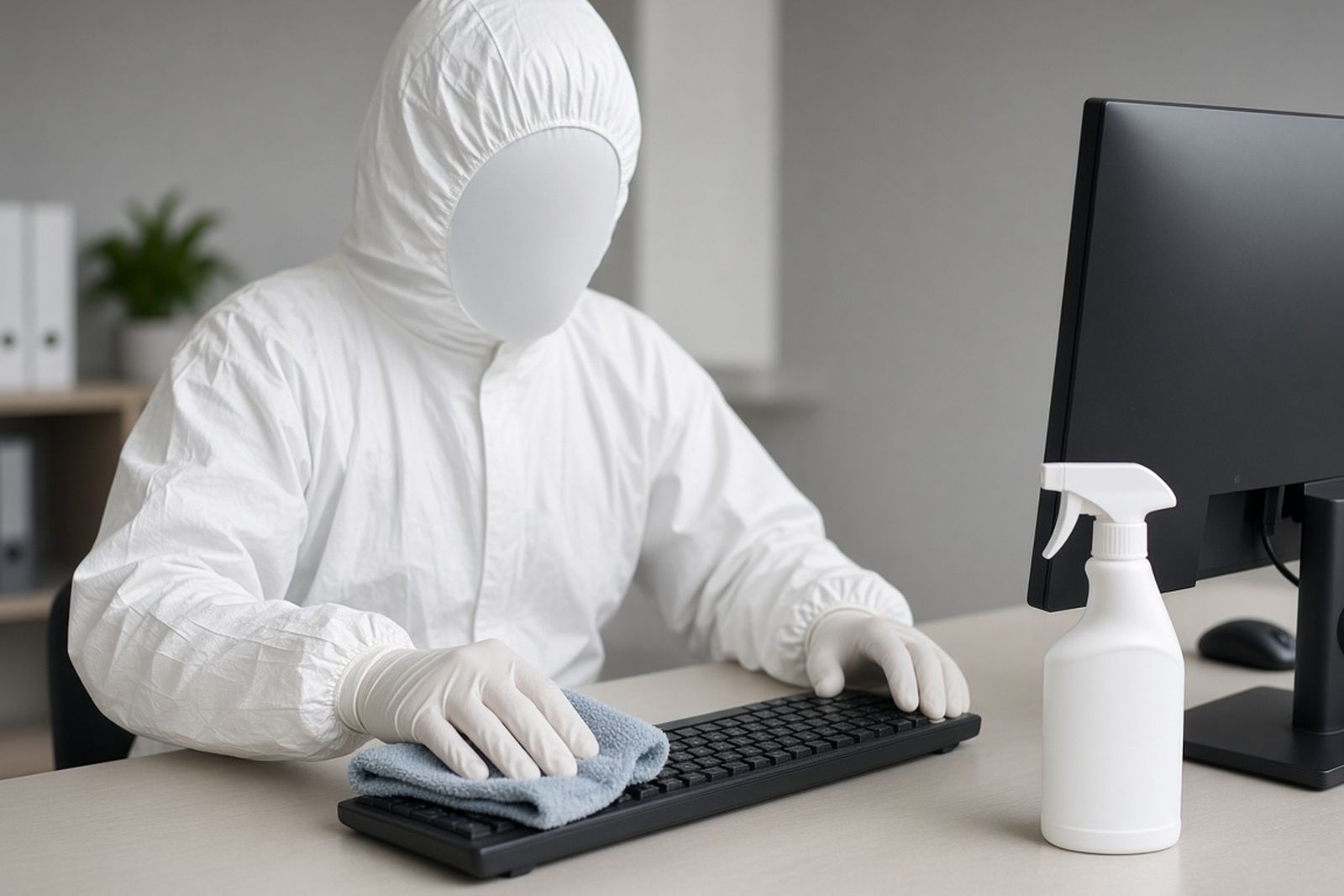
Disinfectants work poorly on dirty surfaces, so cleaning comes first. That means removing visible soil, wiping down high-touch surfaces with detergent, clearing trash, and addressing any spills or bodily fluids that need direct attention.
The time this takes depends on how clean the space already is. A well-maintained office that is cleaned nightly may need only light prep. A locker room, a daycare after an illness outbreak, or a space with visible contamination needs thorough cleaning before any disinfectant goes on. Some providers handle pre-cleaning themselves; others expect your janitorial staff to do it first.
Make sure you know who is responsible. If the provider arrives expecting a cleaned space and finds otherwise, the job may be delayed or rescheduled.
Carpets and soft furnishings deserve a note. Mist settles on fabric but does not clean it, and many surface disinfectants are not labeled for porous materials at all. If couches, rugs, or curtains are a concern, they may need laundering, steam cleaning, or a product specifically labeled for soft surfaces, each with its own drying time.
- Remove trash and clutter from surfaces.
- Clean visible soil and spills with detergent.
- Wipe high-touch surfaces such as handles, switches, and railings.
- Address any bodily fluids directly before general application.
Room preparation before application
Preparation protects people, equipment, and the effectiveness of the treatment. Occupants leave the area, and pets are removed. Air handling is often turned off so mist is not pulled into ducts or blown away from surfaces. Smoke detectors may need to be covered temporarily if the method could trigger them, with the building's fire safety procedures followed.
Sensitive items such as open food, dishes, electronics, documents, and artwork may be removed or covered. Food-contact surfaces may need special handling depending on the label. Doors to adjoining spaces are closed, and signage is posted so no one walks in during treatment.
Larger or more complex buildings take longer to prepare, especially if several zones must be treated in sequence.
Application and contact time
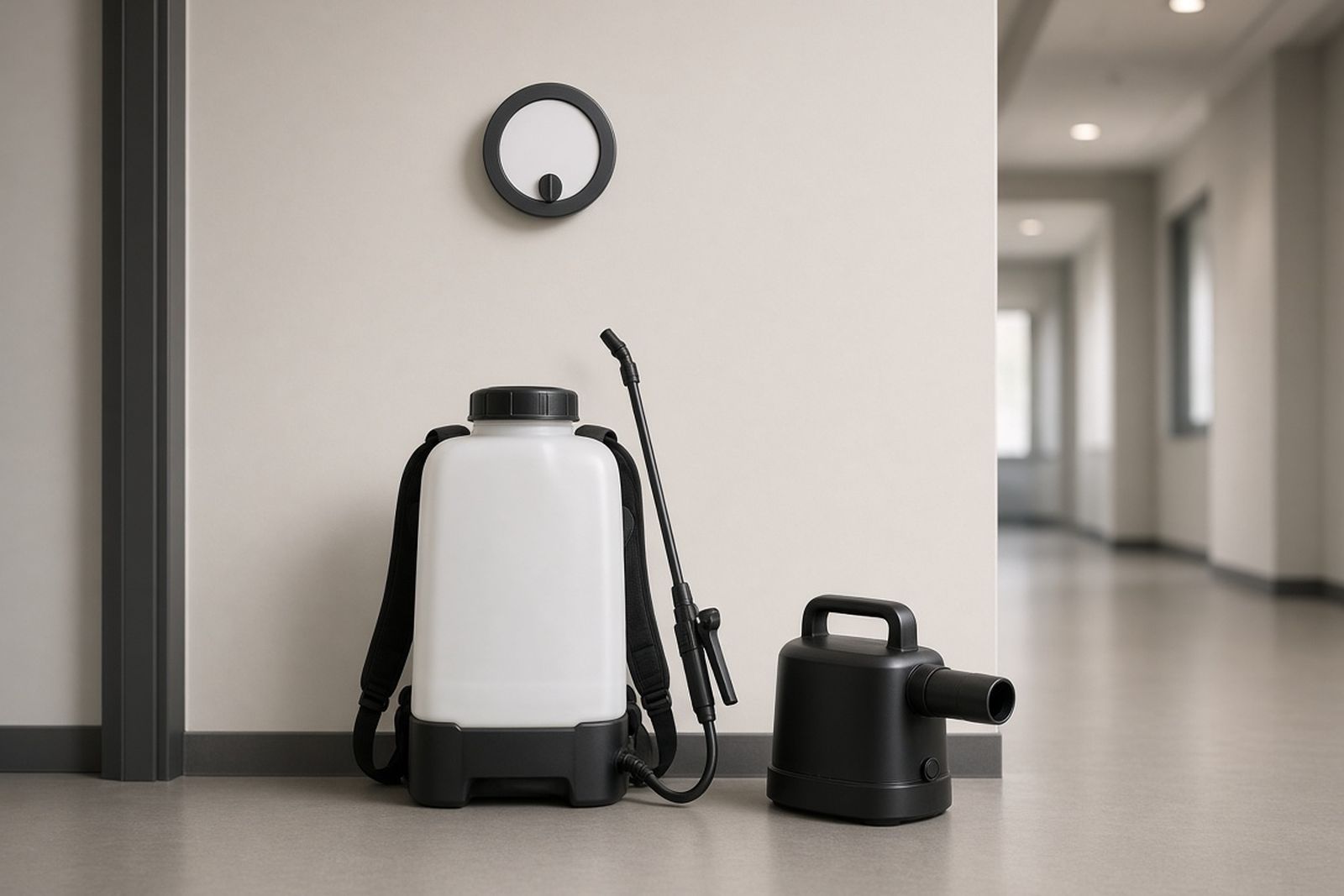
Application speed depends on the equipment, room size, and the need to reach every surface from more than one angle. Technicians move methodically, directing spray toward high-touch areas and working from the far side of a room toward the exit.
After application, the surfaces must stay wet for the full contact time listed on the product label. That time varies by product and organism. If surfaces dry too quickly, a careful provider will reapply rather than accept a shortened contact period.
Some methods take much longer than others. In one 2009 study in Infection Control and Hospital Epidemiology covering 1,565 rooms in a U.S. hospital, hydrogen peroxide vapor room decontamination took a mean of 2 hours 20 minutes per patient room, compared with 32 minutes for conventional cleaning. Room-sealing vapor systems are different from the handheld foggers used in most commercial settings, but the finding shows how method choice changes the schedule.
Re-entry: when people can go back in
Re-entry is set by the product label, not by how the room smells or looks. Labels may specify a waiting period, a ventilation requirement, or a condition such as surfaces being dry. Some products require food-contact surfaces or children's items to be rinsed before use.
Ventilation usually involves opening windows and doors where possible and restarting air handling once the label allows. The provider should give you a written re-entry time for each treated area and tell you if any surfaces need rinsing.
Schools, childcare centers, food service areas, and healthcare settings may have additional requirements for when and how disinfectants are applied, so check with your licensing agency or local health department before you set a reopening time.
If some surfaces need rinsing or wiping after treatment, plan who will do it. Toys, high chairs, cafeteria tables, and kitchen prep areas are common examples. Leaving that step to morning staff who were not briefed can lead to it being missed, so ask the provider to include it in their visit or to leave clear written instructions.
Start to finish: a fitness studio example
Here is an illustrative timeline. Say you manage a mid-size fitness studio with a main workout floor, two locker rooms, and a front desk area. Several members report a stomach illness, and you decide to close for a day to disinfect.
The provider would arrive after your last class. Your staff would have already cleared personal items from lockers and removed trash. The provider's crew would start by cleaning locker room benches, sinks, toilets, and showers, then wipe down equipment grips, mats, and the front desk.
Next, they would shut down the air handling, cover the sound system and front desk computer, and post signs on every door. They would apply a disinfectant labeled for the relevant virus and approved for the method they use, zone by zone, keeping surfaces wet for the full contact time.
After the label's re-entry conditions were met, the crew would restart ventilation and rinse surfaces the label specified. You would receive written notes on what was treated, which product was used, and when each area was cleared for use. Your studio would be ready to reopen at the time the provider confirmed in writing.
What slows a fogging job down?
The most common delay is a space that is not ready. If surfaces have not been pre-cleaned, if occupants are still present, or if the air handling cannot be shut off, the crew must wait or adjust the plan.
Other delays come from the building itself. Large open areas with high ceilings, many small rooms, lots of furniture, or delicate equipment all take more time to prepare and treat properly. Humidity and temperature can affect how quickly surfaces dry, which may require reapplication.
A change in scope, such as adding more rooms at the last minute, also extends the job. Planning the full scope in advance keeps the schedule predictable.
Verification can add a little time, and it is usually worth it. Some providers take ATP readings or other surface checks before and after treatment to show whether cleaning and disinfection reached the intended areas. Ask whether this is offered and how the results will be shared with you.
Planning around a sanitization service
Schedule treatment for a time when the space would be empty anyway, such as overnight or on a closed day. Confirm who is responsible for pre-cleaning, and make sure it is done before the crew arrives. Share building details such as HVAC controls, alarm systems, and any areas that are off limits.
Ask the provider for a written plan showing each zone, the product to be used, the contact time, and the re-entry time. If anyone who uses the space has asthma, chemical sensitivity, or a medical condition, tell the provider so they can adjust the product or re-entry time accordingly.
Finally, remember that fogging is a point-in-time treatment. Surfaces begin to be recontaminated as soon as people return. Routine cleaning of high-touch surfaces, good hand hygiene, and encouraging sick people to stay home do more over time than any single treatment. A provider who tells you that honestly is one worth keeping.