Short answer
PPE for sanitization and fogging starts with the product label and safety data sheet, then adjusts for the space and application method. Most jobs call for chemical-resistant gloves, sealed goggles, and clothing that keeps mist off the skin. Enclosed rooms, fine-droplet foggers, and some active ingredients call for a fit-tested respirator with the right cartridge. Removal and re-entry steps matter as much as the gear.
The product label comes first
Every registered disinfectant has a label that tells applicators what protective equipment is required. For fogging and electrostatic spraying, that label is the first place a technician should look. It may call for specific gloves, eye protection, clothing, and sometimes a respirator.
The safety data sheet adds detail. It describes the product's hazards, how it can enter the body, and what exposure controls are recommended. Together, the label and data sheet set the minimum.
A hazard assessment then fills in the rest. The size of the room, ventilation, how long the technician will be inside, the droplet size the equipment produces, and whether anyone has chemical sensitivities all shape the final choice. Some states also license disinfectant applicators in certain settings; the state pesticide regulatory agency can tell you whether that applies.
The baseline ensemble
For a typical fogging or electrostatic spraying job, technicians usually wear protection for the eyes, hands, and skin at a minimum. Mist travels and settles on everything in the room, including the person holding the nozzle.
Glove material matters. Nitrile works for many disinfectants, but some products call for other materials. The safety data sheet or label should guide the choice. Eye protection should be sealed goggles rather than open safety glasses, since fine mist can drift around the edges of glasses.
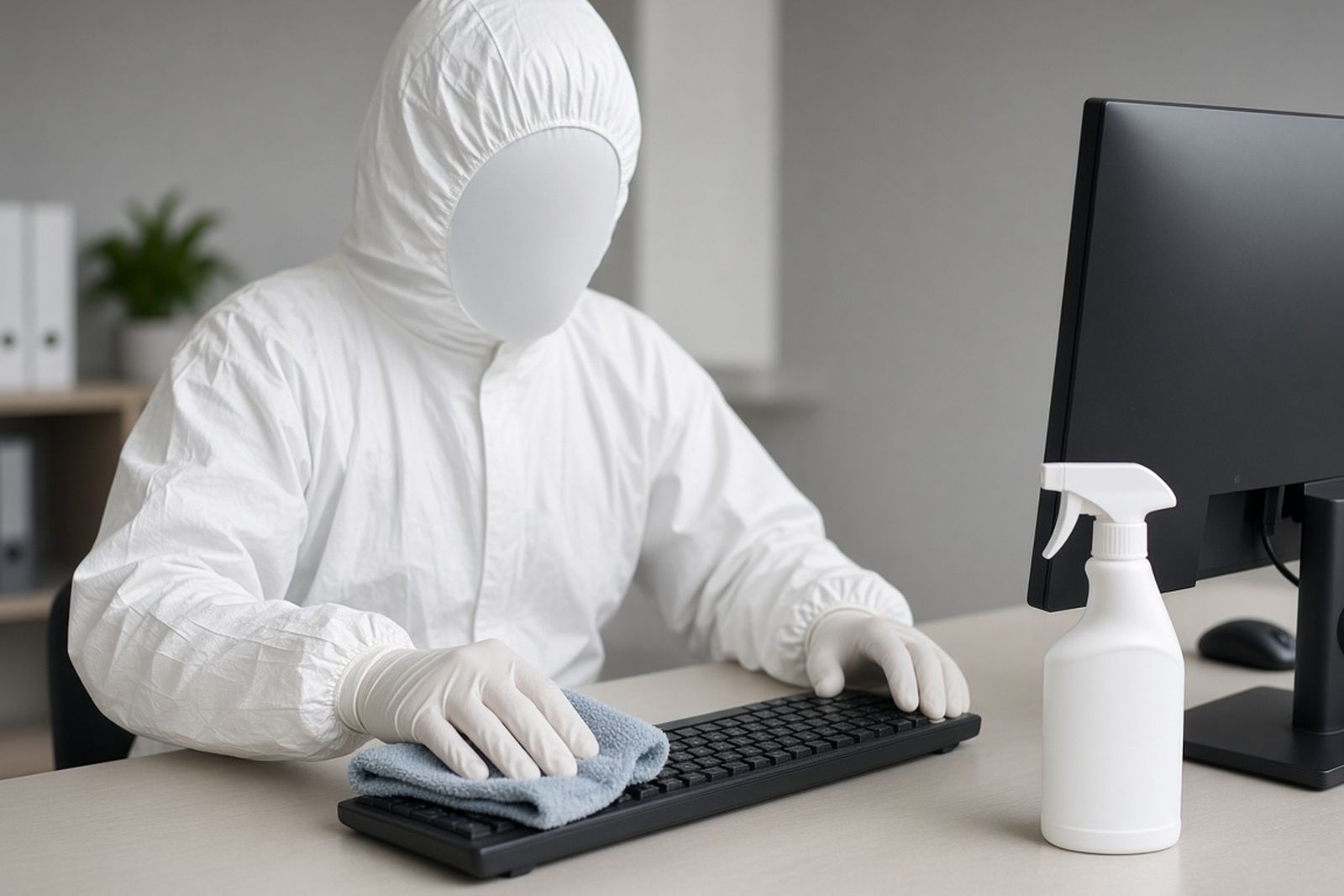
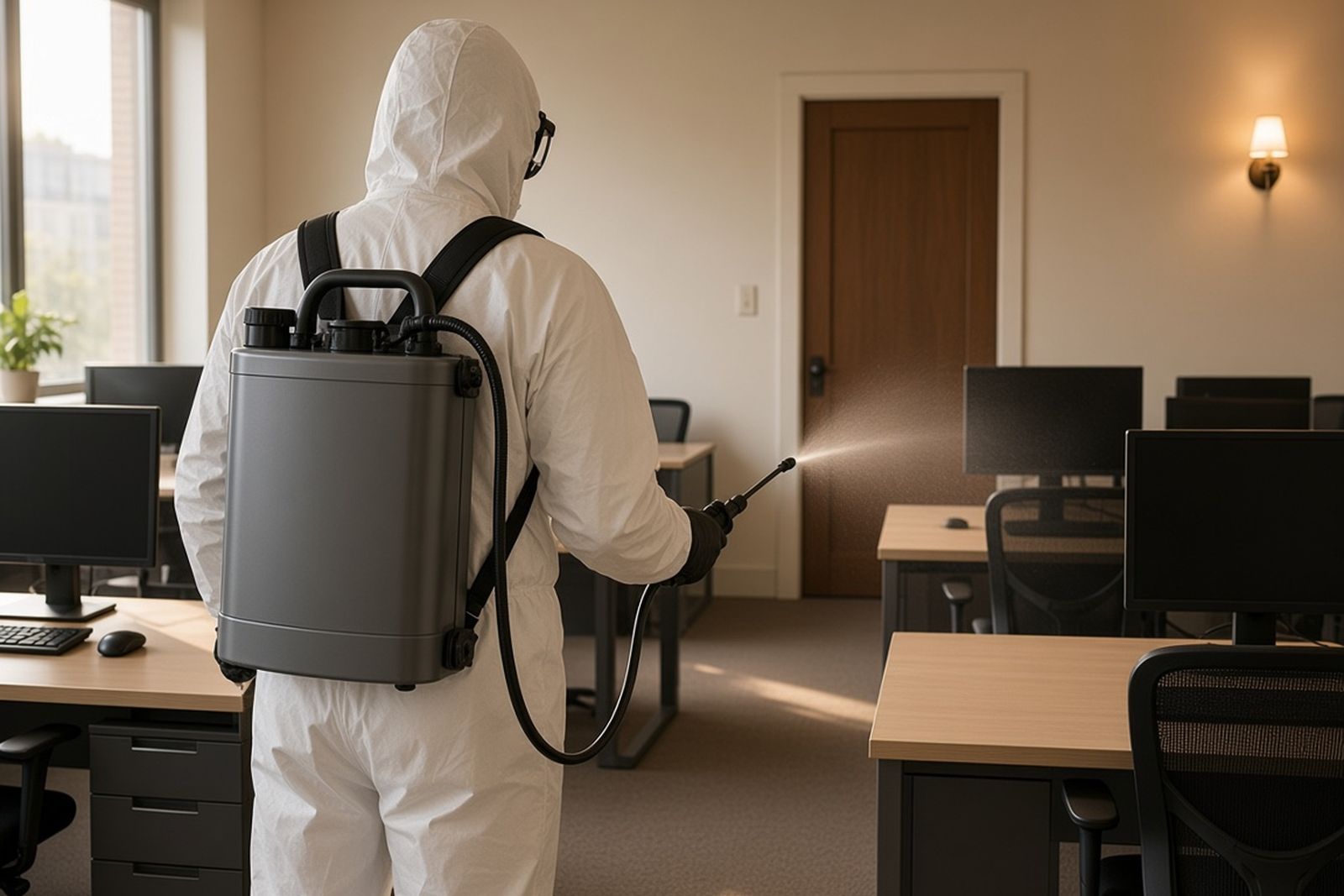
Clothing choices depend on how much mist the technician will walk through. For a quick electrostatic pass over a few desks, long sleeves and gloves may be enough. For a full room fog in a confined space, disposable coveralls with hoods keep droplets off hair and street clothes, so the technician does not carry product residue home.
- Chemical-resistant gloves matched to the product.
- Sealed goggles or a full-face respirator.
- Long sleeves or disposable coveralls to keep mist off skin.
- Closed shoes or shoe covers, especially on floors that stay wet.
- A respirator when the label, safety data sheet, or assessment calls for one.
When does a technician need a respirator?
Respiratory protection depends on the product, the equipment, and the space. Some product labels require a respirator during fogging. Others do not, but the employer's assessment may still call for one, particularly in small or poorly ventilated rooms where a technician spends extended time inside the mist.
Droplet size is part of the decision. Fine-droplet foggers create mist that lingers in the air longer, which increases inhalation exposure. Electrostatic sprayers usually produce larger droplets that settle faster, though they still create airborne mist near the nozzle.
The respirator has to match the hazard. Particle filters catch droplets. Some active ingredients also produce vapors, which may call for chemical cartridges or combination filters. Any required respirator brings OSHA's respiratory protection program with it: medical evaluation, fit testing, and training.
Fit matters as much as filter type. A respirator only works when it seals to the face, which is why fit testing is done with the exact model and size each technician will wear. Facial hair along the seal line defeats a tight-fitting respirator, and technicians should perform a quick seal check each time they put one on.
Long-term exposure and fogging crews
A single job rarely causes lasting harm when products are used as directed. The bigger concern is cumulative exposure for workers who apply disinfectants frequently. Research on healthcare workers, who use these products heavily, has found associations with respiratory disease.
Among 73,262 U.S. female nurses followed over six years, weekly disinfectant use for surface cleaning was associated with a 38% higher rate of new COPD diagnoses, according to a study published in JAMA Network Open in 2019. The study looked at surface cleaning in general, not fogging specifically, but it is a reminder that repeated exposure matters.
Awareness is often low. In the 2023 Arizona study of cleaning services personnel by Wilson and colleagues, eight of 11 interviewees were unaware of asthma risk associated with cleaning work. Good training helps technicians understand why the gear matters on every job, not just the ones that smell strong.
Other research is more reassuring on some outcomes. A study of 61,539 U.S. female nurses followed for six years, published in the American Journal of Industrial Medicine in 2019, found that weekly disinfectant use showed no significant association with new asthma diagnoses (hazard ratio 1.12, 370 cases). Mixed findings like these are a reason for sensible precautions, not alarm.
Adjusting gear to the method and the space
Fogging a large, high-ceilinged warehouse with good ventilation is a different exposure from fogging a small windowless restroom. The same product can call for different levels of protection in each space.
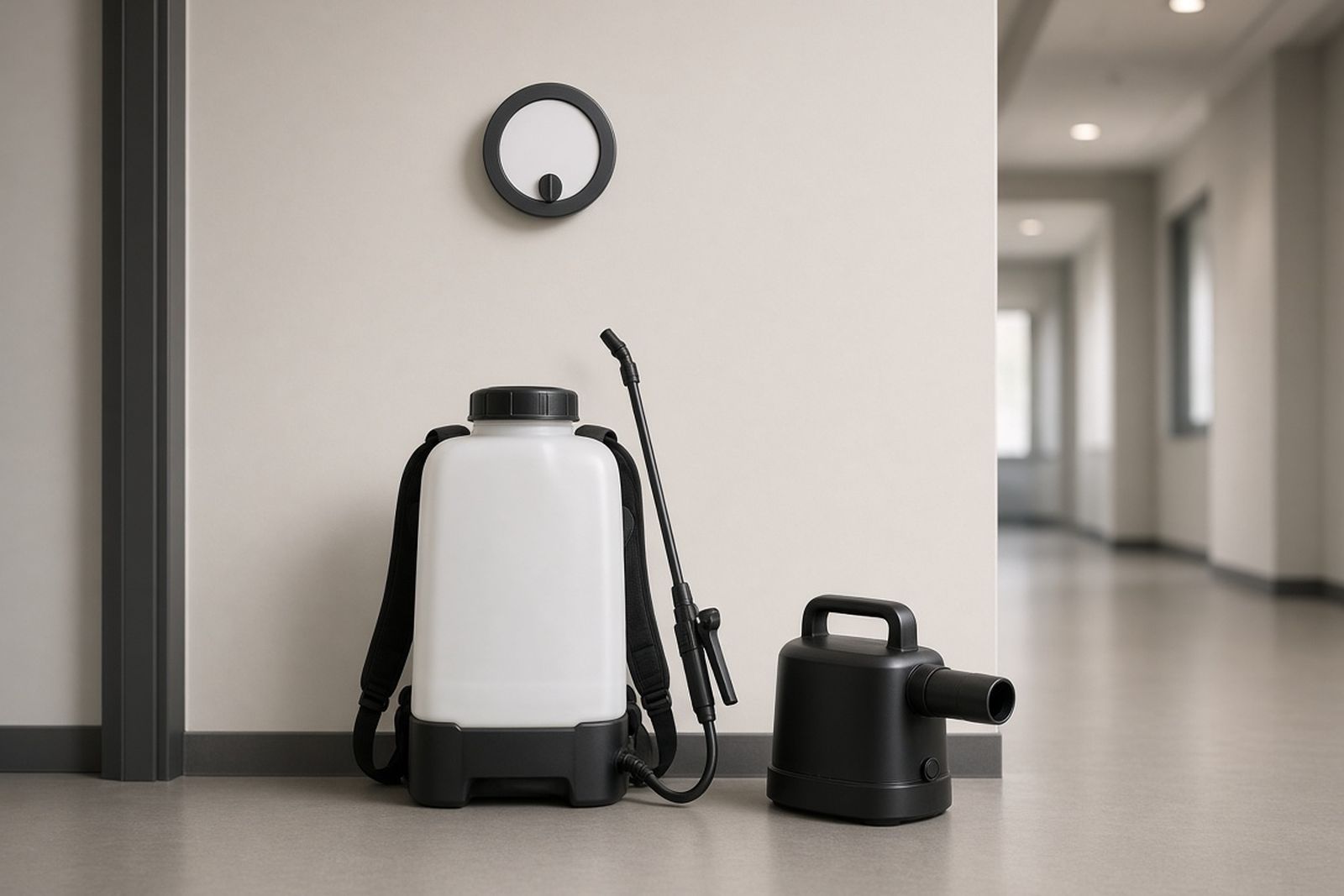
Electrostatic spraying of individual surfaces, done by walking a room and aiming the nozzle, may involve shorter exposure than running a stationary fogger that fills a room. Vapor-phase systems like hydrogen peroxide vapor are usually run with the room sealed and nobody inside, so PPE focuses on setup, retrieval, and emergency entry.
Heat can become a factor as well. Coveralls, respirators, and gloves in a warm building can lead to heat stress on long jobs. A thoughtful provider plans breaks and water, rather than letting technicians push through.
Mixing and loading deserve their own attention. Concentrated product is usually more hazardous than the diluted solution in the tank, so technicians often wear their heaviest glove and eye protection while filling equipment, even if the application itself calls for less.
Removing gear and leaving the space
Mist settles on gear, so removal matters. Technicians typically exit the treated area, remove gloves carefully, then coveralls inside out, then goggles and respirator by their straps. Hands are washed with soap and water before touching phones, food, or the vehicle.
Reusable items like respirators and goggles are cleaned according to the manufacturer's instructions. Cartridges are replaced on a schedule or when breathing resistance or odor suggests they are spent. Disposable items are bagged and discarded as the label and local rules direct.
Re-entry is part of the plan. Technicians should not remove their respirator inside the treated space, and nobody else should enter until the label's re-entry conditions are met. Posting a sign on the door with the time the space may reopen helps prevent mistakes.
Spills during filling or on equipment should be cleaned up right away according to the safety data sheet. A technician who wipes a splash off the tank with a bare hand has undone much of the protection the rest of the gear provides.
Small, windowless rooms: how the ensemble changes
Small clinical and office spaces show how the assessment plays out. Waiting rooms, restrooms without windows, and break rooms are tight, and the mist has nowhere to go. If someone who works there has asthma, that raises the stakes further.
The starting point is still a registered product whose label allows electrostatic application on the surfaces involved, and a read of the safety data sheet. If the sheet notes that inhaled mist may irritate the respiratory tract, small rooms usually justify a fit-tested half-mask respirator with combination cartridges, along with sealed goggles, chemical-resistant gloves, and a disposable coverall.
The sequence matters as much as the gear: clean visible soil from high-touch surfaces first, spray each room, keep doors closed for the contact time, then run ventilation before posting a re-entry time. Where a staff member has asthma, it is reasonable to keep a room such as the break room closed until the next morning so residual mist has cleared.
What PPE questions should you ask a fogging company?
A few direct questions show whether a provider takes protection seriously. You are listening for answers tied to the specific product and space.
A provider that explains its choices calmly and ties them to the label is usually applying the product correctly as well.
Ask, too, how often the company reviews its PPE choices. Products change, new equipment arrives, and crews move between very different buildings. A provider that revisits its assessments when any of those things change, rather than relying on a decision made years ago, is keeping its protection current for its technicians and for the people who will use your space afterward.
- What does the product label require applicators to wear?
- Will your technician wear a respirator in my space, and is it fit tested?
- How do you decide on protection for small or poorly ventilated rooms?
- How long should the space stay closed, and how will you mark it?
- How do you handle occupants with asthma or chemical sensitivities?
Protecting the people who use the space afterward
PPE protects the technician, but occupants deserve protection too. The best protection for them is not gear but timing and communication: keeping them out until the product has settled and the label's conditions are met.
If you manage the space, tell the provider about anyone with asthma, allergies, or chemical sensitivities. Ask whether a lower-hazard product or a targeted wiping approach would work for some areas. Fogging is one tool among several, and sometimes the right choice is to use less of it.
Sources
- JAMA Network Open — Association of Occupational Exposure to Disinfectants With Incidence of Chronic Obstructive Pulmonary Disease Among US Female Nurses
- Wilson et al. — COVID-19 cleaning protocol changes, experiences, and respiratory symptoms among cleaning services personnel
- American Journal of Industrial Medicine — Occupational exposure to disinfectants and asthma incidence in US nurses: a prospective cohort study