Short answer
A defensible fogging or electrostatic scope starts with a specific reason, confirms the product label allows the method, makes cleaning a required first step, limits treatment to the spaces that matter, and sets re-entry conditions from the label. This illustrative example follows a hypothetical school after a stomach illness cluster, showing how each choice gets written down so the program can be explained and adjusted later.
Why follow one school's response from start to finish?
Fogging decisions are often made quickly and under pressure. A parent emails, a staff member calls in sick, a vendor offers a same-week appointment, and a contract is signed before anyone asks what problem it solves. This example slows that process down so you can see each decision on its own.
The school, the people, and the events described here are hypothetical. They are composites built for teaching, not a description of any real client, outcome, or price. Your building, your local health authority, and your product labels will shape your own decisions.
Watch for two threads as you read. The first is the product label, which keeps showing up as the deciding document. The second is the order of operations: clean first, then disinfect, then verify, then document. When either thread breaks, the scope loses its footing.
The cluster, and the first decision
In this hypothetical, a small charter school with about two hundred students sees a cluster of vomiting and diarrhea over three days, concentrated in two classrooms that share a restroom. The principal notifies the county health department, which recommends enhanced cleaning and disinfection with a product effective against norovirus, along with exclusion of sick students and staff.
Norovirus is a sensible concern. The CDC, in its 2024 facts and figures, estimates that norovirus causes 19 to 21 million illnesses and about 2,500 reported outbreaks in the United States each year. It spreads readily in settings where young children share surfaces.
The first decision is not about fogging at all. The principal asks her facilities lead to write down the specific goal: reduce the chance of further spread through contaminated surfaces in the affected classrooms, the shared restroom, and the cafeteria, over the next two weeks. That sentence becomes the anchor for everything else.
The label decides the method
A local vendor proposes nightly fogging of the entire school. Before responding, the facilities lead asks for the product name and registration number, because a disinfectant should only be fogged or sprayed if its label includes directions for that method.
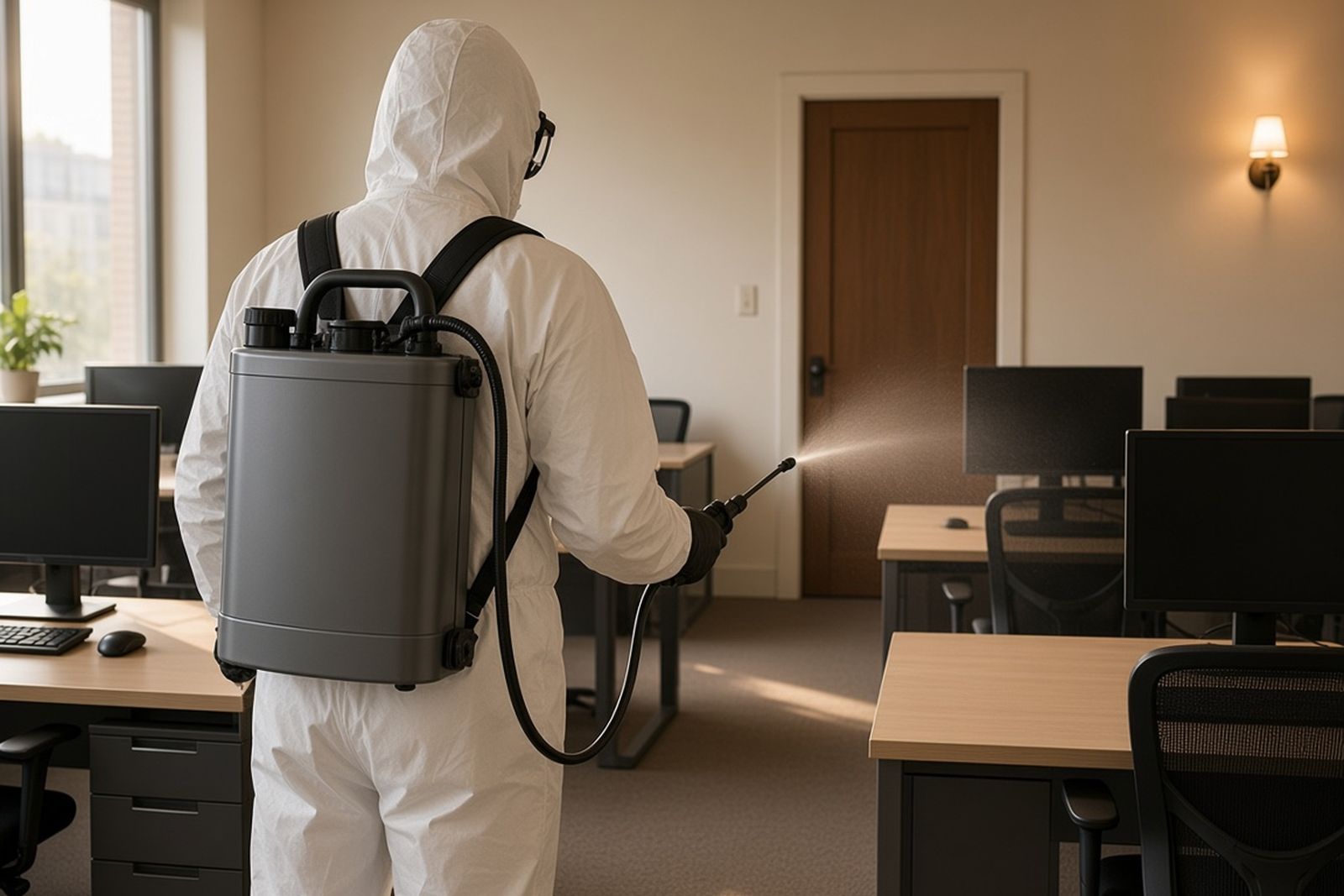
The vendor's first product lists norovirus but has no directions for fogging. The vendor then proposes a second product whose label includes electrostatic application directions, lists norovirus, and specifies a contact time, a ventilation requirement, and a re-entry interval. The facilities lead accepts the second product and rejects fogging with the first.
This single exchange removes most of the risk from the project. It ensures the kill claim applies to the method being used, and it gives the school a clear, citable reason for its choices if parents or staff ask.
- Product lists the organism of concern.
- Label includes directions for the planned application method.
- Contact time, ventilation, and re-entry are stated.
- Food-contact surface instructions are noted for the cafeteria.
Choosing treatment zones instead of the whole building
Whole-building treatment sounds thorough, but it spreads effort thin and exposes more people to chemicals. The facilities lead instead maps where the ill students spent their time and which surfaces they shared. The two affected classrooms, their shared restroom, the nearest hallway drinking fountain, and the cafeteria make the list.
Offices, the library, and classrooms in the other wing are excluded from electrostatic application. They remain on the standard nightly cleaning routine, with extra attention to door handles and light switches. The scope says any change to these zones requires the principal's written approval.
Choosing zones this way concentrates attention where the risk actually is. It also makes the evening schedule realistic, because the vendor's technicians can move carefully through five areas instead of rushing through twenty.
The map itself goes into the file. A simple floor plan with the treated zones shaded, attached to the work order, prevents confusion when a substitute technician arrives on a later night and wonders whether the music room is included. It also makes it easy to show parents or the health department exactly where treatment happened.
Cleaning written into the scope
The scope makes the school's custodial team responsible for cleaning every high-touch surface in the treatment zones before the vendor arrives. That includes desks, chairs, cubbies, door handles, faucets, toilet flush handles, stall latches, fountain buttons, and cafeteria tables. Any visible soiling from an illness event is cleaned up promptly during the day following the school's body fluid procedure, not left for the evening.
The vendor's technician walks each zone before applying product and flags anything that looks unclean. Flagged surfaces are cleaned again before spraying. The vendor's report records which surfaces were flagged.
This clause matters because disinfectants lose effectiveness on soiled surfaces, and because it prevents the common failure where everyone assumes the other party handled the cleaning.
A nightly sign-off sheet
The custodial supervisor also gets a short sign-off sheet for each evening, listing the surfaces in each zone with a box to initial once they are cleaned. The vendor's technician reviews the sheet on arrival. It is a small piece of paper, but it turns an assumption into a record and gives both teams a shared reference if something is questioned later.
Coverage and contact time
Electrostatic sprayers are sometimes sold as reaching every hidden side of an object. The facilities lead is skeptical: droplets land mostly on the surfaces the nozzle faces, and the far side of a chair leg or desk edge is easy to miss.
So the scope requires the technician to approach high-touch objects from more than one side, including the undersides of desk edges and the backs of chair frames that children grip. It also requires the technician to confirm that treated surfaces remain visibly wet for the label contact time, and to reapply where they dry early.
The air handler serving the treated wing is set to the mode the vendor and building engineer agree on for the application period, consistent with the label's ventilation instructions. Anything connected to life-safety systems is checked with the fire marshal and the alarm contractor before it is changed.
Re-entry and communication
Each evening, the vendor finishes application with enough time for the label's re-entry conditions to be met before custodial staff return in the morning. The cafeteria's food-contact surfaces receive whatever post-application step the label requires before breakfast service begins.
Parents receive a short letter explaining that the school is working with the health department, that specific areas are being cleaned and then disinfected with a product labeled for norovirus, and that treatment happens after hours with rooms ventilated before students arrive. The letter names a contact person for questions and invites families with health concerns to reach out.
Staff receive a separate note asking them not to enter treated areas after hours and explaining why. The custodial team is briefed on the product's safety data sheet.
A family's concern, handled in writing
One family writes back to say their child has asthma and is anxious about chemical odors in the classroom. The principal responds personally, explains the ventilation step and the re-entry interval, and offers to have the child's desk and chair wiped with a detergent solution each morning before class as an extra precaution. That conversation is noted in the file, along with the accommodation offered.
Closeout, and ending the program on purpose
The vendor submits a report after each visit listing zones, times, product, technician, flagged surfaces, and any issues. After two weeks with no new cases reported to the health department, the principal ends the electrostatic service and returns the affected areas to the standard cleaning routine with an updated checklist.
The facilities lead writes a one-page summary: why the service was used, which product and method, which zones, how long, and what changed in the routine afterward. That summary sits in the school's facilities file, ready for the next time a similar question arises.
Ending the program on purpose is part of a defensible scope. A service justified by a specific event should stop when the event is over, unless a new reason is documented.
- Per-visit reports filed with facilities records.
- A defined end date tied to the original goal.
- A summary explaining the decisions for future reference.
- Updated routine cleaning checklist for affected areas.
What can you borrow for your own building?
Write the goal in one sentence. Get the label before the proposal is approved. Treat zones, not buildings. Put cleaning in the scope with a named owner. Ask how coverage and contact time will be confirmed. Set re-entry from the label. Communicate plainly. End the program deliberately.
None of these steps requires specialized equipment on your side. They require asking a few pointed questions and writing the answers down. That record is what lets you explain your choices to a board, a parent, an inspector, or a tenant, and it is what lets you improve the next response.
If your building has never faced this kind of event, consider drafting a short template now. A blank version of the goal statement, zone map, cleaning sign-off, and closeout summary takes an hour to prepare and can save a great deal of confusion when the phone starts ringing.