Sanitization & Fogging: Industry Insights
Operational analysis of sanitization & fogging documentation, property-type differences, technology limits, environmental decisions, and provider business models—without invented case histories.
Industry posts look at how the disinfecting and fogging trade works and how it has changed. Articles trace the surge in demand for mist-based services during the pandemic. They show the more careful approach many buildings took afterward. They cover the rise of electrostatic sprayers and the growing focus on following labels. Other posts compare business and home service. They describe what property managers should build into repeat agreements. They show how to put together a scope of work you can defend. They also discuss environmental worries about chemical use and runoff. You will also read about how where a crew gets its products shapes what it can offer.
Get an email reply about sanitization & fogging
Send a short message to the follow-up inbox. A coordinator can reply by email. This form does not send emergency help; call 911 first if anyone is in danger.
Seeing the business side helps you read offers in context. Some companies added fogging to their cleaning or repair work in a hurry. Their experience with labels and airflow may vary. Learn how service programs, subcontracting, and product sourcing are set up. Then you can ask who is responsible for results. You can also shape a program based on real risk rather than marketing trends. It also explains why a repeat contract written during a crisis may deserve a fresh look once things settle. Review it against current advice, your own incident history, and the service logs you have collected. That often shows rooms that need more attention and others that need far less.
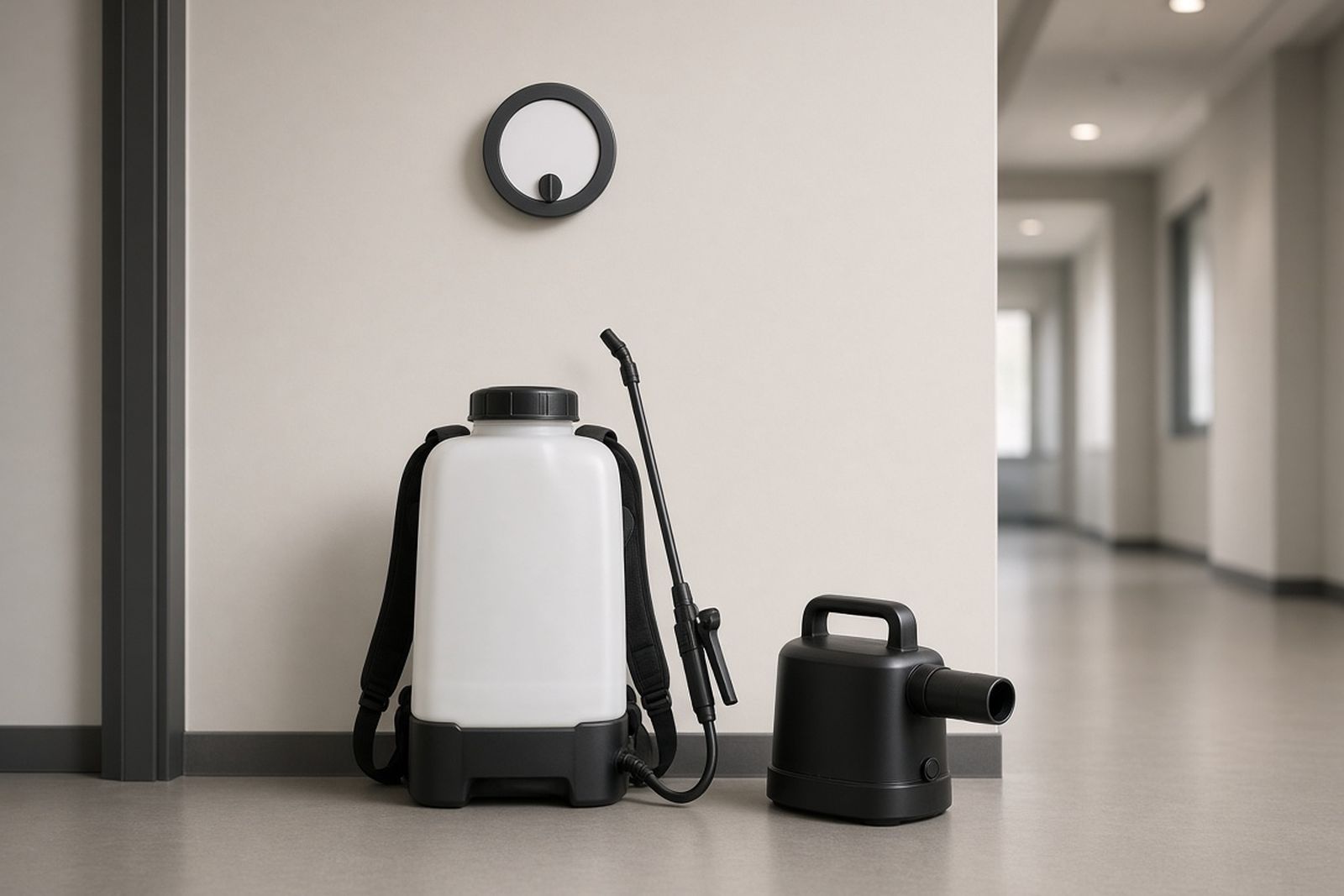
How Sanitization & Fogging Practice Has Changed
From old room fumigation to hospital vapor systems, pandemic-era sprayers, and label-driven practice: how sanitization fogging changed and what it means now.
Sanitization fogging has moved from crude room fumigation to targeted technologies such as hydrogen peroxide vapor, UV-C, and electrostatic sprayers. The pandemic brought a surge in fogging and in registered disinfectants, followed by closer scrutiny of what fogging can and cannot do. Today, careful practice centers on cleaning first, using products labeled for the application method, protecting occupants, and verifying results.
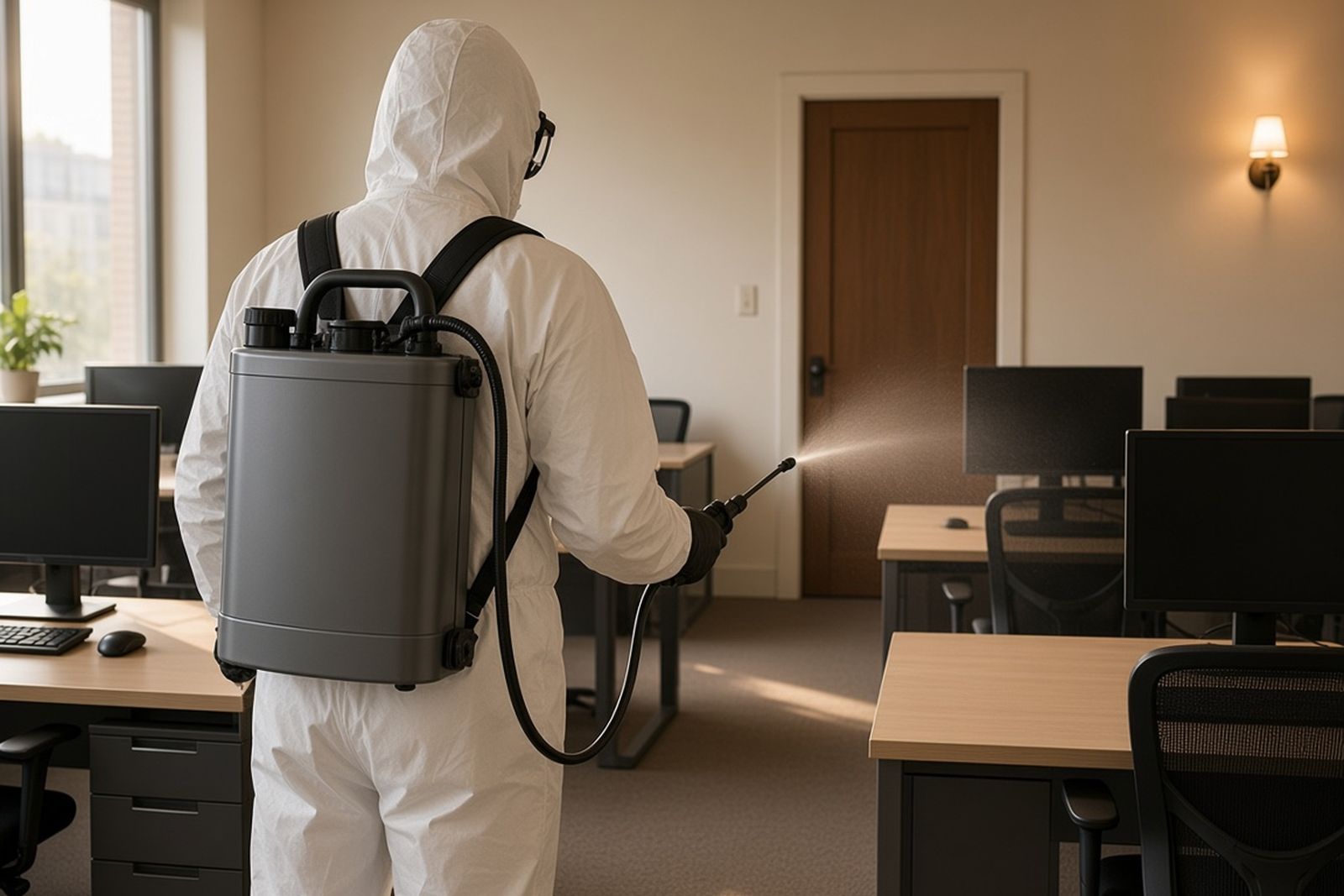
Sanitization & Fogging for Property Managers: What You Need to Know
Property managers weighing a fogging or electrostatic proposal: label checks, resident notice, HVAC, re-entry, and when wipe-and-dwell is the better buy.
Before you approve fogging or electrostatic spraying at a property you manage, confirm the product label allows that application method, decide which spaces are actually at risk, plan resident notice and re-entry, and make sure surfaces are cleaned first. Fogging supplements cleaning; it does not replace it. A clear written scope and a label-based re-entry plan protect residents, staff, and your budget.
Sanitization & Fogging Planning Example: Building a Defensible Scope
A hypothetical school stomach-bug cluster, used to show how a defensible fogging scope is built: label review, pre-cleaning, zones, re-entry, and records.
A defensible fogging or electrostatic scope starts with a specific reason, confirms the product label allows the method, makes cleaning a required first step, limits treatment to the spaces that matter, and sets re-entry conditions from the label. This illustrative example follows a hypothetical school after a stomach illness cluster, showing how each choice gets written down so the program can be explained and adjusted later.
Commercial vs Residential Sanitization & Fogging
Fogging a home and fogging an office or gym raise different questions about occupants, pets, HVAC, labels, timing, and records. Compare both before you book.
Residential fogging usually involves a single household, pets, personal belongings, and a short list of affected rooms, so the main questions are whether it is needed at all and how long everyone must stay out. Commercial fogging involves employees, customers, shared HVAC, operating hours, and recordkeeping. In both settings, the product label, prior cleaning, and re-entry conditions decide whether the service is safe and worthwhile.

Environmental Responsibility in Sanitization & Fogging
Fogging puts chemicals into the air of your building. How to limit needless use, protect occupants and materials, and choose products and methods responsibly.
Environmentally responsible fogging means using it only when a specific risk justifies it, choosing a product whose label permits the method, applying the smallest effective amount, cleaning first so less chemical is needed, protecting occupants and materials, ventilating as directed, and avoiding devices like ozone generators that promise disinfection they cannot deliver safely. Fewer, better-targeted applications usually protect people and buildings best.
Sourced figures on industry insights
- HR 1.38
Weekly disinfectant use for surface cleaning was associated with a 38% higher rate of new COPD diagnoses among 73,262 U.S. female nurses over six years.
Read with care: Observational study of occupational exposure in healthcare workers; it cannot prove causation or be applied directly to one-time fogging services.
Source: JAMA Network Open (2019)Nurses' Health Study II; 73,262 nurses; 582 incident COPD cases; 2009 to 2015
- 1 in 38
On any given day in 2023 about 1 in 38 U.S. hospital patients had a healthcare-associated infection, an estimated 518,000 infections, and 61% were not linked to devices or procedures.
Read with care: Hospital-specific data; the share attributable to environmental surfaces is not stated.
Source: CDC (2026)United States; CDC Emerging Infections Program survey of 13,653 patients in 218 hospitals in 10 states; 2023
- 77%
In a September 2020 Ipsos poll of 1,005 U.S. adults, 77% expected businesses to wipe down surfaces frequently and 65% felt businesses were cleaning enough.
Read with care: Commissioned by a cleaning-products trade association during the pandemic; expectations may have eased since.
Source: American Cleaning Institute (2020)United States; Ipsos online poll of 1,005 adults; September 10-11, 2020; margin of error 3.5 points
These figures are public research and agency data, not this network's own job records. Keep each number with its population, year and limits; none of them predicts cost, timing or outcome at a specific property.
What research has found
Findings from published studies of people and properties in situations like this one. They describe what researchers observed in a specific group; they are not predictions for your case.
Microorganisms decreased significantly on sampled surfaces after treatment.
The comparison found no significant difference between preceding cleaning with and without UV.
Industry Insights: common questions
Why did fogging become so common, and has that changed?
During the pandemic, many buildings wanted disinfecting people could see, and fogging put on a dramatic show. Over time, public health advice stressed cleaning, fresh air, and focused disinfecting of the most-touched surfaces. Many buildings now save fogging for certain situations. They focus on routine wiping, with clearer scopes of work and logs.
What should property managers include in a recurring disinfection agreement?
Include a map of rooms and surfaces and the required cleaning first. List the named products with registration numbers and the allowed spray methods. Add reopening times, alarm and airflow steps, notice to tenants, and a log after each visit. Add a rule that swapping products needs written approval. Clear terms cut down on disputes and make the program easier to review.
Is heavy disinfectant use a concern for the environment?
It can be. Overuse sends more chemicals into indoor air and wastewater. It may also affect surfaces and people without making things cleaner. Using the right product for the target, spraying only where the risk calls for it, and following the label's disposal steps all limit that impact. Ask companies how they avoid spraying more than they need to.
Are providers moving away from routine fogging contracts?
Many careful companies now suggest treating only after an event, paired with strong daily cleaning. They move away from fixed weekly or monthly fogging. Clients have also grown more likely to question repeat contracts that began during the pandemic. Routine schedules still exist, especially in busy buildings. But well-informed buyers are moving toward treatment tied to a recorded reason.
What do experienced providers offer instead of routine fogging?
Common offerings include cleaning first and focused disinfecting of the most-touched surfaces. Others are electrostatic treatment after illness outbreaks and checks with surface readings. Some companies train in-house cleaning staff and write procedures for outbreak response. Some also review current programs and suggest cutting back. These services focus on the steps that make disinfecting work, not on how visible the treatment looks.
How do marketing claims for fogging compare with what labels support?
Marketing often uses phrases like hospital grade, kills everything, total coverage, or lasting protection. Labels are much narrower. They list specific germs, surfaces, wet times, and allowed spray methods. When the two disagree, the label is what counts. Read the label yourself, or ask the company to point out the key sections. That is the fastest way to tell real claims from sales talk.
What role does verification play in how services are sold now?
More companies now include surface readings, visual checks, or detailed service reports. These show results instead of just describing equipment. Buyers ask for them more and more, especially for repeat contracts. Checking has limits. Common tests measure cleanliness, not specific germs. But it shifts the talk from how a treatment looked to what the records show.
Related community polls
Every count is a real visitor vote; nothing is seeded or padded. One vote per poll per device, and you can change your answer.
A vendor offers to fog your classrooms at lunch while students are outside. What do you say?
How do you see repeat fogging contracts today?
More on sanitization & fogging
Sanitization & Fogging services
See how electrostatic spray, heat fogging, UV-C, and scheduled programs fit into a clean-first, then-disinfect plan for your building or fleet.
Costs explained
What drives the price, published cost ranges, and how to read a written quote line by line.

Insurance and payment
Which policies may respond, how to document a claim, and what to do if coverage is denied.
Planning tools
Estimate costs, vet companies, sort waste, and choose between wiping and fogging with tools built for offices, gyms, schools, and fleets.
Community polls
See how other facility managers weigh fogging contracts, air system control, label checks, and re-entry timing against cost and daily disruption.
Knowledge quiz
Check whether you can spot a label mismatch, fogging with people present, or a skipped cleaning step. Then review the study guide.