Short answer
Before a sanitization or fogging job, assess ten risks: inhaling disinfectant mist, using a product whose label does not permit the method, re-entering too soon, mixing incompatible chemicals, residue on food-contact surfaces and toys, fire and electrical hazards, slippery floors, damage to materials and electronics, spread through the HVAC system, and the false confidence that fogging replaces cleaning. Each risk has a clear, practical control.
Why fogging needs its own safety review
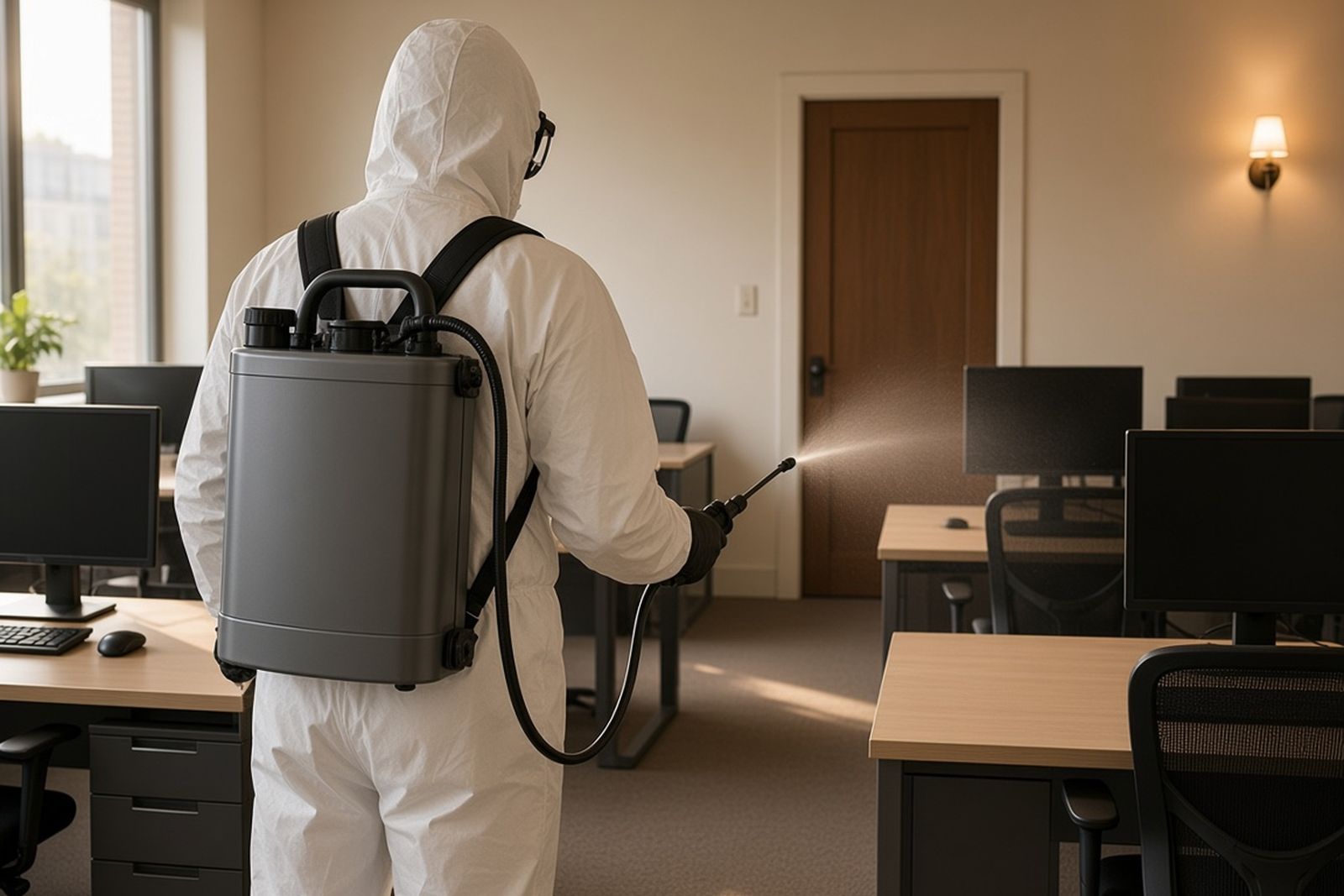
Fogging and electrostatic spraying turn a liquid disinfectant into a cloud of droplets. That is what lets the product reach many surfaces quickly, and it is also what makes the method riskier than wiping. Droplets in the air can be inhaled, settle where they are not wanted, and travel through air handling into other rooms.
A short safety review before each job sorts out who needs to leave, what needs to be covered or switched off, which product is appropriate, and when people can safely return. It also forces a basic question that is easy to skip: does this space actually need fogging, or would targeted cleaning serve it better?
The ten risks below apply to most fogging and electrostatic work in offices, schools, gyms, vehicles, and similar spaces.
- 1. Inhaling disinfectant mist
- 2. Using a product off label
- 3. Re-entering too soon
- 4. Mixing incompatible chemicals
- 5. Residue on food-contact surfaces and toys
- 6. Fire and electrical hazards
- 7. Slippery floors
- 8. Damage to materials and electronics
- 9. Spread through the HVAC system
- 10. False confidence that fogging replaces cleaning
Risk 1: breathing the mist
Inhalation is the risk most directly tied to fogging. Fine droplets can stay airborne and be breathed deep into the lungs. Short exposures may irritate the eyes, nose, and throat. Repeated exposures matter too, particularly for the people who apply disinfectants as part of their job.
Research on healthcare workers illustrates the concern. A 2019 study in JAMA Network Open found that weekly disinfectant use for surface cleaning was associated with a 38% higher rate of new COPD diagnoses among 73,262 U.S. female nurses over six years. That study looked at regular occupational use, not one-time fogging, and it cannot prove cause, but it underlines why applicator protection matters.
Controls include clearing the space of occupants and pets, having applicators wear respiratory protection appropriate to the product, choosing droplet sizes that land rather than linger, and allowing thorough ventilation before re-entry. Anyone with asthma or chemical sensitivity should be kept well away during and after treatment.
Risk 2: a label that does not allow the method
Disinfectant labels specify how a product may be applied. A product tested and registered as a wipe or trigger spray has not necessarily been evaluated as a fine mist, where both effectiveness and inhalation exposure behave differently. Using a product by a method the label does not include may be ineffective and may expose people to risks the label did not anticipate.
Before any job, the provider should show you the label section that permits fogging or electrostatic application, lists the organisms of concern, and specifies dilution and contact time. If they cannot, treat that as a stopping point.
Your state pesticide regulatory agency can tell you whether commercial application of disinfectants in your area requires a licensed applicator or specific notice to occupants.
Risk 3: going back in too soon
Early re-entry is one of the most common and preventable problems. People return because the mist has cleared or the room looks dry, but the label's re-entry conditions may not have been met.
Re-entry should be set by the label and the provider's plan, not by appearance or smell. Controls include posting signs on every door, locking or monitoring entrances, giving building staff written re-entry times for each zone, and confirming ventilation has run long enough.
Plan for early arrivals. Cleaners, security staff, and early-shift employees often enter before anyone else. Make sure they know the schedule.
Neighbors count as well. In shared buildings, strip malls, and multi-tenant offices, mist and odor can drift under doors or through shared ceilings. Let adjacent tenants know when treatment is scheduled, and ask the provider how they will keep product contained to the areas you are paying to treat.
Risks 4 and 5: chemical reactions and residue
Mixing incompatible chemicals is the fourth risk. Bleach combined with ammonia-based cleaners or acids can release toxic gases. Residue from one product can react with another applied soon after. A space cleaned with one product in the afternoon and fogged with another at night may be at risk if the two are incompatible.
Controls include coordinating with janitorial staff about what products they use, choosing compatible products, rinsing surfaces when needed, and ventilating between steps.
Residue on food-contact surfaces and children's items is the fifth risk. Some disinfectant labels require rinsing surfaces that touch food or that children may put in their mouths. Fogging a cafeteria, break room, or classroom without covering or rinsing these surfaces can leave residue where it should not be.
Before treatment, identify food-contact surfaces, dishes, utensils, toys, and pacifiers, and either remove, cover, or plan to rinse them as the label directs.
Risks 6 and 7: fire, electrical, and slip hazards
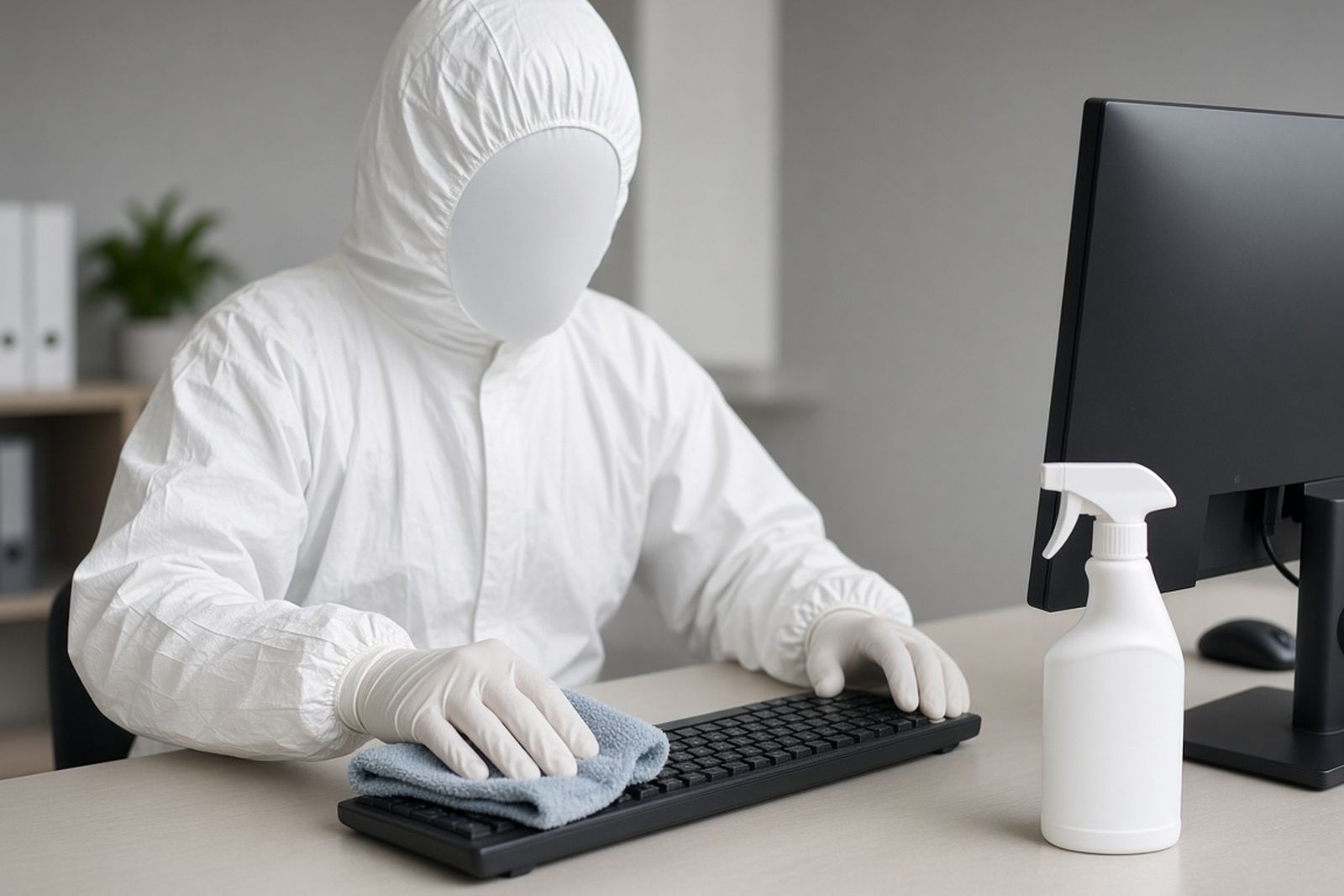
Some disinfectants contain alcohol or other flammable ingredients. Misting them near open flames, pilot lights, or sparking equipment can create a fire risk. Thermal foggers, which use heat, bring their own concerns. Fine mist can also trigger smoke detectors, and moisture can damage or short electrical equipment.
Controls include checking the safety data sheet for flammability, turning off ignition sources, covering sensitive electronics, and following the building's fire safety procedures if detectors need to be temporarily covered, including restoring them immediately after the job.
Slippery floors are the seventh risk. Settled droplets can leave hard floors slick, especially tile, sealed concrete, and gym flooring. Post wet-floor signs, keep people out until floors are dry, and plan the application path so the applicator is not walking back across wet surfaces.
- Check the safety data sheet for flammability.
- Turn off ignition sources and cover sensitive electronics.
- Restore any covered smoke detectors right after treatment.
- Post wet-floor signs and plan an exit path that avoids treated floors.
Risks 8 and 9: damaged equipment and HVAC spread
Repeated disinfection can harm materials. Plastics can crack, finishes can dull, rubber can degrade, and metals can corrode, depending on the product. A 2024 study by Jennings and colleagues testing disinfectant wipe formulations on healthcare plastics found that products above pH 8 accounted for 74% of failures in the experiment. That test used accelerated conditions, but it shows why product chemistry matters for equipment you plan to keep.
Controls include checking compatibility with the equipment manufacturer's guidance, covering electronics and sensitive items, and avoiding heavy overapplication that leaves pooling or residue.
Spread through the HVAC system is the ninth risk. If air handling runs during fogging, mist can be pulled into return ducts and delivered to occupied parts of the building. Controls include shutting down or isolating air handling in treated zones, sealing return grilles if needed, and restarting ventilation only when the label allows.
Can fogging create a false sense of safety? (Risk 10)
The tenth risk is less visible but often the most important. Fogging looks thorough, and that appearance can lead people to skip the steps that actually matter: cleaning soiled surfaces, wiping high-touch areas regularly, practicing hand hygiene, and keeping sick people home.
Disinfectants work poorly on dirty surfaces, and fogging is a point-in-time treatment. As soon as people return, surfaces begin to be recontaminated. A building that relies on weekly fogging instead of daily cleaning of high-touch surfaces may be less protected than it appears.
Controls include making pre-cleaning part of every job, pairing fogging with a routine wipe-down program, and verifying results with ATP testing or similar methods rather than relying on appearance.
Be cautious of marketing that promises lasting protection for days or weeks after a single treatment. Unless a product's label specifically supports a residual claim, assume the benefit ends when people start touching surfaces again, and budget for routine cleaning accordingly.
Running the review for a mixed-use building
The ten risks turn into a practical checklist once you walk a real building with them. Community centers are a good test because they combine a kitchen, a preschool room, a gym, and a computer lab under one roof. After a norovirus outbreak among attendees, a sound review for overnight fogging covers each space in turn.
It confirms that the product label lists norovirus and permits the application method, and that janitorial staff clean all rooms first with a compatible detergent. In the kitchen, dishes and utensils are stored away and food-contact surfaces marked for rinsing. In the preschool room, toys are bagged or set aside for washing. In the computer lab, keyboards and monitors are covered. The gym floor gets wet-floor signage. Air handling is shut off in treated zones, and smoke detectors are handled under the building's fire safety procedures and restored before the crew leaves.
Written re-entry times go on every door and to the morning staff, and ATP readings in a sample of rooms before and after give you a record. Each step traces back to one of the ten risks, which makes it easy to explain to staff and families.
None of this requires a large budget. It requires a checklist, a label, and a few conversations before the crew arrives.