Short answer
A professional sanitization or fogging visit usually includes a site review, a check of the product label, pre-cleaning of soiled surfaces, protection of electronics and food areas, application by the method the label allows, a required contact time, ventilation, and a re-entry check. Good providers also verify results with ATP swabs or similar tools and leave written records. Expect the space to be closed to people during the work.
Before the visit: what the provider will ask
Scheduling a sanitization visit starts with a few questions. The provider will ask why you want the service: a confirmed illness outbreak, a biohazard event, a routine program, or reassurance before reopening. The reason shapes everything that follows, including the product, the method, and how much preparation is needed.
They will also ask about the space. How large is it? What kinds of rooms are involved: offices, classrooms, locker rooms, a commercial kitchen, a vehicle fleet? Are there sensitive electronics, medical equipment, artwork, or food prep areas? Who will be in the building before and after the work? The answers help the crew bring the right equipment and plan the timing.
If you have specific concerns, such as a staff member with asthma or pets that live on site, raise them now. They may affect product choice and re-entry time.
It also helps to name one contact person who can open doors, answer questions about the building, and sign off at the end. Visits run more smoothly when the crew is not hunting for keys or waiting for someone to decide whether a storage closet is in scope.
Why does the product label come up so often?
A disinfectant label is more than instructions; it is the legal framework for how the product may be used. The label specifies which organisms the product is tested against, what surfaces it can be used on, how long surfaces must stay wet, whether pre-cleaning is required, and which application methods are allowed. Not every product is labeled for fogging or electrostatic spraying.
A good provider will name the product they plan to use, share its EPA registration number, and confirm that the label allows the method they intend. If they cannot or will not, that is a warning sign. You can look up the registration number yourself to check what the product is approved for.
Ask for the product's Safety Data Sheet too. It describes hazards, protective equipment, and first aid, which is useful if anyone has a reaction later.
Room preparation before any mist goes out
The crew will walk the space with your contact person. They are confirming the areas to be treated, checking for anything that needs protection, and identifying surfaces that need cleaning before application. They may also look at HVAC returns, smoke detectors, and doors that need to be closed or sealed.
Next comes preparation. Crews typically cover or unplug sensitive electronics, cover food and food-contact surfaces, close off areas that are not being treated, and remove or protect items like papers and fabrics that could be damaged by moisture. In some buildings, they coordinate with facilities staff to adjust HVAC or temporarily disable smoke detectors that might react to mist.
- Covering or unplugging computers, phones, and other electronics.
- Covering food, dishes, and food-contact surfaces.
- Closing doors and sealing off untreated areas.
- Coordinating HVAC settings and smoke detector sensitivity with facilities staff.
- Posting signs so no one walks in during application.
Cleaning comes before fogging
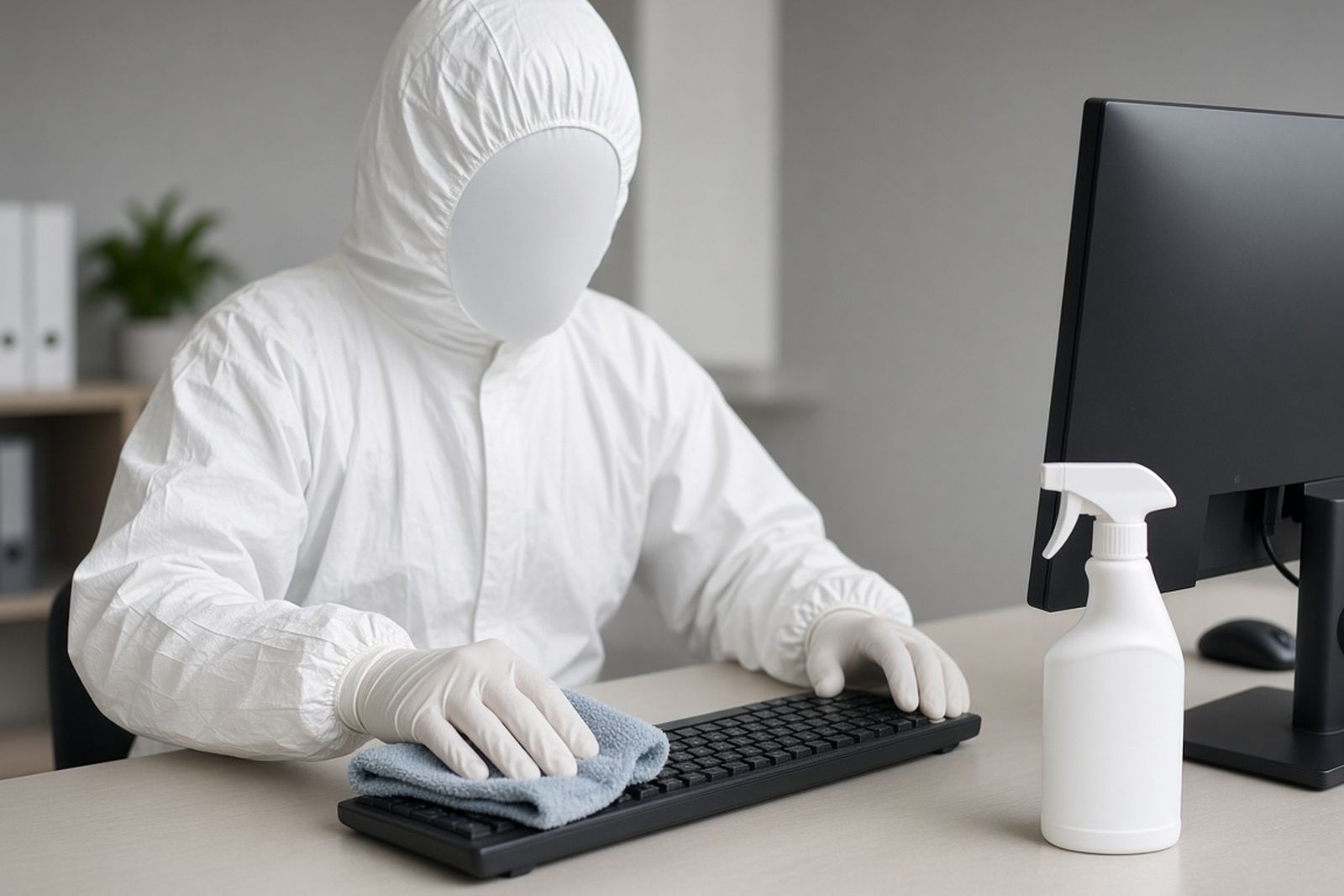
Disinfectants work best on clean surfaces. Dust, grease, fingerprints, and organic soil can shield microbes and use up the active ingredient. That is why many disinfectant labels call for pre-cleaning, and why a professional crew will wipe down high-touch and visibly soiled surfaces before any fogging or spraying begins.
Pre-cleaning often focuses on the places people touch most: door handles, light switches, railings, desks, faucets, restroom fixtures, and shared equipment. In a gym, that means benches, handles, and mats. In a classroom, it means desks, chairs, and learning materials.
This step takes time, and it is often the most important part of the visit. If a provider skips it, the fogging that follows is less likely to accomplish much.
The application step
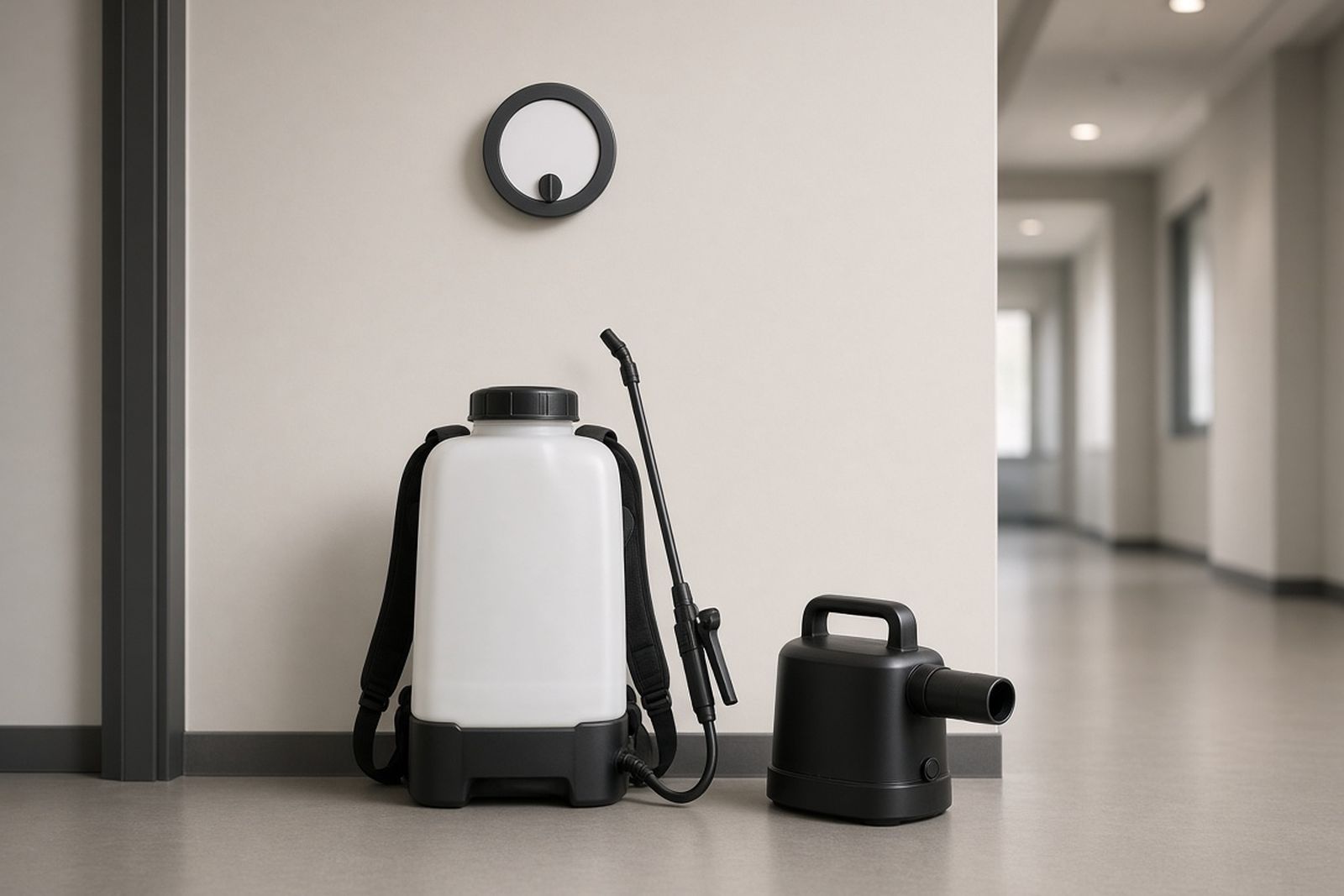
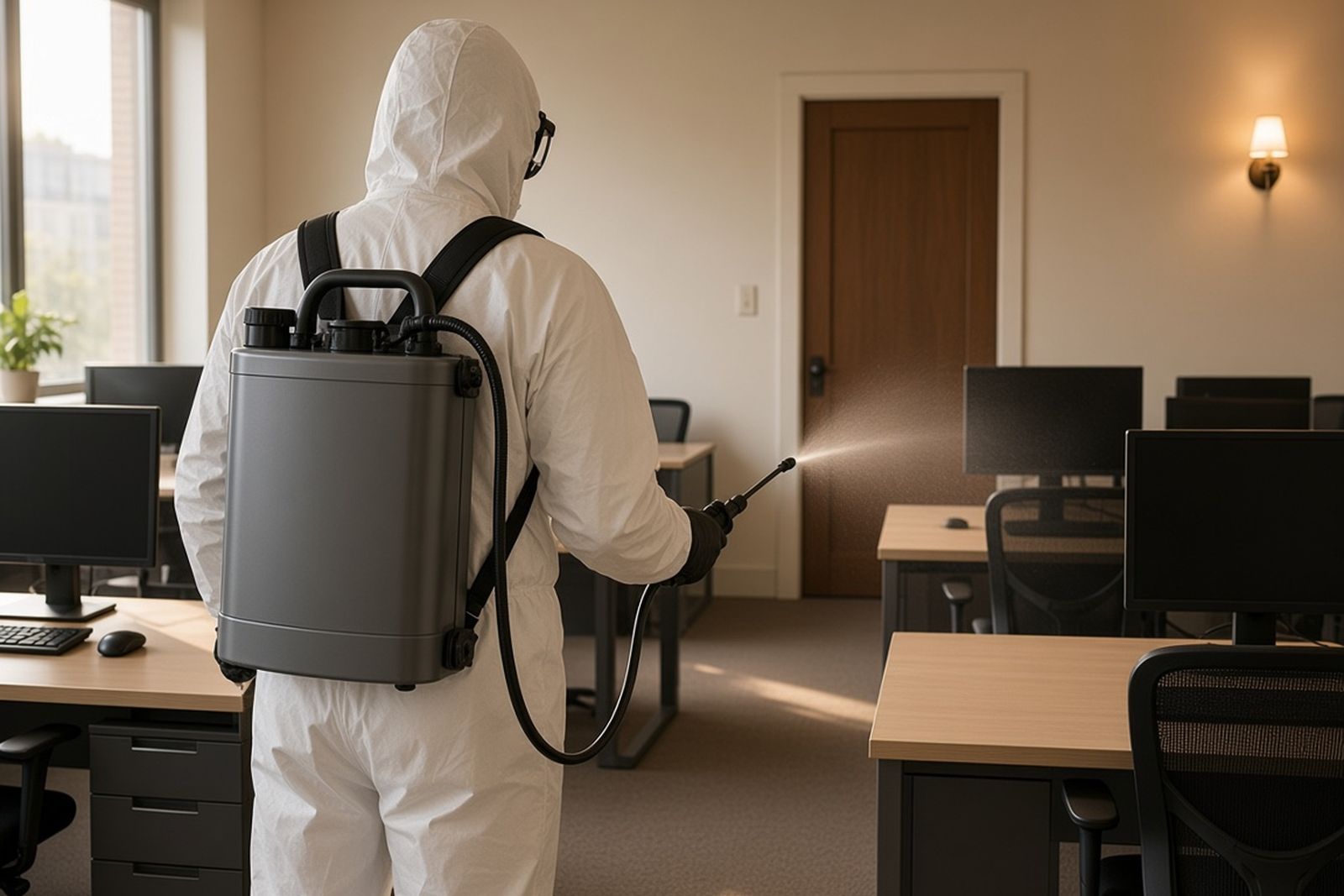
Once the space is prepared and cleaned, the crew applies the disinfectant using the method the label allows. That might be an electrostatic sprayer, a handheld or backpack mister, or a room fogging machine. Technicians wear protective equipment appropriate to the product, which may include respirators, goggles, gloves, and coveralls.
Application is usually systematic. Crews work from the far side of a room toward the exit, so they are not walking through freshly treated areas. They aim at surfaces rather than just filling the air, since the disinfectant needs to land and stay wet to work.
Expect the process to be quieter and less dramatic than sales photos suggest. There may be no visible cloud at all with an electrostatic sprayer, just a fine, even wetness on surfaces. With a room fogger, the air may look hazy for a while, which is one reason the room stays closed until the product settles and the area is ventilated.
Coverage has real limits. The mist may not reach the backs and undersides of objects as well as marketing suggests, which is another reason pre-cleaning and targeted wiping matter.
How long does the space stay closed?
Two timeframes matter. The first is contact time: how long a surface must stay wet for the product to work as labeled. That can be a minute or two for some products and considerably longer for others. The crew should not wipe surfaces dry or reopen the room until that time has passed.
The second is re-entry time: how long people and pets must stay out after application. Some products allow re-entry once surfaces are dry; others require ventilation for a set period. The label and Safety Data Sheet guide this, and the crew should tell you clearly when the space is safe to use.
Plan your schedule around these times. Many businesses book sanitization after closing so the building can sit empty overnight.
After the re-entry time, you may notice a faint odor or a slight residue on some surfaces, depending on the product. Ask the crew whether food-contact surfaces need a potable water rinse before use, and whether any residue should be wiped away. Those instructions usually come straight from the label, and they are easy to miss if nobody writes them down.
A preschool after a stomach bug, step by step
An illustrative weekend shows how the steps fit together. A small preschool has several children and a teacher out sick with vomiting and diarrhea in the same week. The director closes on Friday afternoon and calls a sanitization provider for the weekend.
The provider would ask which rooms were affected, confirm a product labeled for the relevant organisms, and check whether the label allows electrostatic application. On Saturday, the crew would remove or bag soft toys for laundering, pre-clean tables, chairs, cubbies, bathroom fixtures, and floors, and cover the kitchen area. They would then apply the disinfectant by the label-allowed method, wait out the contact time, and ventilate.
Before leaving, the crew might take a few ATP readings on high-touch surfaces to confirm cleaning quality. On Sunday, the director would walk through with the provider, review the records, and reopen Monday with a plan for daily staff wipe-downs using the same product.
The director might also send a short note to families explaining what was done and when, which tends to reassure parents far more than a vague promise that the building was sanitized.
Verification and the paperwork you keep
Verification is not always included, but it is worth asking for. The most common tool is an ATP meter, which measures organic residue on a surface after cleaning. It is quick and gives a number that can be tracked over time. It does not identify specific germs, but it does show whether a surface is truly clean.
Benchmarks vary by device and setting, so there is no single passing number to insist on. The principle is the same everywhere: agree on how success will be measured before the work begins.
If you plan a recurring program, keep verification readings from each visit in one place. Over a few months, the trend tells you far more than any single number, and it gives you something concrete to discuss when the contract comes up for renewal.
A professional sanitization visit should end with documentation you can keep on file. That record helps with inspections, parent or client communication, insurance questions, and planning future visits. If you run a childcare, food service, or healthcare setting, ask your licensing agency or local health department whether specific records are needed after an outbreak.
- Date, time, and areas treated.
- Product name, EPA registration number, and application method.
- Contact time and re-entry time observed.
- Names of technicians and protective equipment used.
- Verification readings, if taken.
- Recommendations for ongoing cleaning between visits.