Short answer
Residential fogging usually involves a single household, pets, personal belongings, and a short list of affected rooms, so the main questions are whether it is needed at all and how long everyone must stay out. Commercial fogging involves employees, customers, shared HVAC, operating hours, and recordkeeping. In both settings, the product label, prior cleaning, and re-entry conditions decide whether the service is safe and worthwhile.
Same science, different settings
The basic science does not care whether a building is a home or a warehouse. Disinfectant droplets only work after they land on a surface that has been cleaned, and only if that surface stays wet for the contact time printed on the label. Mist hanging in the air does nothing useful.
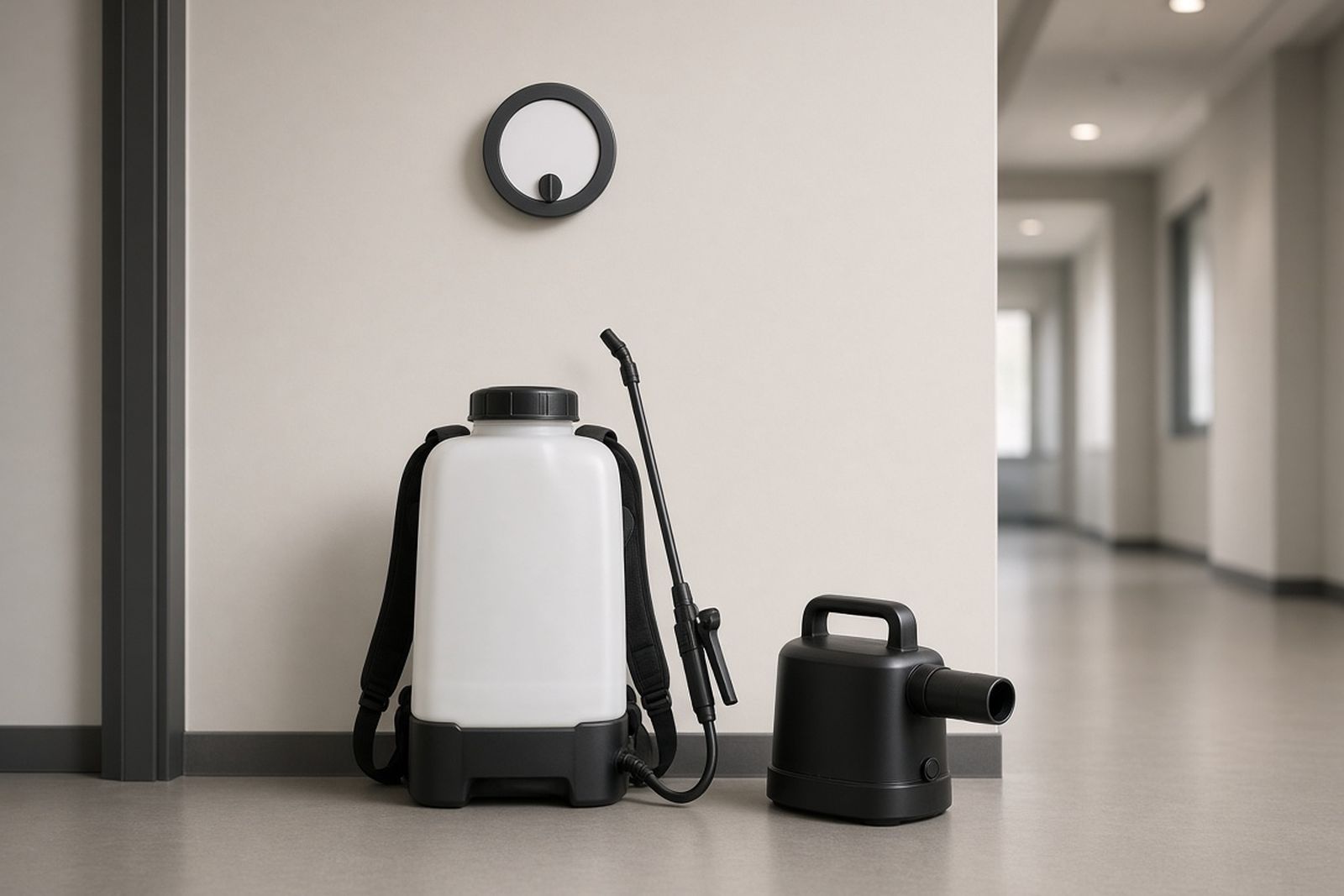
The label also applies in both places. A disinfectant should be fogged or sprayed electrostatically only if its label includes directions for that method. A homeowner and a facility manager should ask exactly the same first question: does the label allow this?
Where the two settings differ is in who is affected, how the space is used, what systems are shared, and who needs to see a record afterward. Those differences change the scope, the schedule, and sometimes the decision about whether to fog at all.
Why do homeowners ask for fogging, and is it usually necessary?
Residential requests tend to follow a stressful event: a family member recovering from a contagious illness, a new baby coming home after a household stomach bug, a move into a house where the previous occupants were sick, or simple anxiety after news coverage of an outbreak. The desire to do something thorough is understandable.
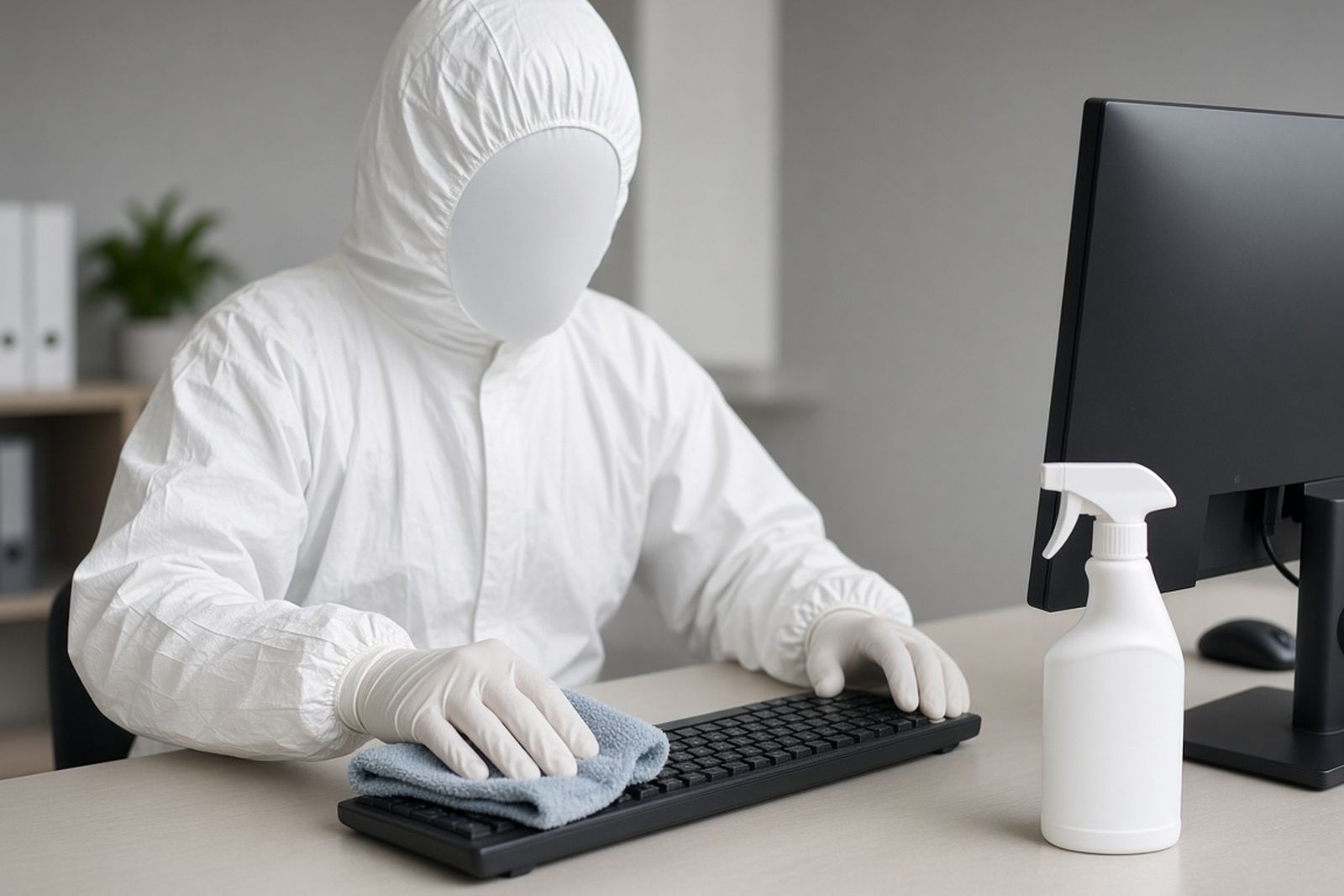
In most homes, careful cleaning followed by targeted disinfection of high-touch surfaces with a registered product, applied the way its label directs, addresses the concern more directly than fogging. Bathrooms, kitchen counters, door handles, light switches, remotes, phones, and bedside surfaces carry the most risk. A household can focus effort there.
Fogging becomes more reasonable at home when an event affected many surfaces at once, when a provider is already handling a larger cleanup such as a sewage backup or a hoarding situation, or when a household member's medical team has recommended enhanced disinfection. Even then, it supplements cleaning rather than replacing it.
Home disinfection carries its own risks when done without guidance, from mixing incompatible products to applying disinfectant where it does not belong. A professional service can reduce those risks, but only if it follows the label.
Home-specific factors that change the plan
Pets are one of the biggest. Birds, reptiles, fish, and small mammals can be especially sensitive to airborne chemicals. Aquariums need to be covered and their air pumps turned off or relocated, and animals should be moved out of the home until re-entry conditions are met. Ask your veterinarian if you are unsure.
Household members with asthma, chemical sensitivities, or other respiratory conditions need a say in whether fogging happens and when they return. Infants and older adults deserve extra caution. A good provider asks about these people before quoting, not after.
Personal belongings also matter. Clothing, bedding, children's toys, food, dishes, toothbrushes, and medications should be put away, covered, or removed before application. Electronics and fine finishes may need protection. Walk through the house with the provider and agree on what stays and what goes.
Finally, homes usually have one HVAC system. Running it during application can spread mist through the entire house, which may be fine or may not, depending on the plan. Decide in advance.
- Move pets out; cover aquariums and turn off air pumps.
- Discuss timing with anyone who has respiratory concerns.
- Put away food, dishes, toothbrushes, toys, and medications.
- Agree on HVAC settings before application begins.
Why do businesses ask for fogging, and what are they really buying?
Commercial requests often come from a mix of risk and reputation. A gym wants members to feel safe. An office wants employees to return after a flu wave. A daycare responds to a stomach illness cluster. A hotel wants a quick way to reset rooms after a guest's illness. A transit agency wants buses back in service.
Customer expectations are real. In a September 2020 Ipsos poll of 1,005 US adults for the American Cleaning Institute, 77% expected businesses to wipe down surfaces frequently. Note what that finding describes: wiping surfaces, not misting rooms. Visible, routine cleaning often does more for customer confidence than an overnight fog nobody sees.
Before signing, a business should decide whether it is buying risk reduction for a specific event or a recurring service for general reassurance. The first is easier to justify. The second deserves regular review, because it can quietly become a permanent line item after the original reason has passed.
Commercial factors: employees, shared systems, alarms, and hours
Employees are the first. Workers who might enter a treated area, including night custodians, security staff, and early shift employees, need to know when application happens and when re-entry is allowed. Employers have duties around chemical hazard communication, and the product's safety data sheet should be available to staff who could be exposed.
Shared systems are the second. Commercial buildings often have multiple air handlers serving different zones, and a tenant may share ductwork with neighbors. Mist or odor can travel. Coordinate with the building engineer and, in multi-tenant buildings, with the property manager and neighboring tenants.
Life-safety devices are the third. Some application methods can trigger smoke detection. Any decision about covering or bypassing detectors must go through your alarm contractor and follow local fire code, so check with the fire marshal before anything is disabled.
Operating hours are the fourth. Treatment usually happens after close, and the space must meet label re-entry conditions before opening. Tight windows can tempt crews to rush contact time or skip ventilation. The schedule should fit the label, not the other way around.
Illustration: a family home and a dental office on the same street
An illustration makes the contrast clearer. In this made-up but typical case, on the same street, a family and a small dental office each call a provider in the same week. The family's two children just recovered from a stomach virus, and the parents want the house fogged before grandparents visit. The dental office has had several staff out with flu and wants its waiting room and break room treated.
For the family, the provider suggests a thorough cleaning and targeted disinfection of the bathrooms, kitchen, and the children's rooms using a product labeled for the virus, applied by wiping. The parents agree. The cat stays with a neighbor for the afternoon, and the house is ready that evening. No fogging is needed.
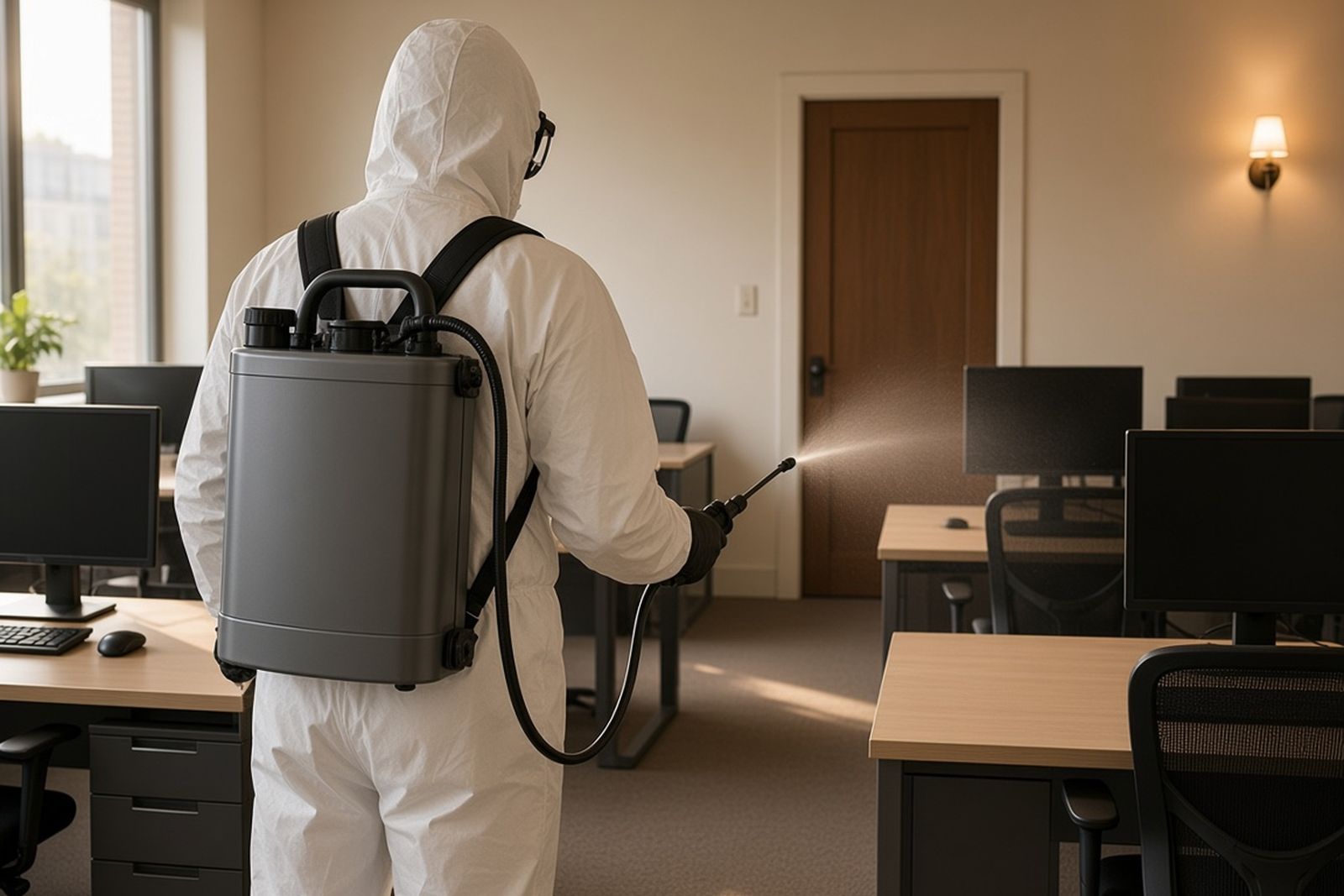
For the dental office, clinical areas are already covered by the practice's own infection control program. The provider proposes electrostatic application in the waiting room and break room only, after the office's cleaning crew has wiped high-touch surfaces. The product label includes electrostatic directions. Work happens on a Friday evening, the air handler for that zone is managed according to the label, and the front desk manager receives a service report on Monday morning.
Same week, same provider, two very different recommendations, each matched to the setting and the actual concern.
Recordkeeping at home vs at work
Households rarely need formal records, but a short note from the provider listing the product, the rooms treated, and the re-entry time is useful, especially if anyone later has a reaction or a question.
Businesses benefit from much more. A service report after each visit should list areas, times, product and registration number, dilution, technician, and any issues. Over time, those reports show whether the service is still justified, help answer employee or customer questions, and support any insurance or regulatory inquiries.
In regulated settings such as healthcare, food service, or childcare, additional requirements may apply. Check with your licensing agency or health department.
How do you decide what is right for your space?
Start by naming the concern in one sentence. Then ask whether cleaning plus targeted disinfection would solve it. If fogging still seems useful, get the label, confirm the method is permitted, plan for the people and animals affected, and set re-entry from the label.
Be cautious about fogging any space while people are in it. Public health agencies have repeatedly advised against spraying or fogging disinfectants in occupied areas, and most labels that permit these methods set clear re-entry conditions for a reason. That caution applies in homes and businesses alike, and a provider who suggests treating around occupants should be able to point to label language that allows it.
It also helps to revisit the decision after the fact. A household can ask whether the targeted cleaning worked and whether anyone reacted to the product. A business can review service reports, employee feedback, and complaint logs every few months. If a recurring service is not changing anything you can observe, it may be time to redirect that budget toward staffing, supplies, or better routine cleaning.
Whether you are protecting a family or a workforce, the most effective program is usually the least dramatic one: consistent cleaning, the right product in the right places, and a clear plan for the rare times when more is needed.