Short answer
Enzyme and microbial products fit a fogging program when the problem is organic soil, odor, or biofilm that needs breaking down before disinfection. They are not disinfectants, they can be neutralized by disinfectants applied at the same time, and fogging them is only appropriate if the label allows it. Used in the right order, they can make cleaning more thorough; used as a substitute, they leave germs untreated.
Why enzyme and probiotic products show up in fogging proposals
Fogging providers often offer a menu: a disinfectant fog, an odor treatment, and sometimes an enzyme or probiotic spray billed as a natural or long-lasting option. For a building manager trying to reduce chemical use, the probiotic option can sound appealing. For a homeowner dealing with a lingering smell, the enzyme option can sound like the missing piece.
These products are real and have legitimate uses. Enzyme cleaners use proteins that break down specific organic materials. Microbial or probiotic cleaners use live, beneficial bacteria that digest organic residue and, according to their makers, compete with other microbes for space on surfaces.
The trouble is that these products are sometimes presented as interchangeable with disinfection, or as something that can simply be added to a fogger. Neither assumption holds without careful checking.
What these products actually solve
Enzyme and microbial products are designed to break down organic soil: proteins, fats, starches, and the compounds that create odors as they decompose. They work well on stains and smells from body fluids, food waste, and pet accidents, and in places where soil builds up slowly, such as drains, grout, and floor seams.
They can also help with biofilm, the protective layer that microorganisms form on surfaces. Biofilm shields microbes from disinfectants, so breaking it down improves the odds that a disinfectant can reach them. Awareness of this issue is uneven even among professionals. When Centeleghe and colleagues surveyed healthcare professionals in 2024, 87.6% said they had heard of biofilms, yet only 39.1% were aware of dry-surface biofilms, which form on surfaces that look perfectly dry.
What these products do not do is kill the viruses and bacteria of concern in an outbreak in the way a registered disinfectant does. They clean. They do not disinfect.
- Organic stains from body fluids or food.
- Odors from decomposing organic residue.
- Buildup in drains, grout, and seams.
- Biofilm that shields microbes from disinfectants.
Can you fog an enzyme or microbial product?
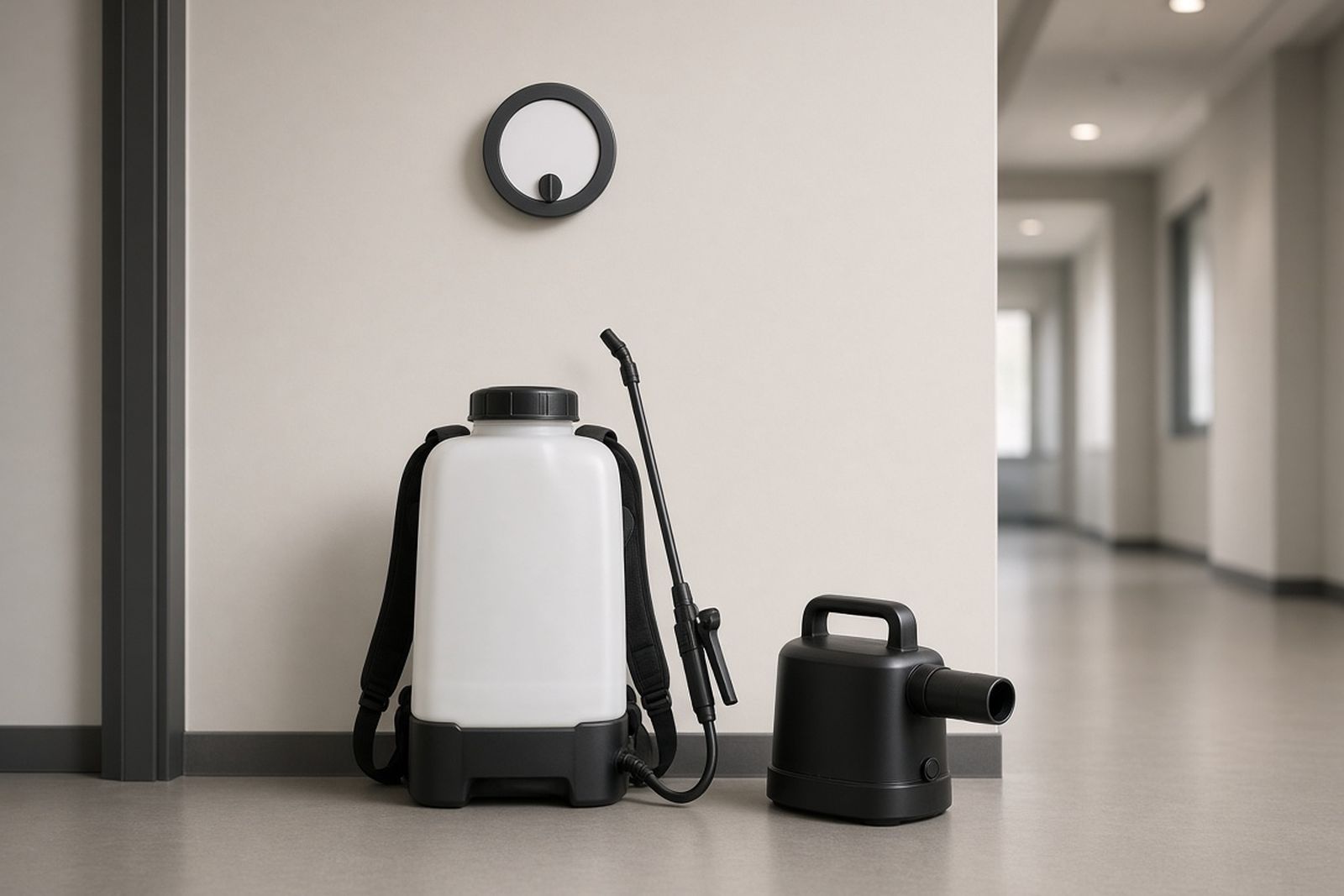
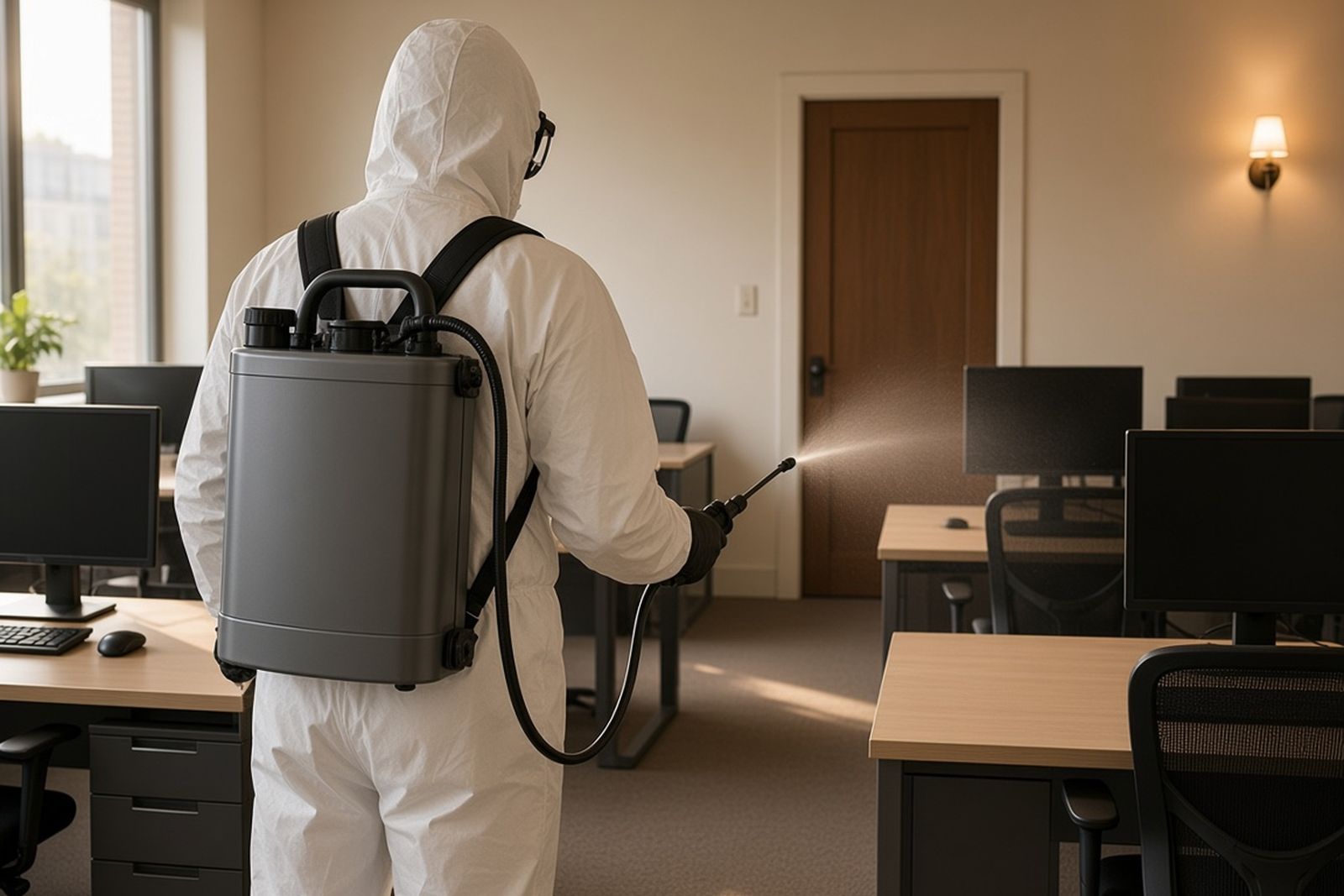
Only if its label says so. The same principle that applies to disinfectants applies here: the application method should match the product's directions. The label-first rule is usually discussed for disinfectants, but the practical logic carries over to any product being dispersed into indoor air. Ask what the label permits and what inhalation precautions it lists.
Many enzyme and microbial products are designed for direct application to a soiled surface, with enough liquid to keep the soil wet while the enzymes or bacteria work. A fine mist that dries quickly may not stay wet long enough to accomplish much. Fogging also puts the product on every surface in a room, including those with no organic soil at all.
Some odor-control products are labeled for fogging or misting. If a provider proposes this, ask whether the product is intended to break down the odor source or simply to treat the air, and how they will address the source itself.
Why disinfectants and microbial products can work against each other
A microbial cleaner works because its bacteria are alive. A disinfectant works by killing microorganisms. Applied together, or one right after the other without a plan, the disinfectant may kill the beneficial bacteria before they do anything useful. Some chemicals can also deactivate enzymes.
This does not mean the two can never be part of the same program. It means they need to be sequenced deliberately. For example, an enzyme product might be used on a drain or a soiled carpet first, then rinsed or allowed to finish its work, and then the surrounding hard surfaces disinfected. Or a microbial product might be used for routine odor maintenance in areas that do not need disinfection, while disinfection is reserved for high-touch surfaces or illness events.
Combining methods on purpose
Combining approaches is common in professional practice. The same 2024 Centeleghe survey found that 70.8% of respondents favored combining methods for cleaning and disinfection. The key is that each method is chosen for a reason and applied in an order that lets it work.
Timing also affects budgets. If a provider applies a microbial product and a disinfectant on the same visit without any plan for sequencing, you may be paying for two products while getting the benefit of only one. Ask to see the order of operations written into the service description so you can confirm it is being followed.
A sensible sequence
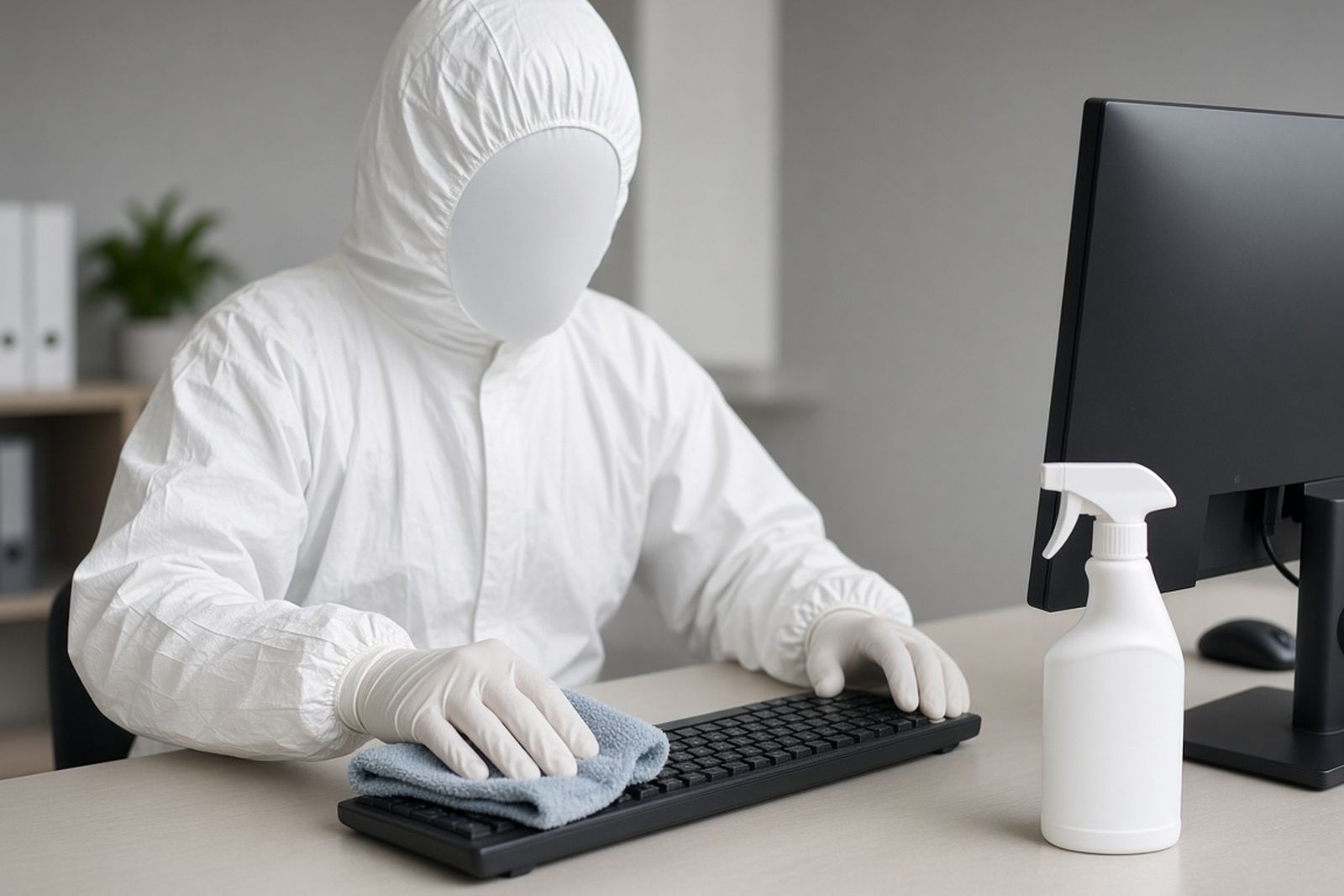
In most settings, the order follows the logic of removing soil before killing germs. First, remove visible debris and clean surfaces with detergent. Second, use an enzyme or microbial product where organic soil, odor, or biofilm remains, following its label for contact time. Third, rinse or allow the product to complete its work as directed. Fourth, apply a registered disinfectant to the surfaces that need it, by wiping, spraying, or a label-approved fogging or electrostatic method.
Some providers reverse the order for odor work in spaces that do not need disinfection at all. That can be appropriate, but they should be able to explain why disinfection is not needed.
Throughout, the product labels are the guide. If two labels give conflicting directions about compatibility or timing, ask the provider how they will resolve it.
- Remove debris and clean with detergent.
- Apply enzyme or microbial product where soil or odor remains.
- Allow its label contact time, then rinse if directed.
- Disinfect the surfaces that need it, by a label-approved method.
Are probiotic cleaning programs a replacement for disinfection?
Some facilities have experimented with probiotic cleaning programs that aim to keep surfaces colonized by harmless bacteria rather than repeatedly disinfecting them. Research on this approach is ongoing, and the evidence varies by setting and product.
For a typical business or home, the practical guidance is straightforward. Probiotic products can be part of routine cleaning where there is no specific infection concern. When there is an illness event or a health department recommendation, use a registered disinfectant with label claims for the organism of concern, applied as directed.
Be cautious of claims that a probiotic spray provides lasting protection against specific diseases. Ask for the evidence and the product's registration status. If your facility has specific disinfection requirements, check with your licensing agency or local health department before changing anything.
If you try a probiotic program, set it up as a trial with a defined area, a set period, and something observable to compare, such as odor complaints, visible soil, or ATP readings on selected surfaces taken the same way each time. Keep disinfection available for illness events during the trial, and review results honestly before expanding it.
When an odor keeps coming back
Restrooms are the classic case: staff clean several times a day, a service fogs with a disinfectant weekly, and a sour smell still returns. When that happens, the fog is probably disinfecting the surfaces it reaches without touching the organic buildup where the odor starts.
An inspection usually finds the source in a few predictable places: the floor drain, grout lines around the toilet base, and residue under the edge of a baseboard. Other common culprits are seams, hidden spills, and plumbing issues.
The sequence from earlier applies. Clean the grout and baseboard edge with detergent, treat the drain and grout with an enzyme product according to its label, and repeat the drain treatment on a set schedule. Keep routine disinfection of high-touch fixtures going by wiping. In many cases the weekly fog can be dropped, which lowers chemical use as well.
The broader lesson: when a problem keeps returning despite regular fogging, finding the source does more than adding another treatment.
Questions before adding these products
Start with the purpose. What soil, odor, or biofilm is the product meant to address, and where exactly? If the answer is general, such as "overall freshness," you may not need it.
Then ask about compatibility and order. Which disinfectant, if any, will also be used? How long will the provider wait between products? Does the label for either product warn against combining them?
Finally, ask about the method. Is the product labeled for fogging or misting, or only for direct application? If it is being fogged, what inhalation precautions and re-entry directions apply? A provider who answers these questions clearly is treating biological products as tools rather than as a marketing add-on.
The takeaway
Enzyme and microbial products can make a fogging program smarter by dealing with the organic soil, odor, and biofilm that disinfectants alone handle poorly. They cannot stand in for disinfection when disinfection is needed, and they should not be fogged unless their labels permit it.
Think of them as specialists. Call on them for the specific problems they solve, in the right order, and let registered disinfectants handle the germs.