Sanitization & Fogging: Education
Science and technology used in some sanitization & fogging scopes, with explicit limits for ATP, disinfectants, enzymes, fogging, air equipment, and moisture tools.
Education posts explain what is really going on when a disinfectant is sprayed, fogged, or given an electric charge. Articles cover why a surface must stay wet as long as the label says. They show how an electric charge helps droplets wrap around chair legs and handles. They explain why heat fog acts differently from a cold mist, and where UV-C light falls short because of shadows. You will also find explainers on the gap between cleaning and disinfecting. Some cover a quick swab test that shows leftover organic residue. It does not detect germs, and the posts explain what it can and cannot tell you after a visit. Others show how to judge new devices a vendor promotes.
Get an email reply about sanitization & fogging
Send a short message to the follow-up inbox. A coordinator can reply by email. This form does not send emergency help; call 911 first if anyone is in danger.
This background keeps you from paying for a show. A room filled with visible mist can look fully treated while the surfaces under desks never got wet. A pleasant scent says nothing about whether germs were killed. Once you understand wet time, droplet size, and line of sight, you can ask sharp questions about coverage. You can choose methods that suit the surfaces people really touch. You will also be quicker to notice when a vendor pushes a device for a problem that simpler tools would handle more reliably. A spray bottle, a clean cloth, and a properly labeled product often do better. That kind of judgment keeps your budget aimed at the surfaces and routines that truly lower risk.
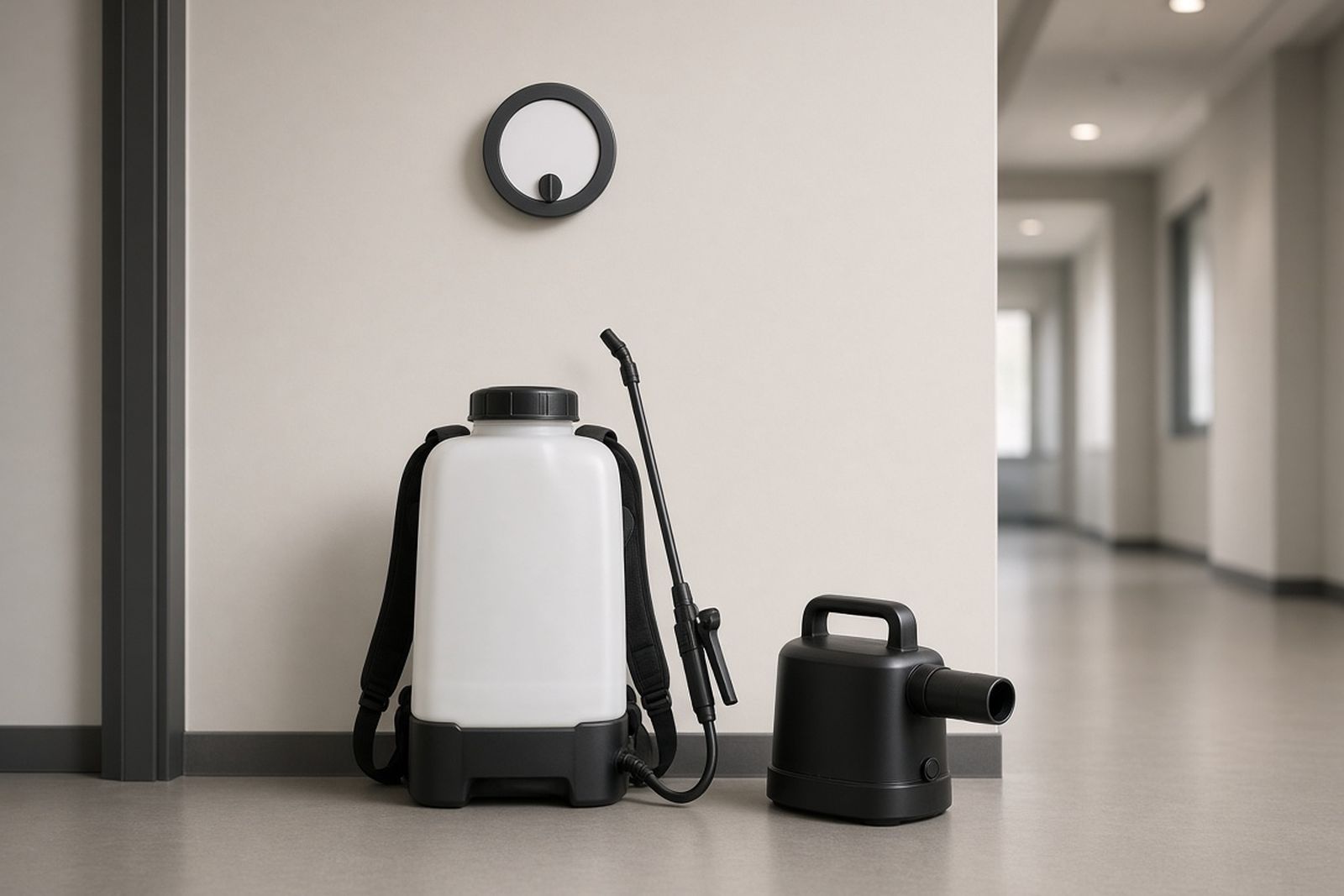
The Science Behind Sanitization & Fogging
Droplet size, gravity, electric charge, and contact time decide whether fogging disinfects anything. The physics and chemistry behind a mist, made plain.
Fogging and electrostatic spraying work only when disinfectant droplets land on a surface, stay wet for the full label contact time, and meet a surface already cleaned of soil. Droplet size controls where the mist settles, electric charge helps droplets reach some hidden sides, and the product label decides whether the method is allowed at all. Mist in the air disinfects nothing.
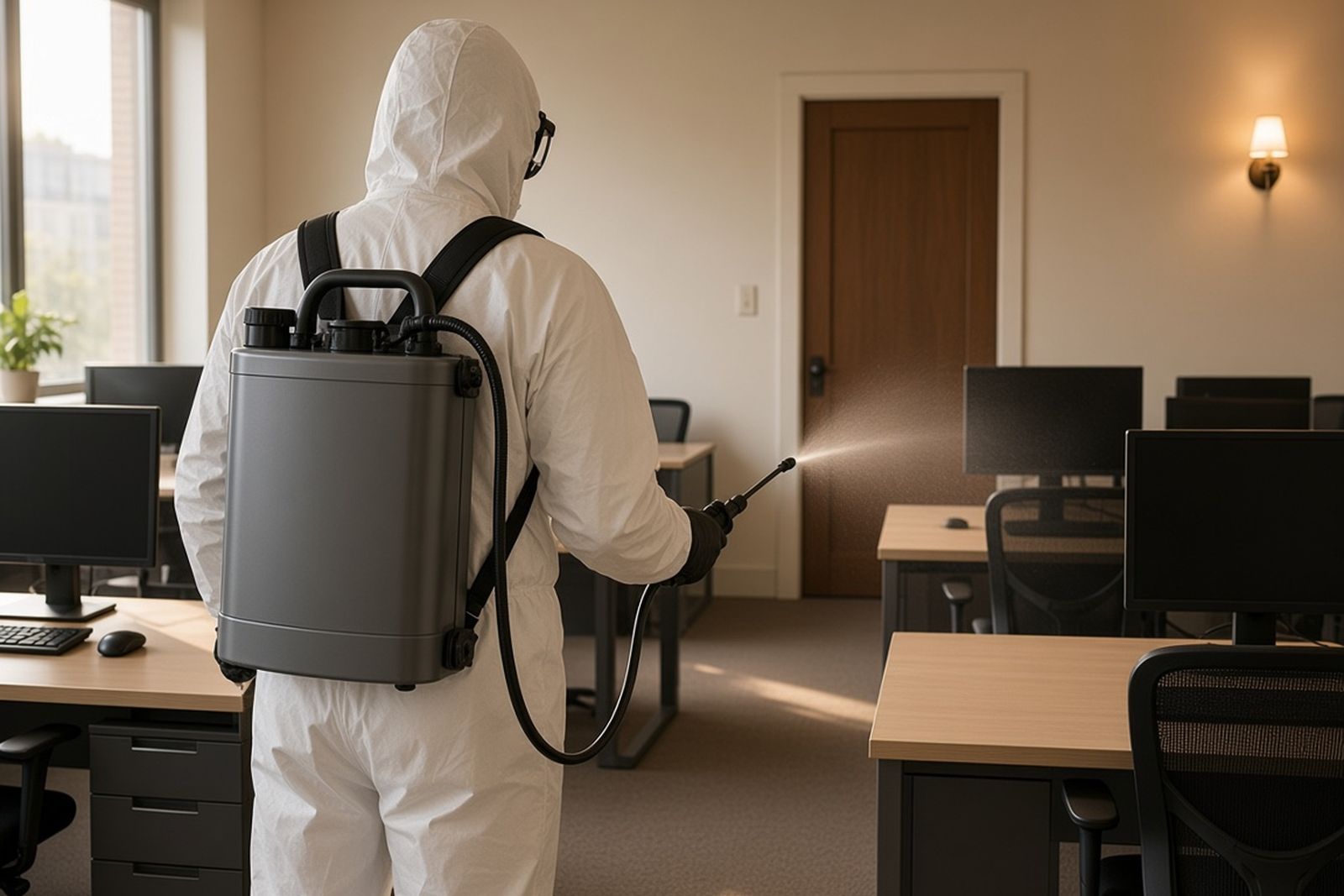
How to Evaluate Equipment Proposed for Sanitization & Fogging
ULV foggers, electrostatic backpacks, vapor systems, UV-C lamps, and ATP meters: how to judge whether proposed fogging equipment fits your building and goals.
To evaluate equipment proposed for sanitization and fogging, match each device to a documented purpose. Check that the disinfectant label permits the application method, that the sprayer's droplet size suits your surfaces, that pre-cleaning tools are included, that respiratory protection and re-entry plans cover occupants and staff, and that the provider can verify results with a method such as ATP testing rather than relying on how the mist looks.

The Difference Between Cleaning and Disinfection in Sanitization & Fogging
Fogging disinfects; it does not clean. How cleaning, sanitizing, and disinfecting differ, why soil blocks disinfectants, and where a fogger actually fits in.
Cleaning physically removes dirt, grease, and organic matter. Sanitizing lowers germs to levels considered safe, often on food-contact surfaces. Disinfecting kills most germs listed on a product label when it stays wet for the stated contact time. Fogging and electrostatic spraying are ways to apply a disinfectant, not ways to clean, so surfaces should be cleaned first for the treatment to work well.
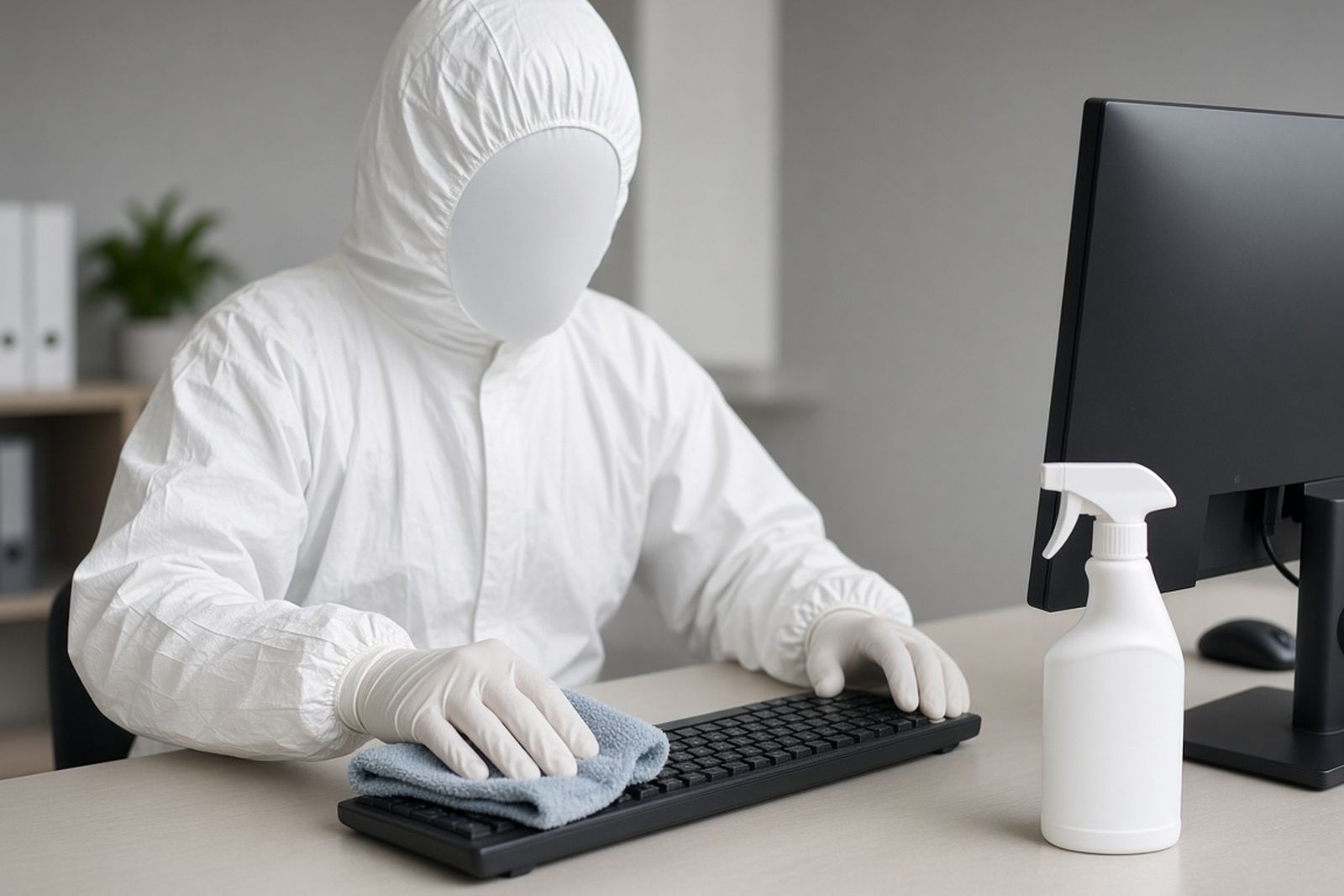
When ATP Testing Helps—and When It Does Not—in Sanitization & Fogging
ATP swabs can show whether surfaces were cleaned before and after fogging, but they cannot prove a pathogen is gone. How to use readings without being misled.
ATP testing measures organic residue on a surface, so it is a useful check on whether cleaning happened before a fogging or electrostatic treatment. It can also show changes after application. It cannot identify or rule out a specific virus or bacterium, and readings vary by device and technique. Use ATP to verify cleaning quality and track trends, not as proof that a space is disinfected.
How to Evaluate Technology Used in Sanitization & Fogging
Electrostatic sprayers, ULV and thermal foggers, hydrogen peroxide vapor, UV-C robots, and drones: a practical way to judge the fogging technology you are sold.
To evaluate fogging and disinfection technology, check whether the product label permits the device's application method, ask what evidence supports coverage claims, confirm how contact time and re-entry are handled, and compare the whole process, including cleaning and downtime, with simpler wiping. Newer equipment can help in specific settings, but no device replaces cleaning first or following the label.
When Enzymes or Microbial Products Fit Sanitization & Fogging
Enzyme cleaners and probiotic sprays are sometimes pitched alongside fogging. Where they help with odor and biofilm, and why they cannot replace a disinfectant.
Enzyme and microbial products fit a fogging program when the problem is organic soil, odor, or biofilm that needs breaking down before disinfection. They are not disinfectants, they can be neutralized by disinfectants applied at the same time, and fogging them is only appropriate if the label allows it. Used in the right order, they can make cleaning more thorough; used as a substitute, they leave germs untreated.
Sourced figures on education
- 150 ppm
In a randomized trial in two Nigerian hospitals, hypochlorous acid at 150 ppm left 84.8% of surfaces below 2.5 cfu/cm2 versus 87.3% for sodium hypochlorite at 500 ppm.
Read with care: Two-hospital trial measuring bacterial counts, not viruses; the 2-point difference was within the trial's confidence interval.
Source: Microorganisms (PMC) (2022)Two hospitals in Abuja, Nigeria; aerobic colony counts on surfaces; published April 2022
- 45,550
U.S. poison centers logged 45,550 cleaner and disinfectant exposure calls in January through March 2020, and inhalation exposures to disinfectants rose 108.8% over the same period in 2019.
Read with care: Calls reflect reported exposures, not confirmed poisonings, and the spike coincided with pandemic-driven home cleaning.
Source: CDC MMWR (2020)United States; National Poison Data System; January to March 2020 versus 2019
- 39%
In a May 2020 CDC survey of 502 U.S. adults, 39% reported high-risk practices such as washing food with bleach or applying disinfectant to skin, and only 35% knew bleach should not be mixed with vinegar.
Read with care: Small opt-in panel during peak pandemic anxiety; behaviors may have since changed.
Source: CDC MMWR (2020)United States; opt-in internet panel of 502 adults weighted to be nationally representative; May 2020
These figures are public research and agency data, not this network's own job records. Keep each number with its population, year and limits; none of them predicts cost, timing or outcome at a specific property.
What research has found
Findings from published studies of people and properties in situations like this one. They describe what researchers observed in a specific group; they are not predictions for your case.
Biological indicators demonstrated a six-log spore reduction under the tested conditions.
Microorganisms decreased significantly on sampled surfaces after treatment.
Education: common questions
Why can a fine fog dry too fast to disinfect properly?
Disinfectant labels list how long the disinfectant must stay wet. That is the time a surface must stay visibly wet for the germ-killing claims to hold. Very fine droplets from a fogger or mister can dry up before that time is up, especially in warm or dry rooms. That is why some companies change the droplet size, spray again, or follow fogging with a wipe on the surfaces people touch most.
Does electrostatic spraying reach every surface in a room?
It improves coverage on the curved and hidden sides of objects, but it is not perfect. Charged droplets are drawn to many surfaces. Yet cluttered desks, stacked chairs, and closed cabinets can still block them. Very dirty spots stay a problem unless they are cleaned first. Think of electrostatic spraying as better wrap-around coverage, not a promise that it reaches everything.
Can a swab test for leftover residue prove a room was disinfected?
No. These quick swab tests find leftover organic residue on the spot you swab. That can suggest whether cleaning removed grime. They do not find viruses or bacteria, and they do not confirm a disinfectant's germ-killing claim. Used on chosen high-touch surfaces before and after cleaning, they can help track how steady the cleaning staff are. But they are not a pass certificate for the whole room.
What is an emerging viral pathogen claim on a disinfectant label?
It is a limited claim that EPA lets certain products make against a new virus that is not yet on the label. The claim is based on how well the product works against viruses thought to be harder to kill. It applies only while EPA's policy on new germs is active for that virus. It also applies only when the product is used as the label directs, including the spray method.
What does hard, nonporous surface mean on a label?
It means surfaces that do not soak up liquid, like sealed counters, metal, glass, and many plastics. Most disinfectants are tested and labeled for these surfaces. Fabric, carpet, raw wood, and padded seats are soft and soak things up. Do not rely on a product labeled only for hard, nonporous surfaces to disinfect them. Soft items usually need washing, a separate labeled product, or replacement.
Where can I read a disinfectant label before a provider arrives?
Ask the company for the product name and EPA registration number. Then search EPA's online database of registered pesticide labels for the current version. Many makers also post labels and safety data sheets on their websites. Read the directions for use, the germs listed, the wet times, any rinse steps, and the spray methods allowed. Print the key sections for your file.
What is the difference between a residual claim and ordinary disinfection?
Ordinary disinfecting kills the listed germs on a surface at the time of treatment. The protection ends as soon as the surface is touched again. A lasting, or residual, claim means the label says the product keeps working for a set time under certain conditions. Those claims are narrow and printed on the label. If a company promises lasting protection, ask to see the exact label wording that backs it up.
Related community polls
Every count is a real visitor vote; nothing is seeded or padded. One vote per poll per device, and you can change your answer.
A vendor offers to fog your classrooms at lunch while students are outside. What do you say?
How do you see repeat fogging contracts today?
More on sanitization & fogging
Sanitization & Fogging services
See how electrostatic spray, heat fogging, UV-C, and scheduled programs fit into a clean-first, then-disinfect plan for your building or fleet.
Costs explained
What drives the price, published cost ranges, and how to read a written quote line by line.
Insurance and payment
Which policies may respond, how to document a claim, and what to do if coverage is denied.
Planning tools
Estimate costs, vet companies, sort waste, and choose between wiping and fogging with tools built for offices, gyms, schools, and fleets.
Community polls
See how other facility managers weigh fogging contracts, air system control, label checks, and re-entry timing against cost and daily disruption.
Knowledge quiz
Check whether you can spot a label mismatch, fogging with people present, or a skipped cleaning step. Then review the study guide.