Short answer
Environmentally responsible fogging means using it only when a specific risk justifies it, choosing a product whose label permits the method, applying the smallest effective amount, cleaning first so less chemical is needed, protecting occupants and materials, ventilating as directed, and avoiding devices like ozone generators that promise disinfection they cannot deliver safely. Fewer, better-targeted applications usually protect people and buildings best.
The environmental footprint of a fogging service
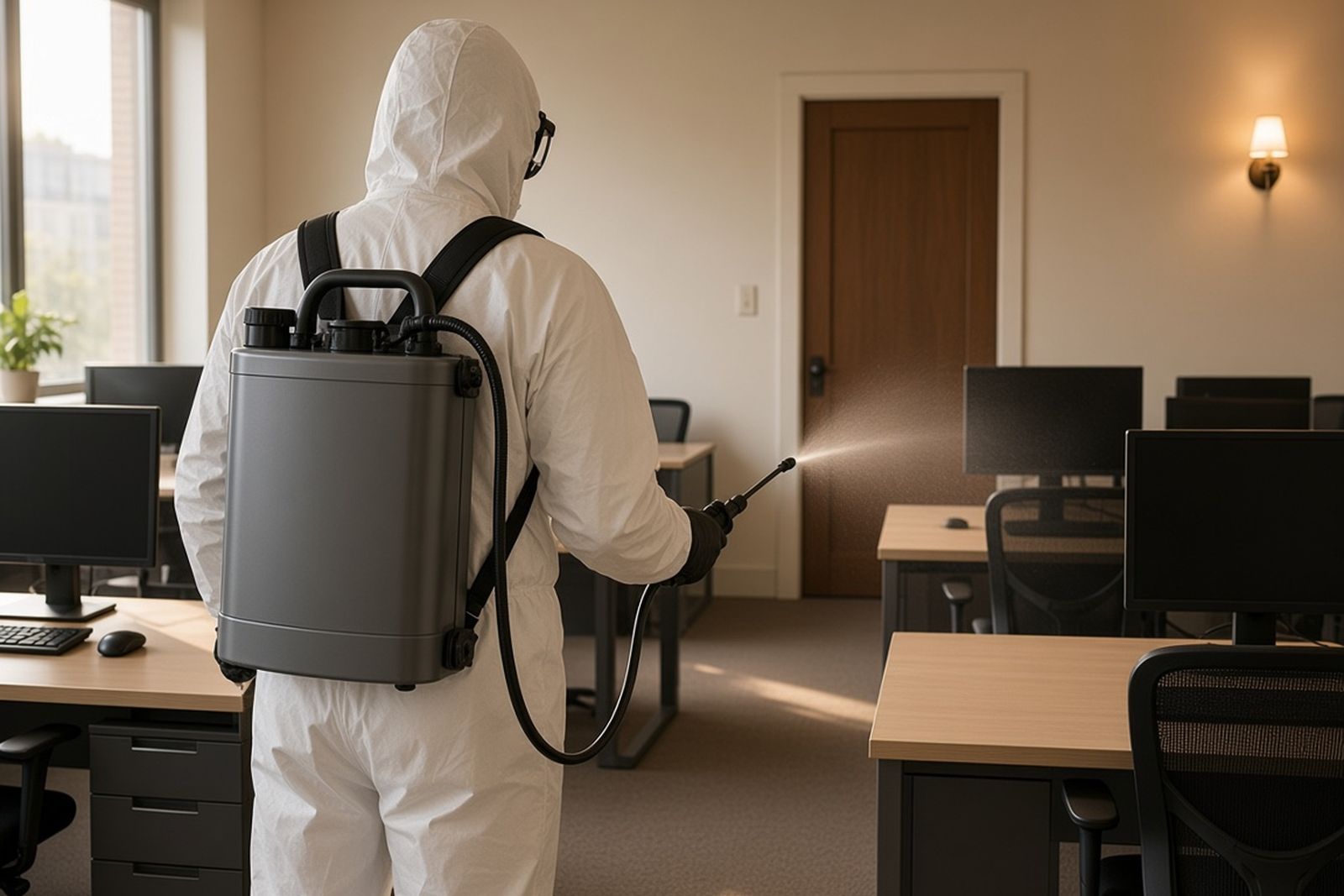
Every fogging or electrostatic application releases disinfectant into indoor air, where it lands on surfaces, drifts into corners, and is eventually breathed, wiped up, or vented outside. Unlike a spray bottle aimed at a single counter, fogging treats everything in the room, including surfaces nobody touches.
That broad reach is the point of the method, but it is also its environmental cost. More chemical is used per room than targeted wiping would require. Occupants, custodians, and technicians have more opportunity for inhalation. Materials such as plastics, finishes, and electronics receive exposure whether they needed disinfection or not.
None of this means fogging is always wrong. It means the method carries a footprint that should be justified by a real benefit, and minimized whenever possible.
It helps to think of the footprint in three parts: what goes into the air people breathe, what stays on surfaces and materials, and what leaves the building as vented air, rinse water, empty containers, and worn-out equipment. A responsible program tries to shrink all three, and the sections below take each in turn.
Avoiding fogging when it is not needed
The most environmentally responsible application is the one that does not happen because it was not necessary. Recurring fogging contracts are a common source of unnecessary use. They often begin in response to a specific event, then continue out of habit or a sense that stopping would look careless.
A better approach ties each application to a reason. Was there a confirmed illness cluster? A contamination event that affected many surfaces at once? A health department recommendation? If the answer is no, targeted cleaning and disinfection of high-touch surfaces may accomplish more with far less chemical.
Review recurring services every few months. Ask what has changed since the program started, whether any measurement shows benefit, and whether routine cleaning could cover the need. Ending a program that has served its purpose is a responsible decision, not a lapse.
- Tie every application to a documented reason.
- Prefer targeted wiping for routine high-touch surfaces.
- Review recurring contracts on a set schedule.
- End programs when their original reason has passed.
Why cleaning first reduces chemical use
Soil, grease, and residue consume disinfectant. Active ingredients react with organic material and can be used up before they reach microorganisms. On dirty surfaces, a provider may be tempted to apply more product or apply it more often to compensate.
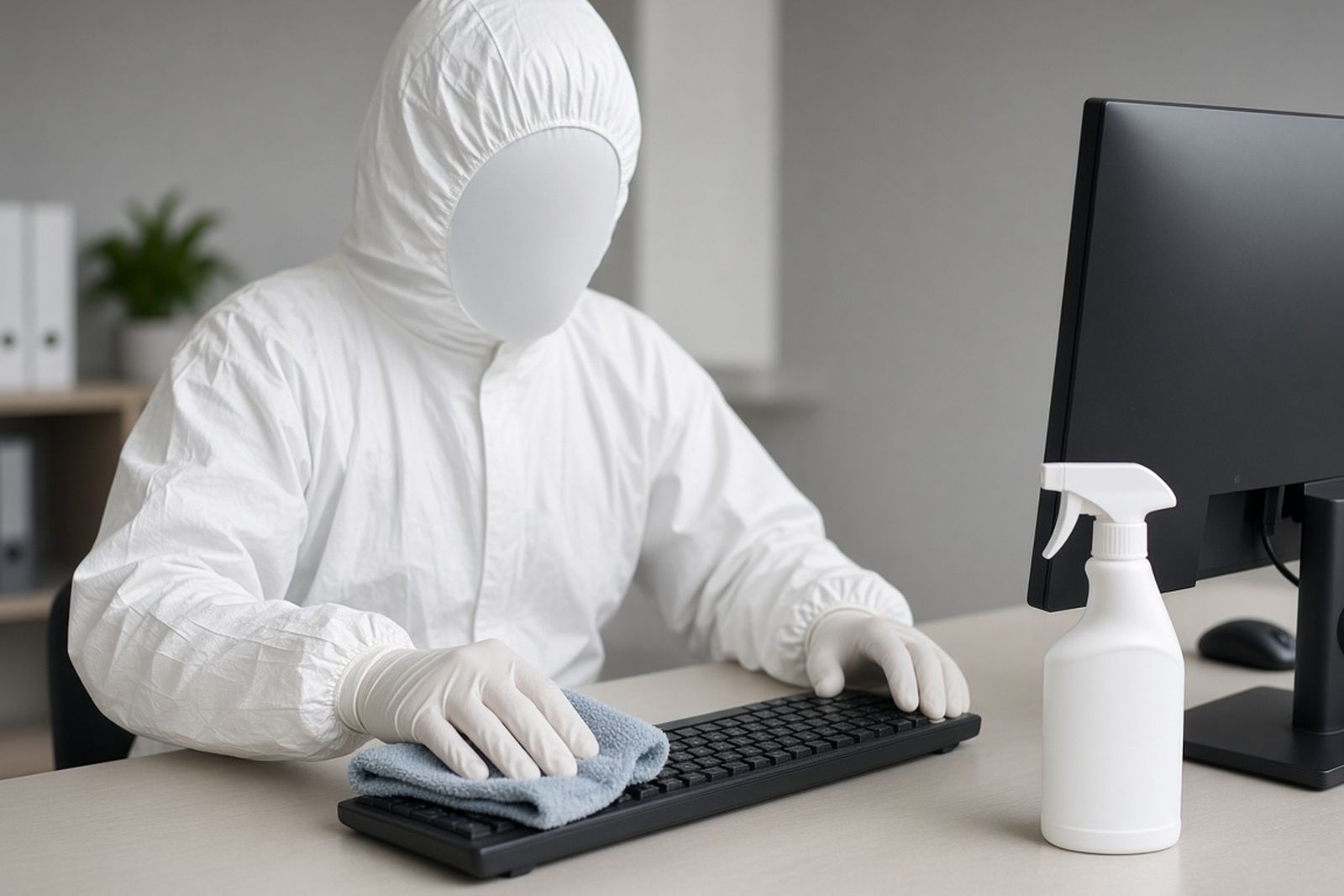
Cleaning with detergent and friction removes most of that load before any disinfectant is applied. The disinfectant then has less to fight through, and the amount the label calls for is more likely to do its job. In practical terms, a well-cleaned room needs no more than the label amount, and often a well-cleaned room needs only targeted disinfection rather than fogging at all.
This is one of the rare places where the safer choice, the more effective choice, and the environmentally responsible choice all point the same way.
There is a scheduling benefit as well. When cleaning is done well and documented, a provider can often treat a smaller set of surfaces or zones, finish sooner, and ventilate sooner. Less product in the air means shorter re-entry intervals in many cases, which keeps the building usable and reduces the temptation to cut ventilation short.
How product choice and label directions affect the footprint
Products differ in active ingredients, concentrations, byproducts, and residue. Some leave residues that require a rinse on food-contact surfaces. Some break down into simpler compounds after use. Some are harsher on materials. The label and safety data sheet describe these characteristics, along with any environmental hazard statements and disposal instructions.
Following the label precisely is itself an environmental practice. The dilution printed on the container is what the manufacturer tested. Mixing stronger does not add meaningful benefit and increases exposure and residue. Mixing weaker risks failing to disinfect, which may lead to repeat applications.
Ask your provider why they chose a particular product and whether a lower-hazard alternative with an appropriate label claim exists for your situation. Providers who have thought about this will have an answer.
Why to steer clear of ozone generators
Ozone generators are sometimes marketed alongside fogging as a way to sanitize rooms or vehicles. Their environmental and health profile is a concern. In its 2026 guidance on ozone generators sold as air cleaners, the EPA says that ozone applied to indoor air at concentrations not exceeding public health standards does not effectively remove viruses, bacteria, mold, or other biological pollutants.
Put simply, ozone at levels safe for people does not do the job, and levels high enough to affect microorganisms are not safe for people. Ozone can also react with other chemicals in indoor air and with some materials, such as rubber, and it can irritate the lungs.
If a provider proposes ozone as a disinfection step, ask for the basis for that claim. Treating it as an odor tool in an unoccupied space is a different question from treating it as a disinfectant, and the two should not be blurred.
Long-term effects on people and materials
Indoor environments are shared by people who spend many hours in them. Regular exposure to disinfectants is a real consideration, especially for the custodians and technicians who apply them week after week. Keeping that exposure no higher than necessary is part of running a responsible program.
Materials also bear the cost. Jennings and colleagues, testing the chemical resistance of plastics in 2024, found that products above pH 8 accounted for 74% of failures in their experiment. Cracked or clouded plastics, faded finishes, and degraded seals shorten the life of equipment and furnishings, which adds replacement waste to the environmental ledger.
Choosing compatible products, avoiding unnecessary repeat applications, and covering or excluding sensitive items reduces both the human and material costs.
Ventilation, waste, and leftover product
Ventilation after fogging moves airborne product out of the building. The label will describe what is required before re-entry. Running exhaust or opening windows as directed protects occupants. It also means the product enters outdoor air, which is one more reason to use no more than needed.
Leftover concentrated product, rinse water, and empty containers should be handled according to the label and local rules. Pouring concentrate down a storm drain or onto soil is not appropriate. Your local solid waste or household hazardous waste program, or your provider, can tell you how unused product and containers should be disposed of in your area.
Equipment upkeep and packaging
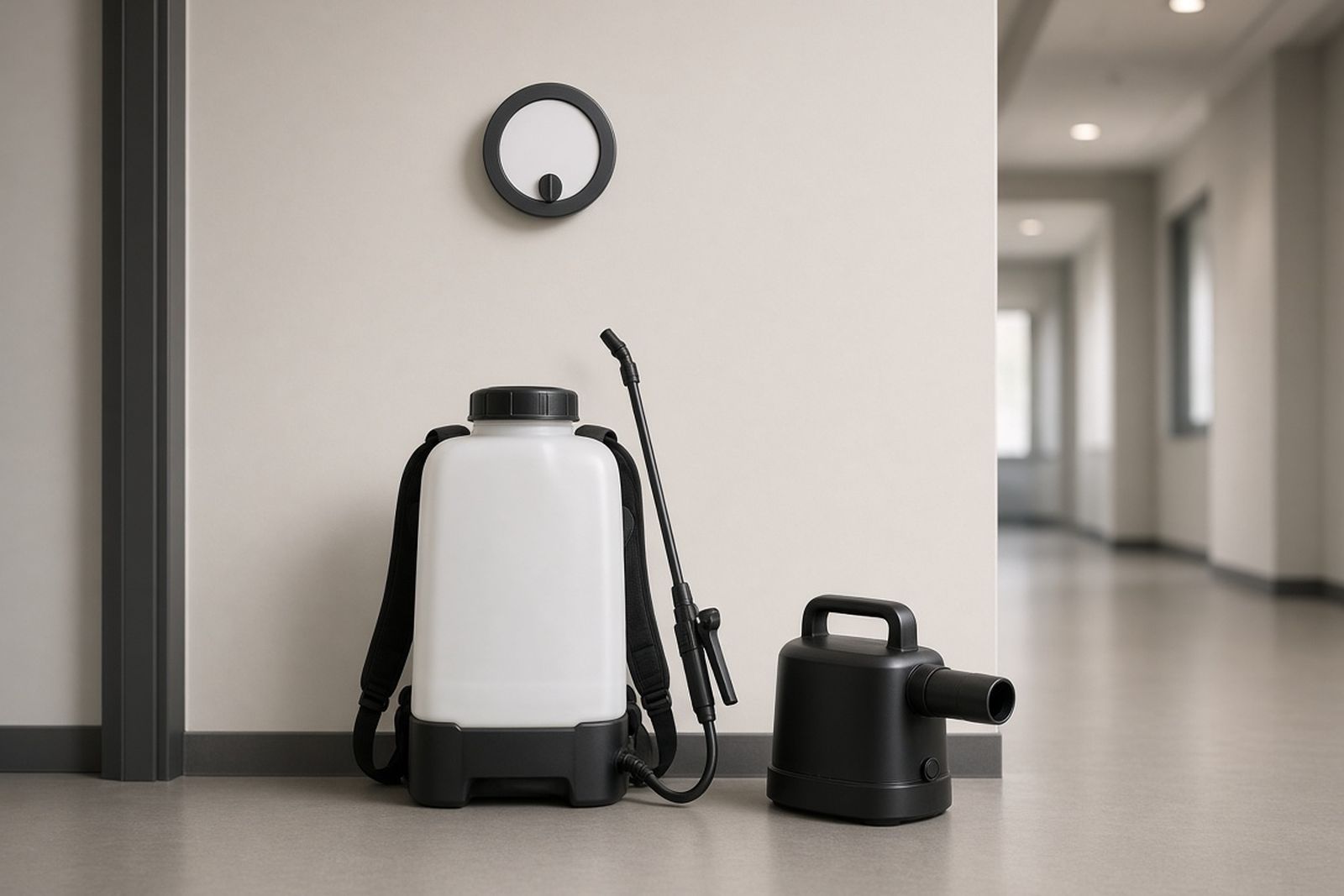
Equipment maintenance matters too. A sprayer or fogger that leaks, drips, or produces uneven droplets wastes product and can over-apply in some areas while missing others. Ask how often the provider services and calibrates equipment.
Think about packaging too. Concentrates diluted on site generally produce fewer empty containers than ready-to-use products shipped in many small bottles, as long as dilution is measured carefully. Ask whether the provider uses measured dispensing systems rather than eyeballing concentrate into a tank.
Trimming a recurring program without losing protection
Many buildings carry a spraying contract that began during an illness wave and never ended. If yours is one of them, start with the service reports. Look for a record of why the schedule was chosen and whether it was ever revisited. Often there is none.
Next, check for signs that the program is costing more than it returns: lingering odors on the mornings after treatment, clouding on plastic monitor bezels or touchscreens, or complaints from staff with asthma. Those are signals to reduce exposure, not to switch to a stronger product.
Then strengthen the daily routine. Work with the janitorial vendor to improve wiping of desks, door handles, kitchen surfaces, and restroom fixtures, using a product compatible with your plastics and finishes.
Finally, move the spraying service from a fixed, building-wide schedule to an event-based, zone-specific one: used when a cluster of illness is reported on a floor, and only on that floor, with the provider confirming the label supports the method. Chemical use falls, and you still keep a documented plan for the times when enhanced disinfection is warranted.
Questions that help you choose a responsible provider
A provider who cares about environmental impact will usually welcome questions about it. A few focused ones reveal a lot about how they think.
Look for answers that are specific to your building, not a generic promise that everything they use is safe and green. The best providers will sometimes tell you that you need less of their service than you asked for.
- Why is fogging needed here instead of targeted wiping?
- Which product will you use, and does its label permit this method?
- How do you make sure you apply only the labeled amount?
- What materials in this space might the product damage?
- How do you handle leftover product and empty containers?
- Do you ever recommend reducing or ending a service?