Short answer
Sanitization fogging has moved from crude room fumigation to targeted technologies such as hydrogen peroxide vapor, UV-C, and electrostatic sprayers. The pandemic brought a surge in fogging and in registered disinfectants, followed by closer scrutiny of what fogging can and cannot do. Today, careful practice centers on cleaning first, using products labeled for the application method, protecting occupants, and verifying results.
Early room fumigation
The notion of treating an entire room with a chemical mist is older than most people realize. Long before modern disinfectants, public health workers fumigated homes and sickrooms after infectious illness, sealing windows and releasing vapors meant to purify the air and surfaces. The practice was driven by fear of contagion and by limited understanding of how germs actually spread.
Over time, that approach fell out of favor for everyday use. Some fumigants were hazardous to people, damaged belongings, and did not clean anything. As science clarified that many infections spread through contact with contaminated surfaces and hands, attention shifted toward cleaning, handwashing, and targeted disinfection.
Still, the idea of treating a whole space at once never disappeared. It returned in new forms as technology improved and as hospitals looked for ways to reach surfaces that manual cleaning missed.
Agriculture and food processing kept a version of the practice alive. Barns, poultry houses, greenhouses, and processing plants were routinely sprayed or fogged between uses, and much of the equipment later adapted for buildings first came from those industries. That lineage explains why some early commercial foggers looked more like farm tools than cleaning equipment.
How hospitals shaped modern whole-room disinfection
Hospitals have strong reasons to care about surfaces. Some germs linger on bed rails, call buttons, and equipment and can pass from one patient to the next. Manual cleaning is essential, but it depends on people, and people miss spots.
To add another layer, hospitals began experimenting with no-touch technologies: hydrogen peroxide vapor systems that fill a sealed room, ultraviolet devices that expose surfaces to UV-C light, and aerosolized disinfectant systems. These were used after cleaning, not instead of it, typically in patient rooms after discharge.
They also came with trade-offs. A 2009 study in Infection Control and Hospital Epidemiology found that hydrogen peroxide vapor room decontamination took a mean of 2 hours 20 minutes per patient room versus 32 minutes for conventional cleaning, across 1,565 rooms in a US hospital. That time cost shaped how and when such systems were used, and it showed that whole-room methods require planning, sealed spaces, and trained staff.
The pandemic surge
The COVID-19 pandemic transformed public awareness of disinfection almost overnight. Businesses, schools, transit agencies, and households wanted visible proof that spaces were being treated. Fogging and electrostatic spraying suddenly appeared everywhere, from offices to gyms to buses.
Manufacturers and regulators moved quickly as well. The EPA's List N of surface disinfectants expected to kill SARS-CoV-2 grew from 85 products at launch in March 2020 to more than 500 products by October 2020, according to an agency news release. That rapid expansion gave buyers more options and more confusion.
Workers and small businesses in the middle
Cleaning workers felt the change directly. In a 2023 study of cleaning services personnel by Wilson and colleagues, 53% reported changes in application type, such as fogging, spraying, or wiping. Many workers were asked to use new equipment and products with little time for training.
Small businesses were caught in the middle. Many bought their own sprayers or hired new providers without a clear way to judge quality. Owners wanted to reassure customers and staff, and fogging offered something they could point to. The demand was understandable, even when the method was not always the best fit.
Why fogging came under closer scrutiny
As the early rush settled, researchers and public health agencies looked more carefully at what whole-room spraying actually accomplished. Several concerns emerged.
First, many disinfectants were never labeled for fogging or electrostatic application, and using them that way was outside their directions. Second, testing showed that droplets did not always coat surfaces as thoroughly as marketing suggested, particularly the back sides of objects. Third, spraying disinfectants into the air raised questions about respiratory exposure for workers and occupants. Fourth, it became clear that surface transmission was only one part of how respiratory viruses spread, so heavy fogging did not address the main risk.
None of this meant fogging had no value. It meant fogging had to be used thoughtfully, with the right product, the right method, and realistic expectations.
Public health guidance evolved alongside the research. Agencies increasingly emphasized cleaning high-touch surfaces, improving ventilation, and following product labels, while cautioning against spraying disinfectants into occupied spaces. That shift pushed reputable providers to explain their methods more carefully and to recommend fogging only where it clearly added value.
- Products used off-label for fogging or electrostatic spraying.
- Uneven coverage, especially on shaded surfaces.
- Respiratory exposure for applicators and early re-entry.
- Overreliance on spraying instead of cleaning and ventilation.
How the technology evolved
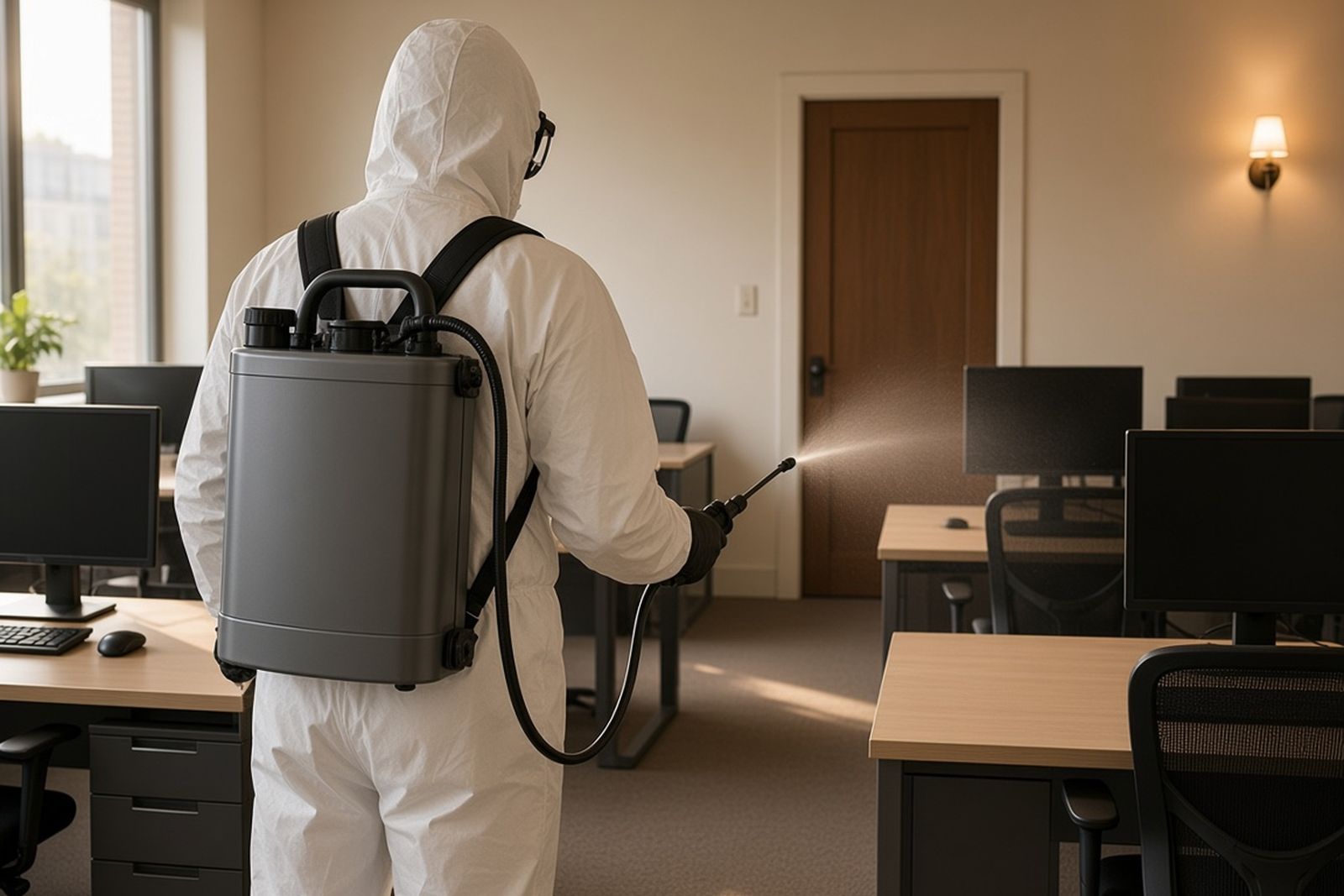
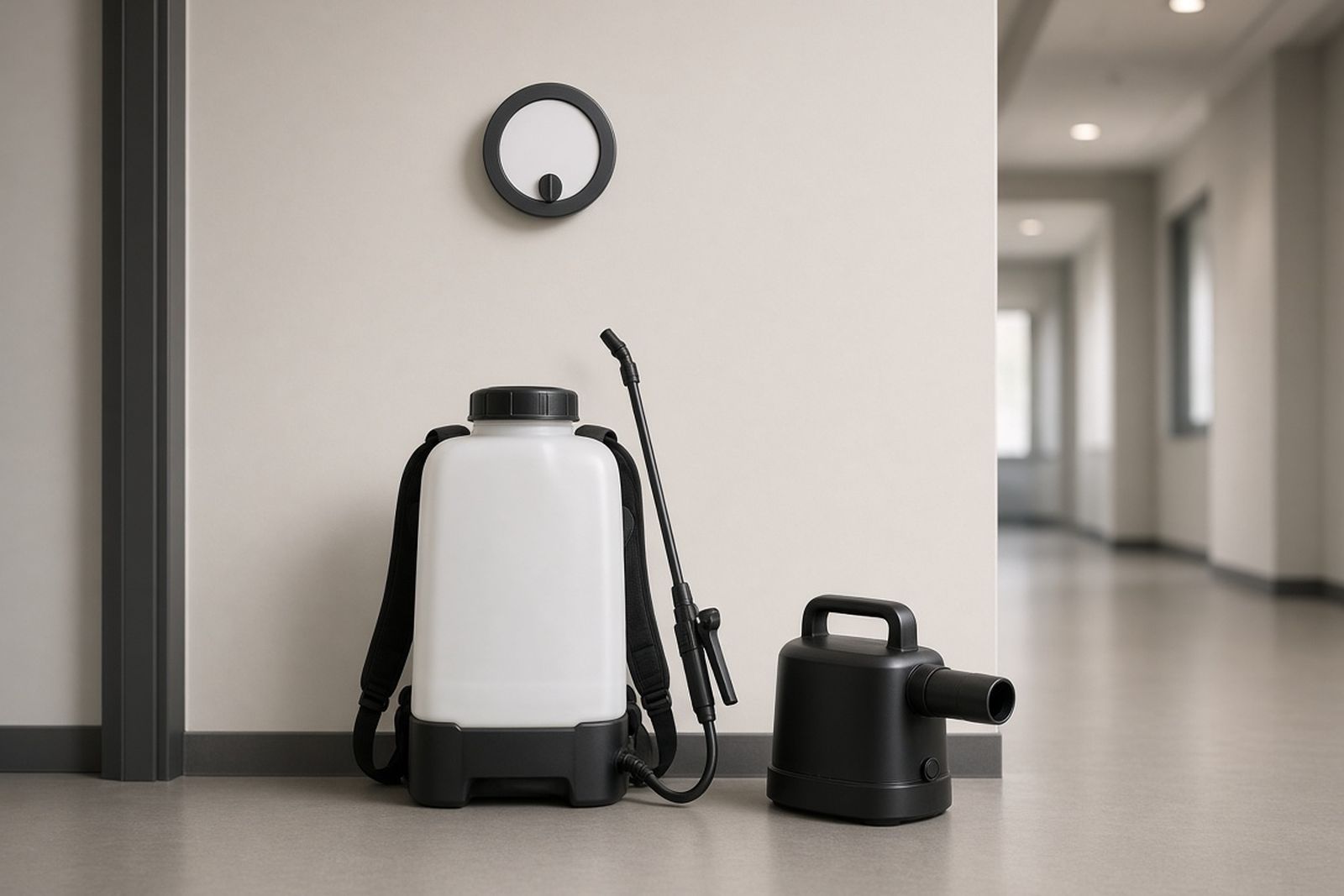
The equipment available today is more varied than the old fumigation methods. Cold foggers produce fine droplets that drift through a room. Thermal foggers use heat to create a denser mist. Electrostatic sprayers apply a charge to droplets so they are attracted to surfaces. Hydrogen peroxide vapor systems and UV-C devices offer no-touch alternatives in controlled settings.
Each has strengths and limits. Droplet size affects how long mist stays airborne and how well it wets a surface. Charge helps droplets reach nearby surfaces but does not guarantee complete coverage. UV-C works only where light reaches directly. Vapor systems require sealed rooms and longer cycles.
The trend has been toward matching the tool to the job rather than using one device for everything. Experienced providers now explain why they choose a particular method for a given space.
From appearance to evidence: verification
In earlier eras, treatment was judged mainly by whether it was done. Today, more providers try to measure results. ATP testing, which detects organic residue on surfaces, offers a quick indication of cleanliness before and after treatment. Microbial sampling can give more detailed information when needed.
Verification helps shift the conversation away from how impressive a fog looked and toward whether surfaces are actually cleaner. It also helps catch problems, such as areas that were missed during pre-cleaning.
Testing has limits. It cannot prove a space is free of every germ, and results depend on where samples are taken. But its growing use reflects a broader change in the field: from appearance to evidence.
The neighborhood gym, then and now
Gyms are a useful lens on how everyday practice changed, because they touched every stage of this history. Before the pandemic, a typical routine was staff wiping equipment with spray bottles at closing time, with an occasional deep clean by a cleaning company. Fogging rarely came up.
During the pandemic, some gyms hired companies to fog the entire floor nightly with whatever product was on hand. The mist looked reassuring, but it often came with the problems described above: products not labeled for fogging, equipment that was not wiped first, and staff returning before the space was ventilated.
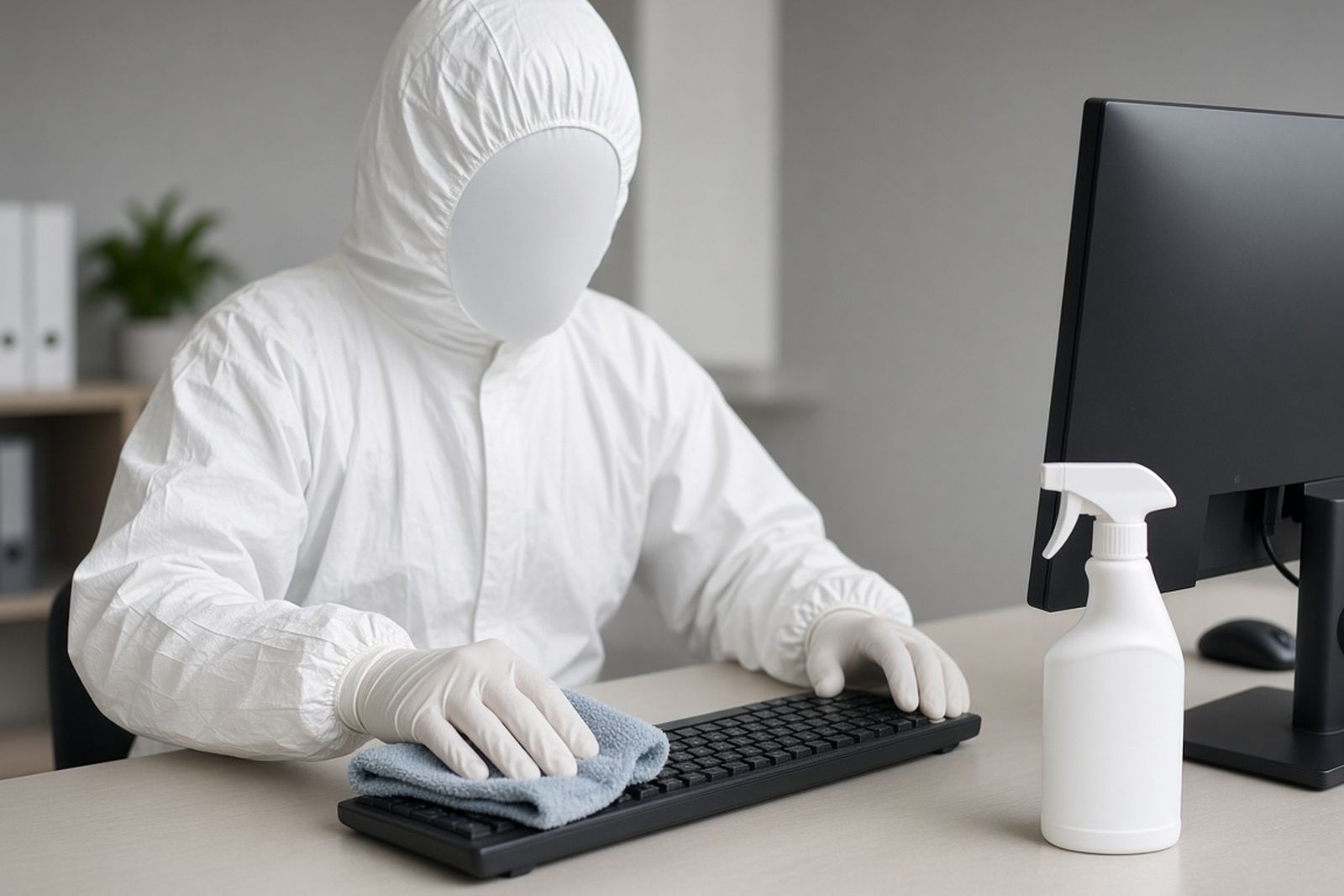
Better practice today looks different. A provider cleans high-touch equipment by hand, uses a product labeled for electrostatic application on selected areas, keeps the space empty for the label's re-entry time, and runs periodic ATP checks on benches and handles. Fogging is used when there is a clear reason, not every night, and the cleaning routine is posted where members can see it.
Lessons from this history that still matter
The main lesson is that no spraying method replaces cleaning. From early fumigation to modern electrostatic sprayers, whole-room treatments have worked best as an addition to physical cleaning, not a substitute.
The second lesson is that labels matter. The product label defines how a disinfectant may be applied, and following it is what connects the treatment to tested results. Your state pesticide regulatory agency can tell you whether licensing or notification requirements apply to disinfectant application in your setting.
The third lesson is that people come first. Protecting applicators and occupants from respiratory exposure, and giving spaces time to clear before re-entry, is now a central part of responsible practice. When you hire a provider today, you can expect it to reflect those lessons, and you should feel comfortable asking how it does.
Where is sanitization fogging likely headed?
Future practice will probably keep moving toward precision. Expect more attention to matching products and devices to specific situations, more use of verification testing, and clearer communication about what each method can and cannot do.
Demand will likely rise and fall with outbreaks, as it has in the past. The providers that last will be the ones who resist the pull toward visual drama and instead offer measured, label-compliant service that fits the real risk in front of them.
Regulation may also sharpen. As agencies and states gain experience with pandemic-era practices, clearer expectations around labeling, applicator training, and occupant protection could follow. Property owners who already ask for labels, safety data sheets, and job records will be well prepared for whatever changes come.
Sources
- Infection Control & Hospital Epidemiology — Feasibility of Routinely Using Hydrogen Peroxide Vapor to Decontaminate Rooms in a Busy United States Hospital
- US EPA — EPA's List of Approved SARS-CoV-2 Surface Disinfectant Products Passes 500
- Wilson et al. — COVID-19 cleaning protocol changes, experiences, and respiratory symptoms among cleaning services personnel